Ballots and Big Money
Even Spring Has Its Unpredictable Clouds


Spring is doing what it always does—showing up, even when the weather refuses to cooperate.
A few unpredictable days don’t stop what’s already in motion, and that feels like a fitting metaphor for where we are right now in education.
Arizona Opposition
For decades, I’ve had the opportunity to watch—and at times be part of—the education freedom story in Arizona. It was one of the first states willing to take charter schools seriously, long before it was fashionable and long before most people believed lawmakers would really let educators create their own public schools. But Arizona pioneered it. And in doing so, it helped redefine what public education could mean: educators with the freedom to build, parents with the power to choose, and lawmakers willing to trust families and communities rather than preserve one system at all costs.
That is why Arizona has been such a consistent leader in CER’s Parent Power Index.
Arizona has built one of the country’s most dynamic education marketplaces, including Empowerment Scholarship Accounts and other programs that allow families to find the environment that works for their children.
There are now competing ballot efforts in Arizona over the future of the state’s Empowerment Scholarship Account program. One proposal would impose new limits, including an income cap. Another would maintain universal eligibility with additional guardrails. Both are aiming to qualify for the ballot.
That is why people like Katherine Haley matter.
She is running for Arizona Treasurer and brings a rare mix of experience: native Arizonan, former president of the Arizona State Board of Education, and someone who helped manage the legislative effort for the D.C. school choice program.
The Wrong Place to Make Education Policy
The initiative to turn the clock back on Arizona’s education freedom laws is being advanced under the “Protect Education” banner and has raised millions, largely from national union funding.
They claim it’s aimed at improving the program. In reality, they just want it smaller. Even Arizona’s U.S. Senator Mark Kelly has weighed in, arguing recently in the Wall Street Journal that he wants the money parents are using for their child’s education to go back to the system that served him so well—as if it were still the same system, or even if it were, that it works for everyone.
In short, this is partisan politics. In a state that has always been more libertarian than pure red or blue, party dynamics are now driving a fight over who decides how children are educated. And when legislators won’t adopt their arguments, unions and their allies take the fight to the ballot.
The problem—which unions know works in their favor—is that ballot initiatives ask voters, who elected legislators to do the work of policymaking, to make complex decisions based on campaign language, slogans, and incomplete premises.
This is not about whether people should vote. It is about what they are being asked to vote on.
Education policy is complicated. ESAs are complicated. Funding, eligibility, accountability, supply, and implementation all interact. Legislatures exist to work through those details—hear from families, evaluate impact, and make adjustments.
A ballot initiative collapses all of that into a yes-or-no campaign.
That is why ballot initiatives on education choice are flawed. They function like bad polling: shape the premise, and you shape the outcome. Like statistics, they can be gamed.
Parents deserve better than that.
Follow the Money
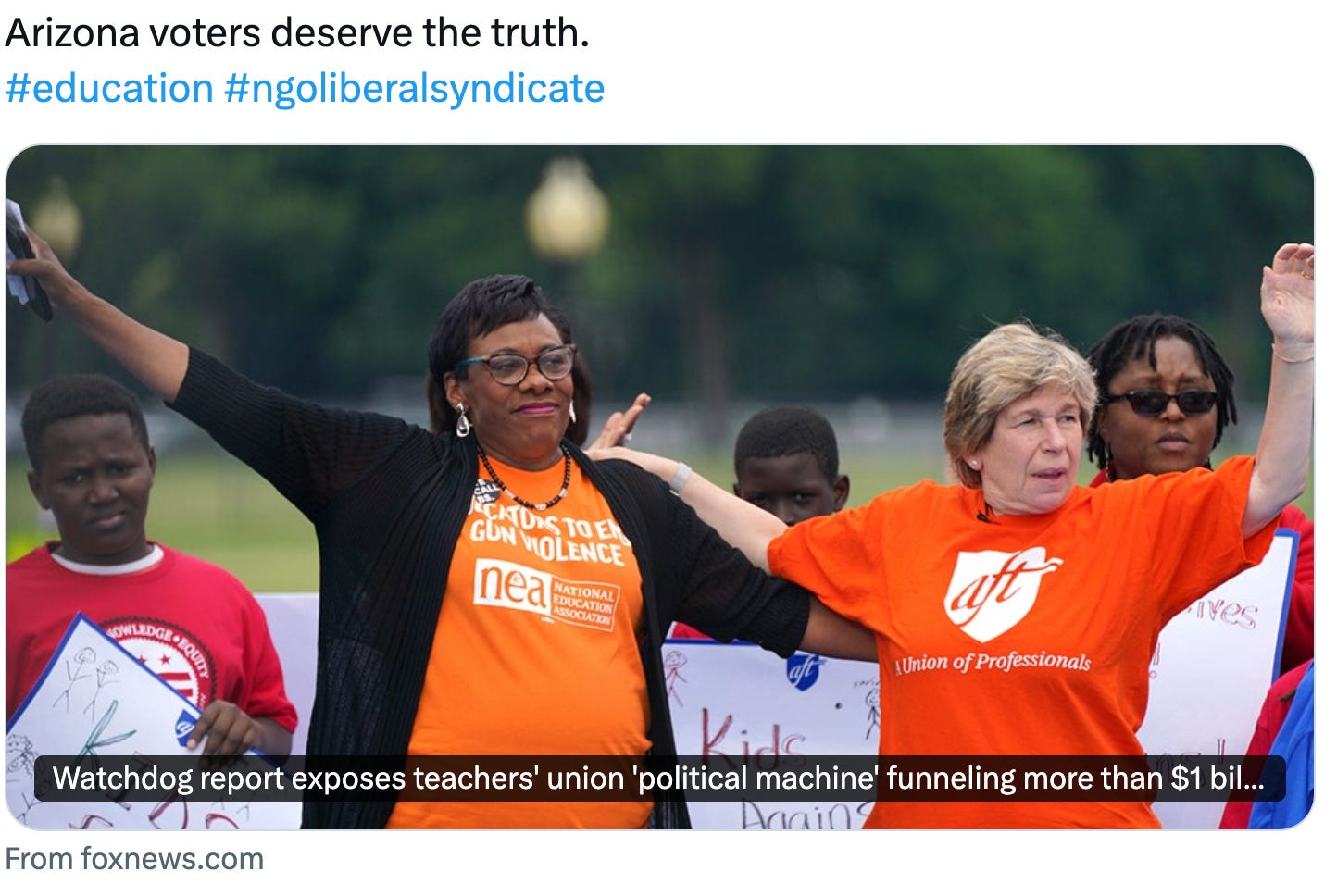
The unions and their allies are doing what they have done for decades: using enormous political resources to convince the public that parent power is somehow dangerous.
A former AFT union leader turned watchdog and analyst documented this clearly in 1997. The late Myron Lieberman knew how it worked. Having spent years inside the world of teacher unionism—including a run for AFT president—he later became one of its most incisive critics, arguing that what had once been seen as a force for improving education had become focused primarily on maintaining collective power.

The NEA and AFT were already billion-dollar organizations with thousands of staff and a significant political footprint. Contemporary analysis showed millions flowing into campaigns, lobbying, and political operations well beyond collective bargaining but only a handful of journalists wrote of his work.
That was nearly thirty years ago.

Today, according to Defending Education and reported by Fox and many other outlets, more than $1 billion in combined national, state, and local political spending has been directed toward campaigns, advocacy networks, and ballot efforts—including those targeting school choice.

This is not new behavior. It has expanded in scale, reach, and intensity.
And now Arizona is one of the targets. Again.
This is a seminal moment for families. Will they keep the authority to choose, will educators keep the freedom to build, and will policy be shaped through informed deliberation? Or will they succumb to campaigns backed by national political interests?
Schools for America
Defending education and parents’ rights is only part of the equation.
Supply matters.
That’s what we help do through the Yass Prize—finding, rewarding, and expanding providers delivering transformational education. It’s what growing networks of all kinds—charter, private, microschools, and hybrid models—are doing every day.
But they are doing it in spite of the system, not because of it.
Families are clearly seeking out smaller schools, more personalized environments, and models that don’t fit neatly into the traditional system. Demand is rising quickly—faster than supply.
The barrier isn’t interest. It’s regulation.
Zoning rules, transportation requirements, and facility mandates make it difficult—sometimes impossible—for new schools to open. And not for reasons tied to quality or outcomes, but because of rigid assumptions about what a “school” is supposed to look like. How many bathrooms. Where they are located. How large the building must be. Rules built around a system that was designed to be large, centralized, and uniform.
Outside of legitimate health and safety concerns, these are decisions that should be driven by families. If a parent chooses a smaller setting, a different location, or a nontraditional model for their child, that choice should carry with it the ability to accept how that environment is structured.
Instead, almost every existing rule governing school facilities is based on the needs and preferences of traditional public systems—large, highly regulated, and often impersonal to the individual needs of students.
That’s where a new effort called Schools for America comes in.

Its launch was covered in the Wall Street Journal and state leaders are thrilled to have their focus.
It’s just one part of a growing recognition that expanding access without expanding supply creates a dead end. They are working to address the practical barriers—zoning, compliance, and regulatory friction—that prevent new schools from opening.
Because giving families the freedom to choose only works if we also protect the freedom to build.
Books Still Matter
If you’re like me, you enjoy getting the actual physical material that tells a story, engages the mind or creates a connection to people and things you might not normally have in your life (without having to spend endless searches online). In just one week I’ve visited with the authors of two great new books that all speak to what’s in this issue.
The Well-Educated Child, Dr. Deborah Kenny’s latest book, comes at a time when many educators feel enormous pressure to deliver test scores. What she shows is that quality teaching and strong outcomes are not at odds. In fact, they depend on one another.
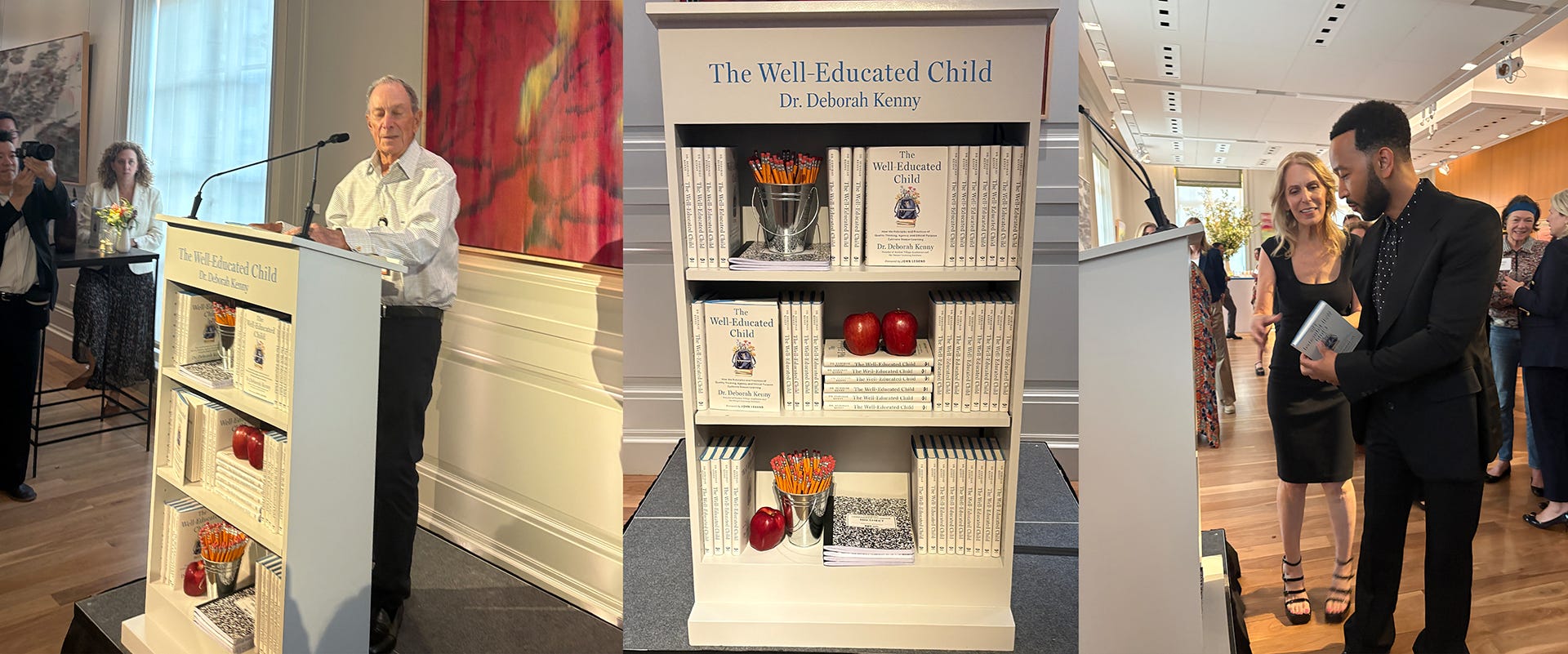
She makes the case that students need agency, they need ethical purpose, and they need to be challenged—intellectually and academically—on a daily basis. The book is grounded in real classroom practice, real examples, and a philosophy that has been tested over time.
John Legend, who has served on her board for years, wrote an insightful foreword, and from both his and Deborah’s perspective, it’s the students who are our celebrities.
Deborah founded Harlem Village Academies with the goal that students in underserved communities be given nothing less than the best education. Her schools were the only charter schools in New York to combine Montessori and International Baccalaureate approaches, grounded in the belief that students should engage deeply with both classic and diverse texts, grapple with complex problems, and develop real intellectual independence.
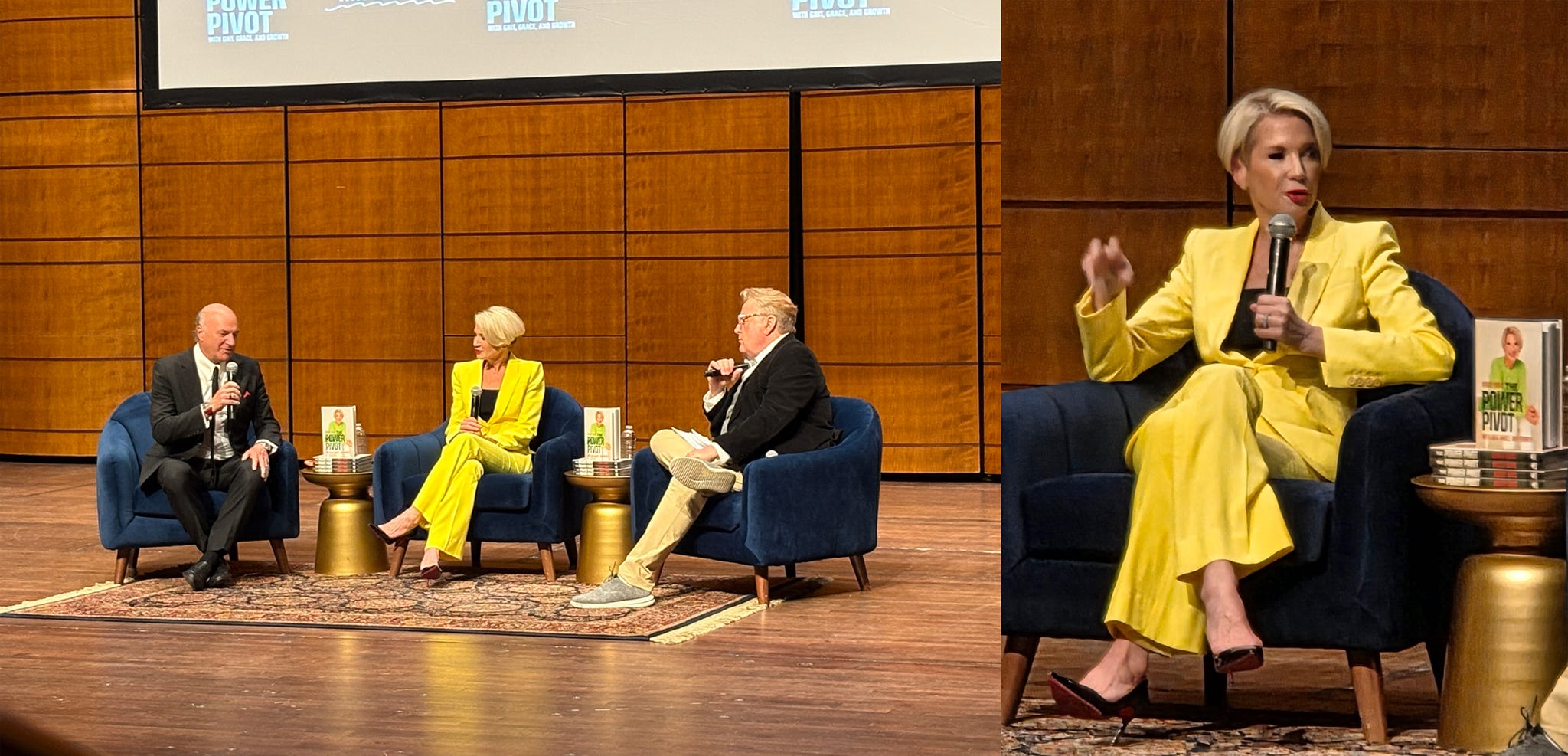
The Power Pivot by Ashley M. Davis is about the opportunities life presents every day that give you a chance to be intentional about how you move forward. Ashley—who now works with a number of major executives including Shark Tank’s “Mr. Wonderful” —builds this through case studies across a wide range of leaders and organizations, people who anticipated shifts in the market, in behavior, in expectations—and made decisions accordingly.
Her own experience anchors the book. Being in the White House on 9/11 and then navigating more than two decades since across business, government, and advisory roles, she has had to pivot repeatedly—personally and professionally. What comes through clearly is that those pivots only matter if they are grounded in purpose. As she puts it, this is not a self-help book. It’s about how to deal with urgency when it’s in front of you, and how to recognize that those moments present opportunities to both do well and do good.
Ashley is also someone who has mentored countless people along the way—thoughtful, grounded, and deeply committed to helping others navigate those same inflection points. The book reflects that. It’s practical without being formulaic, and it’s rooted in real decisions, not theory.
Two books, different lenses but all about leadership and adaptation. Good lessons for anyone wanting to help kids succeed.
See you when May flowers … Jeanne
love this! thanks for covering Schools for America, Jeanne. grateful to have you & CER as partners in this work.