You gotta give it to President Trump for branding such a great saying, so much so that thousands, including myself, just have to “borrow” it to make a point.
We are just coming out of National School Choice Week, and it was not only big, but beautiful. Most people don’t know how it all started, and it’s important to give credit where credit is due.
Started 16 years ago by leaders of the school choice movement—among them, Lisa Graham Keegan and Robert Enlow, developed, launched, led by Andrew Campanella to this day, and funded by the Gleason Family Foundation, NCSW gets the grassroots excited about celebrating the choices they have, no matter what kind or place. Since 2011, there have been 270,000 events, and thousands this year alone. All of it contributes to the very substance that this Friday Forza is about—Parent Power.
Power in the Hands of Parents Makes Education Powerful
More great news from a state that refused to give up: North Carolina.
For years, lawmakers there kept pushing forward on school choice—even when it was unpopular, even when the pressure was intense. The results are now undeniable. North Carolina ranks near the top of the Parent Power! Index, and its Opportunity Scholarship program offers one of the most effective tools for change: a true voucher, funded by the state, that follows a student from their public school district to the school of their family’s choice. That’s what happens when power is placed where it belongs—with parents.
Longtime parent advocate Lindalyn Kakadelis captured it perfectly:
“Thank you NC General Assembly for pushing school (parental) choice—it helps ALL families. We see it time and time again! Without the competitive school choices we have in NC, I doubt we would EVER have this innovation in little ol’ Haywood County.”
She’s right. The new Haywood Innovative Middle School, opening on a community college campus, exists because competition forced innovation. Even the school’s own principal, Andrew Putnam, said it plainly: “We are in a competitive market… and we’re just trying to provide other options within the public school system.”
And on a personal note—Lindalyn has been here from the beginning. As she reminded me recently: “I still remember the first time we met… I had just been elected to the Charlotte-Mecklenburg Board of Education—as a mom who had NO idea what I was getting myself into. I was just a parent who cared.” That’s how every real movement starts.
Add to that the Commissioner launching a school choice initiative this week—remarkable in a state where opportunity scholarships were once declared a “state of emergency”—and the picture is clear. Go Tarheels!
Persistence matters. Parents matter.
Power in the hands of parents makes education powerful.
And Right Next Door, Another Win for Parents

Coming off the great news in North Carolina, right next door in South Carolina comes yet another story of parent-powered progress—and this one nearly slipped away.
When South Carolina’s ESA program was struck down, thousands of families suddenly faced losing the schools they had chosen for their children. In that moment of real uncertainty, Palmetto Promise stepped in, led by Wendy Damron, to help hold families together and keep students in stable, supportive learning environments. We were pleased to help secure support for the ESA Families Rescue Fund, which created a critical bridge from crisis to continuity.
The impact since then has been extraordinary. Today, South Carolina’s restored and expanded Education Scholarship Trust Fund is serving 10,000 students statewide. Demand is surging. Just 11 days into this year’s application window, more than 23,000 applications were submitted—8,000 on the very first day—from families across every corner of the state.
Behind those numbers is the hard, often invisible work of implementation. Palmetto Promise is currently the only organization in South Carolina dedicated full-time to helping families and schools navigate and use the ESA program effectively. Their team has traveled statewide to host dozens of in-person information sessions, conducted webinars reaching thousands of families and providers, responded to thousands of emails and hundreds of phone calls, hired a full-time ESA Implementation Coordinator, launched a revamped school choice website, built simple eligibility tools, and worked closely with the Department of Education to ensure accurate information and smooth execution. At the same time, the number of approved education providers has grown sharply, expanding real options for families.
As Wendy wrote to me recently, the support that came together in that crisis moment didn’t just save a program—it preserved opportunity. Quite simply, thousands of South Carolina families have choices today because people acted when it mattered most.
Our hope now is that this momentum continues—and that every family in the Palmetto State will eventually have access to the kinds of life-saving education options that are already changing lives across South Carolina.
But while some states are proving what’s possible when parents are trusted, others reveal what happens when laws are weak, politics intervenes, and power is pulled back from families.
When Even the Best Schools Have to Lawyer Up
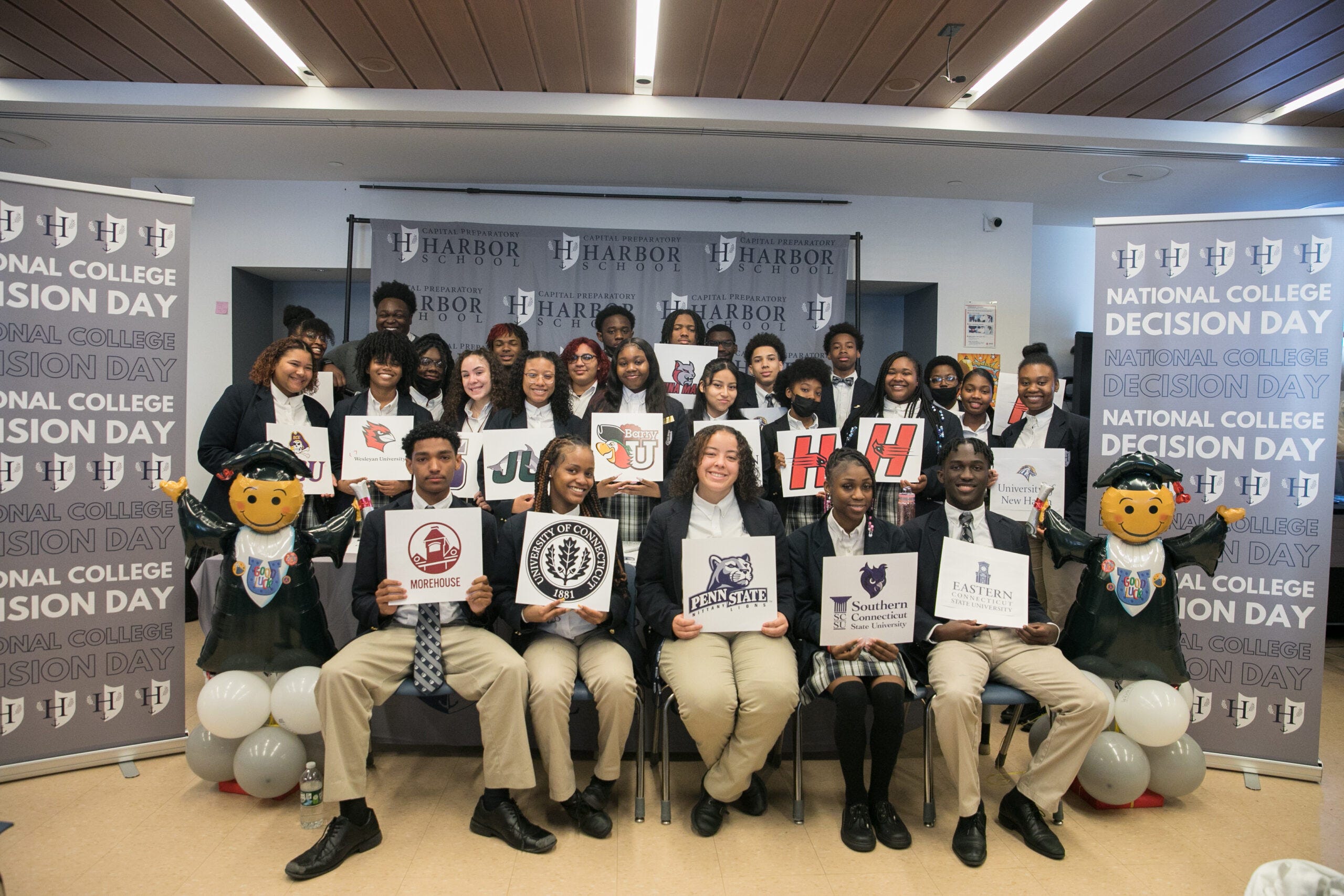
Dr. Steve Perry is not a fringe figure in education. He’s a charismatic, nationally known school founder whose Capital Prep schools in Bridgeport and the Bronx have changed the life trajectories of thousands of students. So when his school ends up suing the state just to be funded, something has gone seriously wrong.
Late-stage political maneuvering, influenced by the unions and local school boards, ended the Middleton, CT’s charter school’s opportunity for funding this year. Needless to say, Dr. Perry is battling to get his kids the education they need.
I lay out the full story in my Forbes column. The takeaway here is simpler: when charter laws are weak and vague, politics fills the vacuum—and even exceptional schools led by proven educators like Steve Perry are forced to fight just to exist.
This would be an ideal issue for the current—and likely last—Secretary of Education. Linda McMahon’s pedigree in Connecticut, coupled with the fact that her Department administers the Public Charter School Grant program, which Connecticut applied for and received funds to support high-achieving charter schools, could make this an issue that merits federal attention.
The National Conversation Worth Having
It was striking to see so many U.S. Senators engage seriously—on the record—in a national conversation about education freedom.
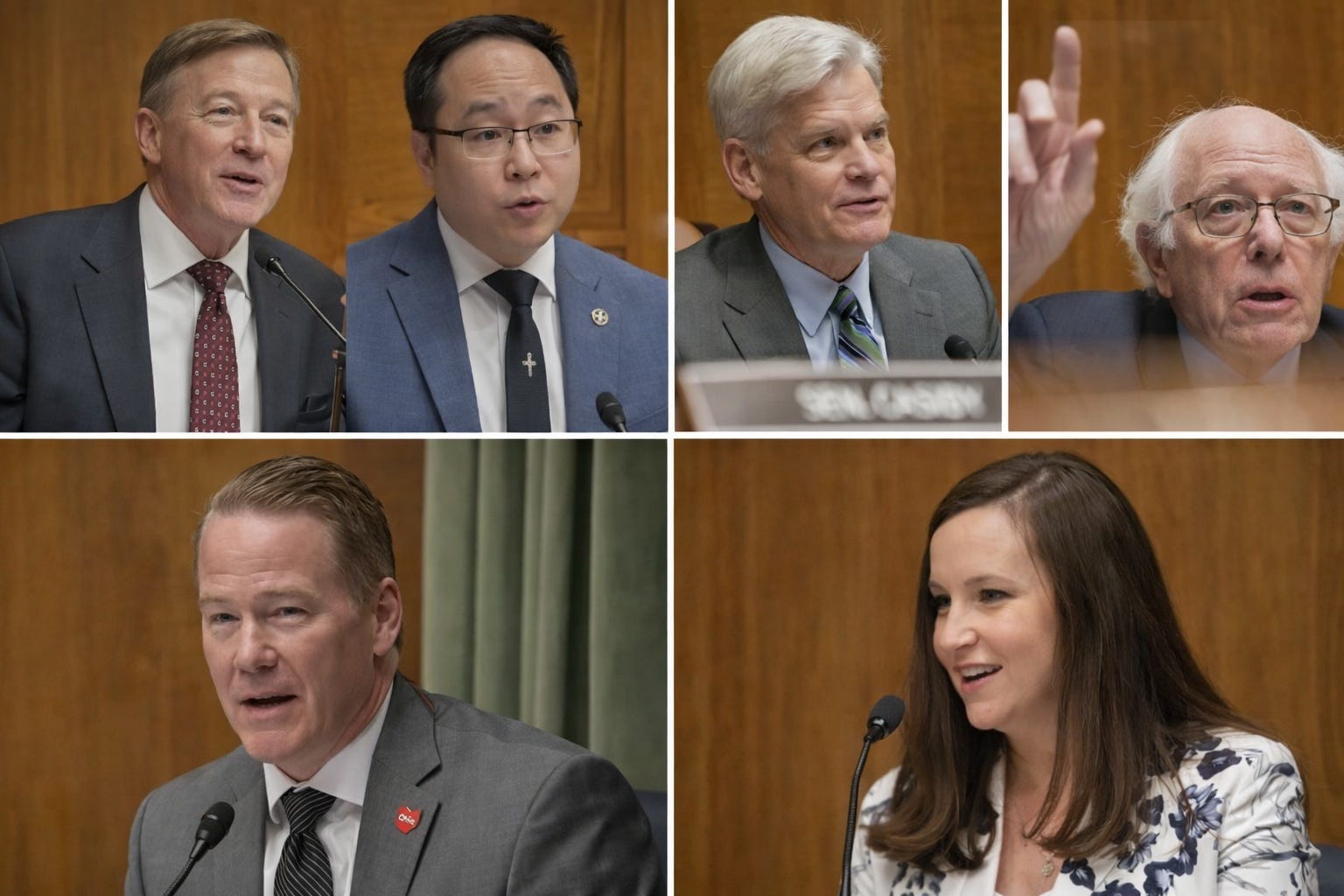
Ohio’s Jon Husted has been pressing this issue long before it was politically fashionable, a point underscored in recent coverage detailing how he’s taken the school choice debate to a national stage. Credit is also due to Bill Cassidy for convening a Senate hearing that actually mattered—one that drew strong attendance from members of both parties. While senators such as Bernie Sanders disagreed with the proposed solutions, they nonetheless acknowledged the core problem. Sanders himself stated plainly that schools are doing terribly. Andy Kim echoed that concern, noting his own struggle with the answer while recognizing that far too many schools are failing students. That level of bipartisan candor is a meaningful signal.
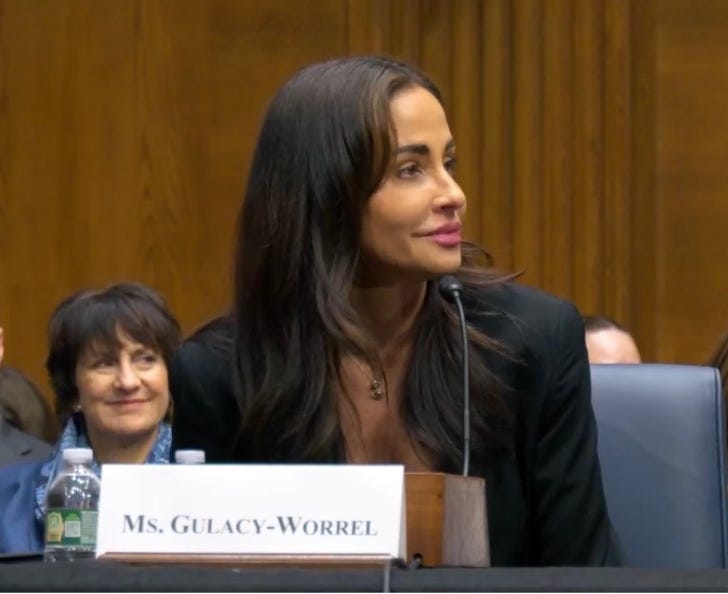
The hearing was grounded not just in policy, but in practice. Cris Gulacy-Worrel offered compelling testimony, arguing for education models that meet students where they are and respond to their real needs—an approach that reflects what families and educators have been calling for across the country.
Disagreement on solutions remains. But agreement on the problem—and a willingness to say so publicly—is progress.
A Big, Beautiful Step for Parents — and the Work Ahead
The Educational Choice for Children Act (ECCA) is one of the most significant federal school-choice advances in decades. At its core, ECCA creates a national, voluntary framework that allows states to expand education opportunity by enabling scholarships that support a wide range of options—public, private, charter, and more—while respecting state leadership and local control.
Why it matters is simple: ECCA helps close gaps where state systems have fallen short, giving families access to choices that better meet their children’s needs. It is a powerful accelerant for parent power—and the momentum is real.
So far, 27 states have opted in, thanks to an extraordinary patchwork of advocates, organizations, and leaders across the country who worked state by state to secure gubernatorial support. That’s no small feat. But there is more to do.
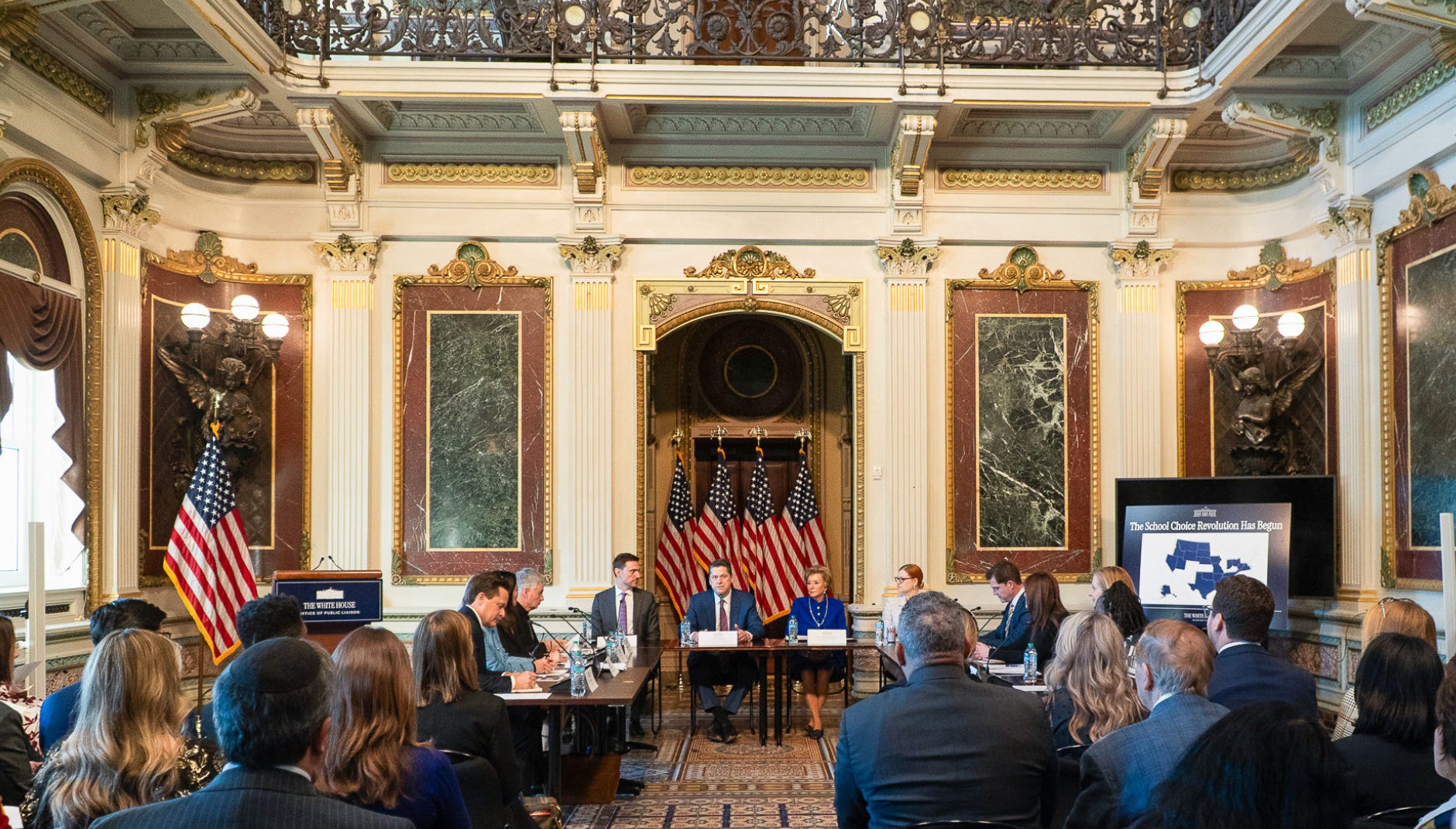
As part of the so-called Big Beautiful Bill, ECCA gives parents a big, beautiful choice. This week, the White House convened education choice advocates and practitioners—many of whom have been active at various points over the last three decades building the school-choice movement. The administration also launched a new website highlighting which states have opted in, making it clear where families and organizations are eligible to participate—and calling out those states that have not. You can learn more about it all through the Invest in Education Coalition.
All of this is exciting—and important. But it’s also critical to be clear-eyed. ECCA is necessary, but it is not sufficient. States cannot rely indefinitely on privately funded, tax-credit scholarships to do the work of states that control the lion’s share of public funding necessary to see a thousand flowers bloom and millions of children benefit.
Every state must ultimately commit to full and fair funding that follows the child.
As David Hardy, founder of Boys’ Latin, has famously said: “It’s public money and it belongs to the kids.”
That’s the next frontier. And it’s the one we should all be fighting for.
Move Over Snow, You’ve Got Nothing on the Grass….. Roots, That Is
I’m grateful to all of them—all of you—who get up every day and move mountains for kids, even when it would be easier, and warmer, to stay home and watch the next episode of whatever it may be you watch.
At the Center for Education Reform, we’ve been talking about parent power for thirty years and provide the only parent-friendly and interactive platform to help parents understand what power their state affords them—and if they don’t, what to do to get it. It has sparked parent revolutions, policymaker competition, and secured policy implementation. Bookmark the Parent Power! Index and share!
Signing off from snowy DC - Jeanne