

Education Opportunity Doesn’t Depend on Who Wins an Election
Whatever the outcome of the 2026 midterms, one thing is certain: the movement for education opportunity and innovation isn’t going away. Even a sweeping Democratic victory would do little to reverse a revolution that began decades ago.
America’s first modern private school choice program began in Milwaukee in 1990. The first charter school law followed in Minnesota in 1991. In 2002, the Supreme Court affirmed the constitutionality of the Cleveland school choice program. Today, at least 18 states have enacted programs designed to make education freedom available to all or nearly all students.
This train left the station long before COVID. The pandemic merely accelerated a movement already transforming American education. It belongs to no single party, administration, or political ideology.
And the most powerful constituency behind it isn’t sitting in Washington. It’s sitting around America’s dinner tables.
These are parents and families of every color, income, and political ideology. They are not easily counted or readily seen because they’re busy raising children, working, and building communities. But they pay attention. They vote. And history has taught us that attempts to take away their educational opportunities invite fierce resistance.
In the coming weeks, CER will be sharpening its 2027 Parent Power Index to identify the states expanding opportunity, empowering innovation across all kinds of schools, and meeting the needs of every learner—as well as those determined to stand in their way.
Education is a dinner-table conversation, not a political football. Politicians who forget that do so at their peril.
New Voice for Opportunity
Speaking of movements that are bigger than an election, a new organization has entered the arena: the National K–12 Opportunity Association, led by President and CEO Anne Lesser and launched in cooperation with Invest in Education, which this week is convening hundreds of people who have led the fight to ensure that tax dollars should work for the people who earn them—and that more children deserve access to the education that’s right for them.
Beginning in 2027, the Federal Scholarship Tax Credit will give eligible taxpayers a chance to contribute to a qualified scholarship organization and receive a dollar-for-dollar federal tax credit of up to $1,700 for an individual, or $3,400 for a married couple filing jointly.
Think about that: instead of simply sending those dollars to Washington, taxpayers can help create educational opportunities for children. Scholarships can support eligible expenses such as tuition, tutoring, special education services, and other learning resources.
As Invest in Ed Founder Tony deNicola remarked at the Power of Innovation Summit,
“It’s a free gift. Do you want your money to go to Uncle Sam or do you want it to go help a local school? Do you want your money to stay in the community or do you want it to go to something that you can’t direct in DC?”
Got it, Governors? It’s an opportunity to put money to work for children and families, not a partison issue. Why wouldn’t every state want to participate? Why wouldn’t anyone who cares about children want families to have access to more of what they need?
This should be embraced across party lines. Children in public and non-public schools can benefit, and the needs this program can help meet don’t disappear at the edge of a congressional district or a party platform.
Congratulations to Tony, Anne, Invest in Education, and the many people who have worked to make this opportunity possible. Now comes the hard work: making sure taxpayers know about it, scholarship organizations are ready, and families can actually benefit.
A Direct Lesson About Direct Instruction
Why does opportunity matter so much? Here’s a tale of bureaucracy telling generations of families to accept an education system that has most often ignored what works, and then telling them to stay put.
I’ve been listening to Emily Hanford’s latest Sold a Story episode, about the results of Project Follow Through, a federal experiment that compared approaches to teaching children.
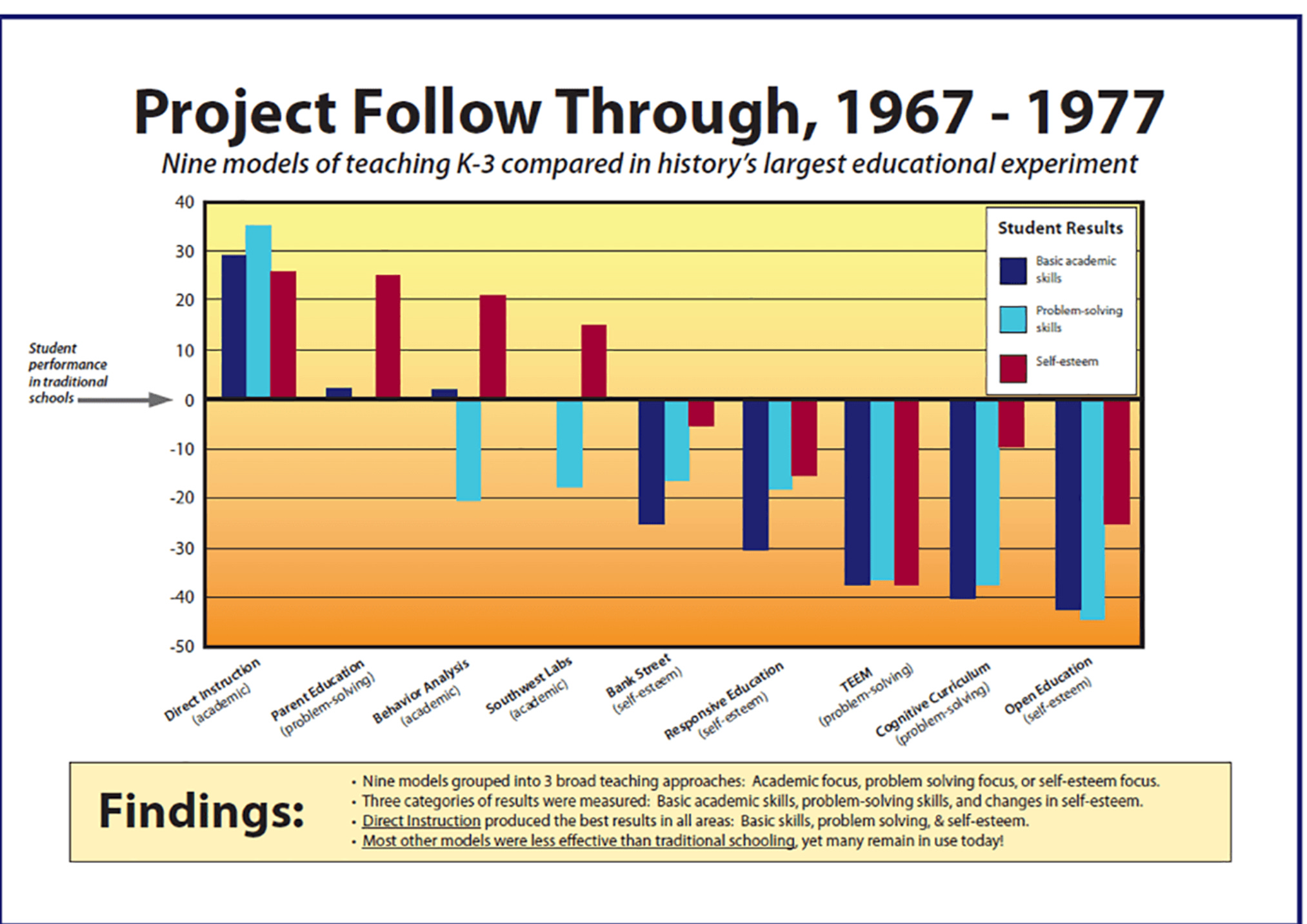
The findings were remarkable— Direct Instruction was the only model with positive results in every category measured. It performed best not only on academic achievement, but also on measures of self-confidence—something it wasn’t even intended to do.
Why? The children were learning. They knew they were smart.
You would think everyone would have wanted those results widely disseminated. But, as Hanford recounts, the Office of Education had a preference as did the developers of programs that didn’t perform well. So they shut it down. They not only hid the results, but backed an inaccurate critique of the government’s report.
This is what bureaucracy creates: people far away from our children deciding which answers are acceptable—and what happens when the research doesn’t produce the answers they want.
What was the opportunity cost to millions of students all these years. I shutter to think.
Same Book, Different Chapter
The Classic Learning Test is taking the nation by storm. But some people just can’t abide the change that’s happening—especially when it takes us back to the basics.
This week, The Atlantic took aim at the test, calling the nation’s only college admissions test rooted in original ideas and texts “dumbing down.” Let’s not forget that renewed engagement with classical learning helped propel Europe out of the Middle Ages and into the Renaissance.
The Classic Learning Test draws on the great works of literature, history, and philosophy—the ideas and original texts that have shaped civilization. You won’t find questions like that on the SAT or ACT, both of which have declined in strength and purpose.
Whatever approach we take to learning—whether it involves a great teacher, a great book, or the latest technology—children need real knowledge. They need to encounter ideas, understand where they came from, and learn to think about them. If we lose that foundation, we risk entering a dark age of our own.
Listen to Classic Learning Test founder Jeremy Tate on the importance of bringing this kind of learning back to students:
When you don’t like, bury it
The political wranging over innovation continues with a The New York Times article on Alpha School, the AI-powered school model that promises children can learn more in less time — and has plenty of takers who agree.
Critics who love the traditional system just can’t get enough of the criticism candy, as is evident if you look at X these days.
Yes, Alpha is getting hit from all sides. Change is hard, and maybe not everyone will benefit. Okay. That’s life. But after listening to Hanford, it’s clear that resistance hits hardest when challenges to conventional education approaches take root.
Consider the pairing. The Classic Learning Test looks to the wisdom of the past. Alpha is experimenting with the technology of the future. Both are challenging assumptions about how education should work.
Opportunity is here to stay
And here’s the corollary: while the arguments continue, people are building new opportunities for children.
The Learning Lounge in Pine Bluff, Arkansas—our 2026 $1 million Yass Prize winner—recently hosted Arkansas Education Secretary Jacob Oliva and Edie Stewart of ForwARd Arkansas to share its rural microschool model and community.
Founder Kanesha Adams and her team saw a need in their community and decided to do something about it. Their work is a reminder that education opportunity begins with people who believe children deserve more and are willing to build it.


Have You Read It Yet?
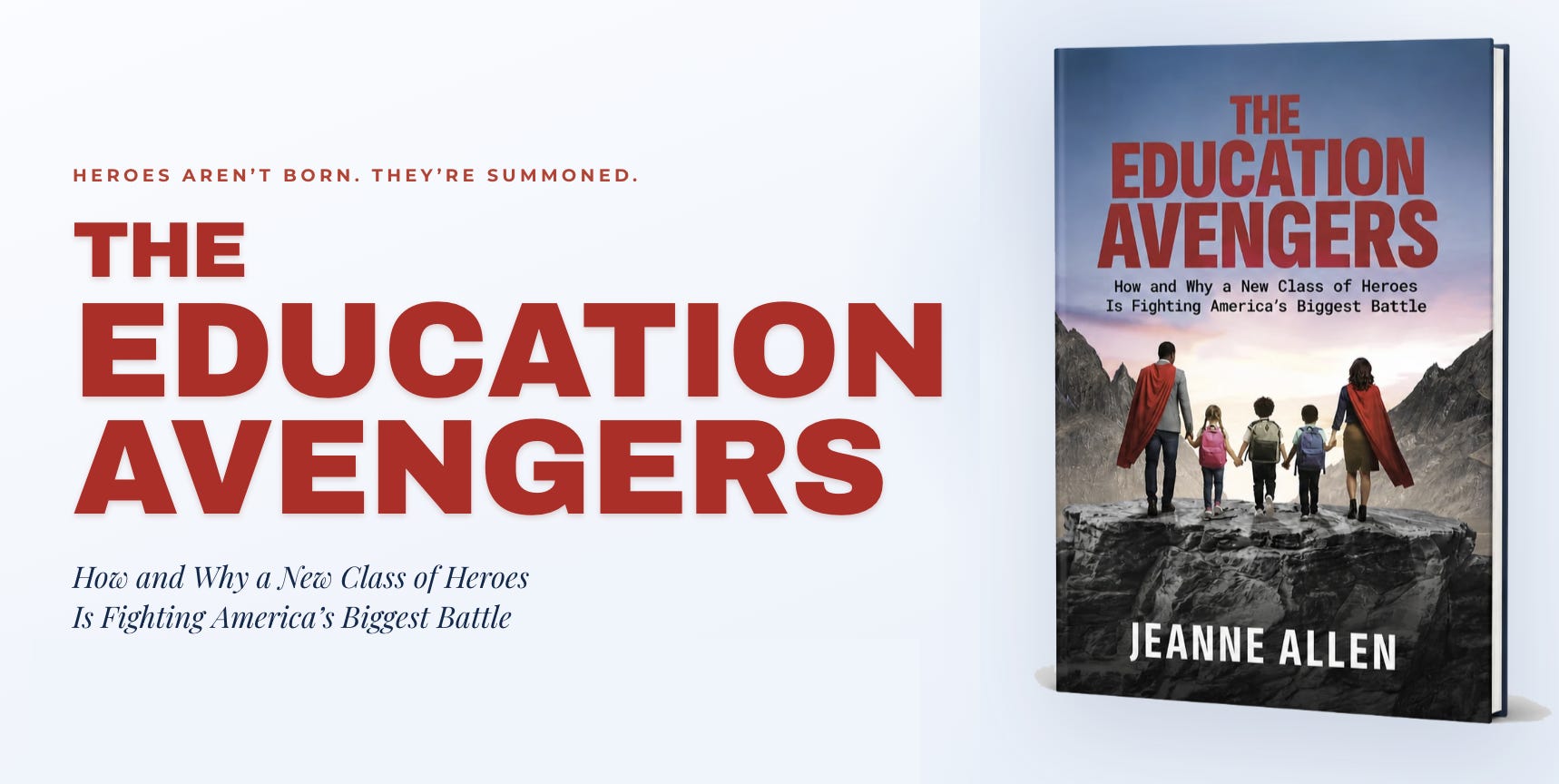
My book, I mean! The Education Avengers.
As I travel around the country and talk with groups big and small, I’m struck by how many people the book resonates with. More importantly, I’m struck by how many believe that the people—and the science and philosophy behind what they do—could help us find a more cohesive approach to what we all do for children.
Maybe not world peace. But perhaps something close to it in education!
After all, who can resist the Avengers? They’re different from one another, and each has struggles of their own. But when they come together, they’re victorious.
I think the same is true of the people in this book—and the countless others working every day to make education better for our children.
Read it, and let me know what you think.
And remember, get out and vote and put the welfare of those you love first.
- Jeanne