
Storming the Bastille

Within ten days of one another, Americans celebrate Independence Day and the French celebrate Bastille Day.
Both began with a simple conviction: that power belongs first to people, not to institutions. (Though this photo I’ll admit seems incongruous to that point!T)
French revolutionaries stormed the Bastille to secure liberation and freedom, influenced by our own American revolutionaries. The Marquis de Lafayette, who is celebrated in the Square bearing his name across from the White House, returned from America convinced that our ideals of liberty, representative government, and natural rights should apply to his homeland.
The Statue of Liberty, so beautifully crowned with fireworks on July 4, was a sign of our (at least then) shared commitment to liberty.
Fitting that in this month, we double down on where freedom really matters.
Education Freedom for Those Who Defend Freedom

One of the most promising developments in education policy this month—maybe even this year is moving through Congress, whose members are poised to consider the addition of a pilot program to the Fiscal Year 2027 National Defense Authorization Act, establishing educational choice scholarships of up to $15,500 to approximately 11,000 military-connected students to attend the school or educational setting that best meets their needs.
The homecoming photos above should be enough to help even the most skeptical reader understand why this matters. Families separated for months at a time bear extraordinary burdens in service to our nation. Their children shouldn’t also have to sacrifice educational opportunity because of the very mobility military life demands.
Education is a readiness issue. The Department of War has a critical opportunity to strengthen force readiness, retention, and family stability by modernizing how education reaches military families. Across the joint force, families too often face limited or uneven educational options because of remote installations, teacher shortages, inconsistent state requirements, and outdated learning models that fail to accommodate the realities of military life. Military families make extraordinary sacrifices for our nation, yet they often have the fewest educational choices because of the very service they provide.
No group has done more to defend the ideals of liberty, opportunity, and freedom than the men and women of our Armed Forces—and the families who serve alongside them. Yet every permanent change of station can mean another disrupted education, another loss of academic continuity, another search for a school that meets a child’s needs, and another source of stress on families already carrying an extraordinary load.
Educational freedom for those who defend freedom is more than good policy. It is an investment in military readiness, family stability, and a recognition that our nation has an obligation to match its gratitude with action.
Back off Arizona Opportunity
Arizona has become the nation’s latest battleground in the fight over educational freedom—and not simply because teachers’ unions continue to oppose Education Savings Accounts. Having failed to stop the program legislatively, the Arizona Education Association and its allies have shifted to a new strategy: rewriting the rules that govern it.
Their vehicle is the Protect Education Act (I-09-2026), a ballot initiative that would fundamentally reshape Arizona’s ESA program by limiting eligibility, restricting how families may use scholarship funds, imposing new requirements on participating private schools, and repealing important legal protections that have helped preserve the program’s independence. Supporters describe the proposal as greater accountability. Opponents rightly argue it would transform a parent-directed education program into one increasingly governed by the same regulatory framework families deliberately chose to leave.
Many of Arizona’s grassroots education freedom leaders, including Love Your School founder and national leader Jenny Clark, believe negotiating those restrictions is a mistake. Some in school choice strangely sought to negotiate additional regulations in hopes the Arizona Education Association and its allies would abandon the ballot initiative.
Ridiculous. Conceding core principles only encourages more demands.
Negotiating with one’s enemy—“terrorists,” as former U.S. Secretary of Education Rod Paige once famously called the teachers’ unions because they held elected officials politically hostage unless they complied with the unions’ demands—is folly.
The Arizona teachers’ union has preyed on people’s fears, convincing voters to sign petitions calling for new controls on Education Savings Accounts to allegedly safeguard students from bad things happening.
It’s all in the playbook. Create fear, control voters and thus you control elected officials. It happens mostly when education reforms become politically successful; the strategy shifts from eliminating it to regulating it. It has happened for decades.
But know this: not one negotiation with opponents in the history of the education reform and school choice movements has resulted in more opportunity for families. Not one.
And you don’t sustain “best in class” for opportunity and innovation by giving in.
Returning Education to the States—Without Permission
Another significant education development this month received surprisingly little attention outside Washington.
The House Education and Workforce Committee introduced a package of ten bills designed to permanently codify the Trump Administration’s effort to right-size the U.S. Department of Education by transferring many of its statutory responsibilities to other federal agencies better equipped to administer them. Rather than simply relying on executive action—which any future administration could reverse—the legislation would place those changes into federal law, ensuring that essential programs continue while eliminating layers of unnecessary bureaucracy.
At the same time, the Department of Education has now approved its fifth “Returning Education to the States” waiver, giving Arkansas state greater flexibility over how it uses federal education dollars. That is welcome progress. But it also raises the obvious question: shouldn’t states be able to manage money on behalf of their own children without having to ask Washington for permission?
As I noted in media comments this week, the House package seeking to codify the transition of various education programs to other agencies is the right move. It’s always too easy to reverse course on administrative changes when political winds change. Enacting these measures will help ensure that the Education Department’s overreaching bureaucracy no longer stands in the way of advancing opportunities for kids.
Innovation thrives when authority sits with families, entrepreneurs, and educators—not within a 4,000-person federal agency.
With challenging midterms coming up, this will be good sport watching in Washington.
Testing... 1, 2, 3... Testing
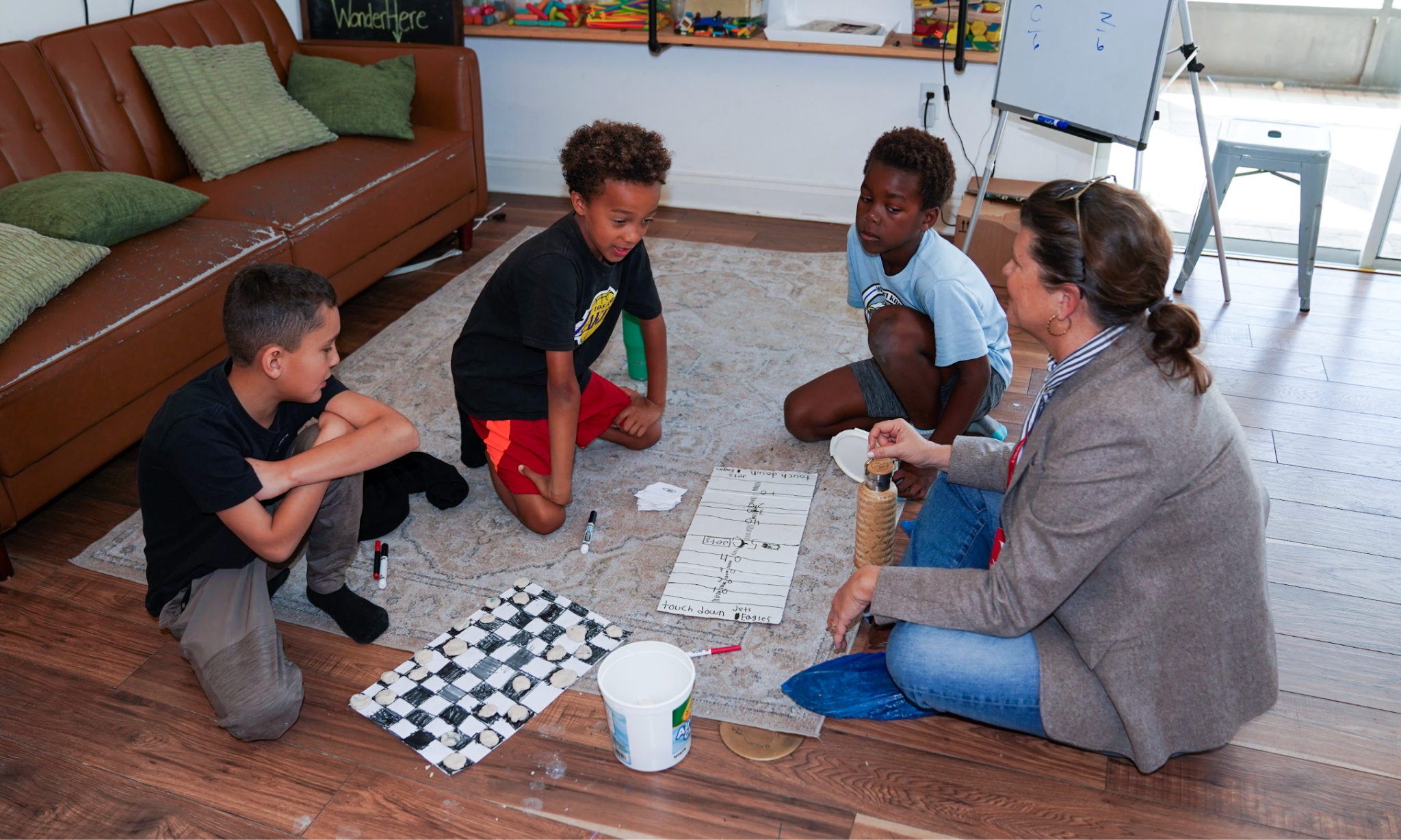
There are few ideas I have supported more consistently over the past four decades than high standards and meaningful accountability.
Good assessments matter. Parents deserve honest information. States should establish clear expectations for the public schools they operate and to which they assign children.
But somewhere along the way, many people began confusing accountability with uniformity.
Those are not the same thing.
Imagine opening a school whose mission is to teach children with severe dyslexia to read after years of failure. Or a charter school built specifically for teenagers who have already dropped out or fallen dramatically behind. Or a school where students learn through curiosity, authentic demonstrations of knowledge, and deeply personalized instruction.
Now imagine judging all three by exactly the same government-constructed metric.
That is the debate we should be having.
Educational freedom and accountability are not competing ideas. They go hand in hand. The real question is: Who is doing the accounting?
When government assigns children to schools, it has a responsibility to measure the performance of the system it operates. But when parents voluntarily choose a school—and remain free to leave if it no longer serves their child—the government’s role changes. It should provide transparency, protect taxpayers, and enforce the law.
It should provide sunlight, not a stifling cloud.
Parents become the primary source of educational accountability because they exercise the most powerful accountability there is: the freedom to choose.
I’ve been thinking a great deal about this distinction lately because I believe it is becoming one of the defining education debates of the next decade. In a forthcoming Forbes essay, I explore why schools with different missions should not all be judged by the same government metric, why accountability is more nuanced than we’ve made it, and why educational pluralism requires different ways of measuring success.
I hope you’ll read it—and tell me what you think.
Until Next Week...
We began today’s Forza on Bastille Day, reflecting on the enduring idea that liberty belongs to people, not governments.
America’s birthday celebration may be over, but the work of preserving—and expanding—freedom never is.
It was a wonderful week of celebrating our nation’s founding. Now comes the harder, more rewarding work of making America’s promise of opportunity, self-government, and human flourishing more real for every child, every family, and every community.
Happy, happy birthday, America. Sorry to be sappy but I love this country. And I’ll keep celebrating it and what it stands for, all day long. Jeanne
P.S. Did you order your copy of The Education Avengers yet? Operators are standing by! Visit MyAvengers.com to find out why it will be your favorite book of the year, and how to order!
👇👇👇
https://substack.com/@eminkeven?utm_source=share&utm_medium=android&r=1y9iuq
"Hello! As a teacher, I've been journeying into children's minds for years; I have 9 books on children's literature and 3 on education and reading habits. On this platform, I'm making a fresh start to share my experiences with you and create a pleasant space for discussion.
I hope my writings will touch you in some way. I would be very happy if you would browse my page and join me on this new journey with a subscription. Looking forward to exchanging ideas and opening doors to new worlds!"