
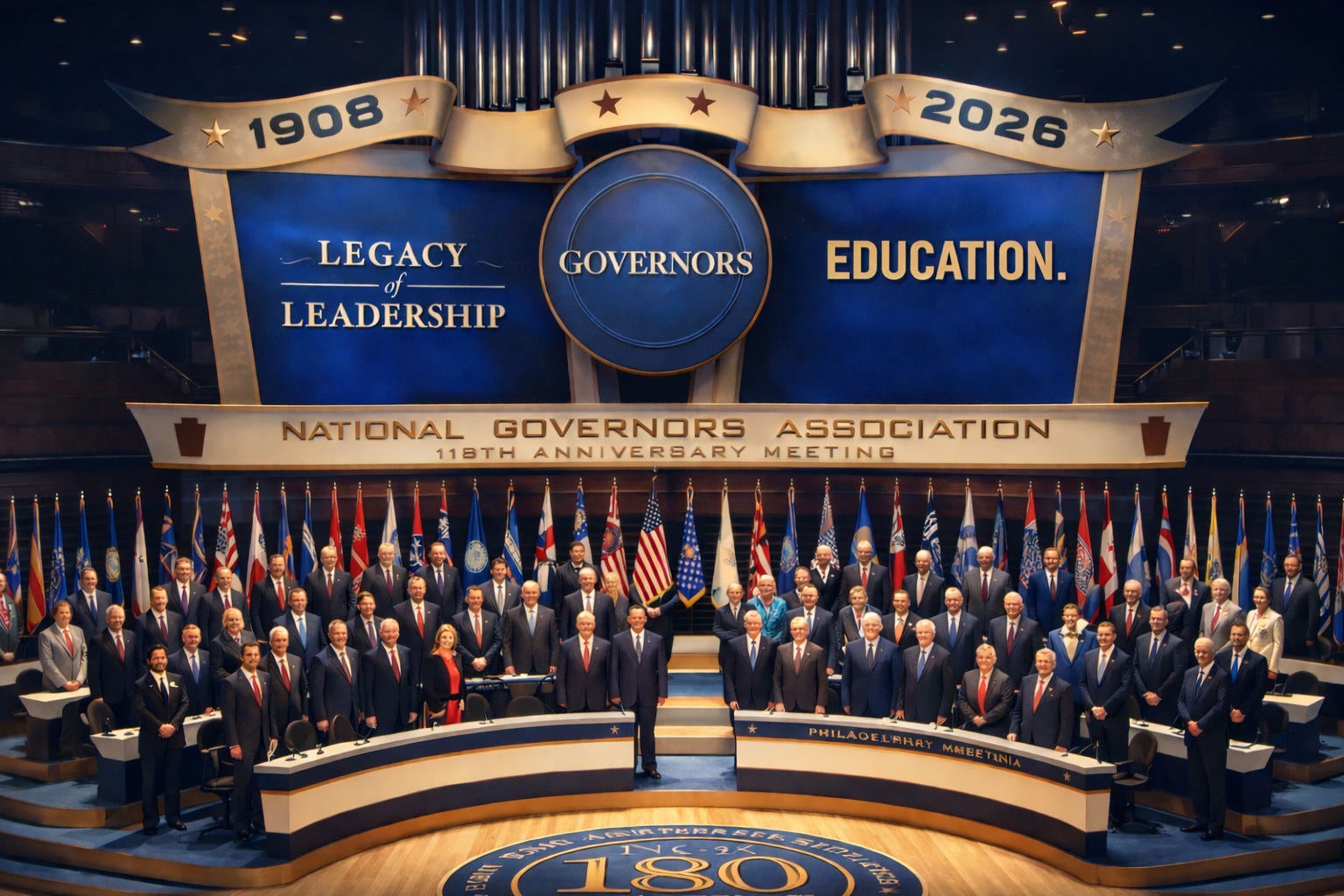
Governors are convening in Washington this week to debate the nation’s most pressing challenges. Budgets. Borders. Energy. Growth.
Here’s one more: education.
Presidents’ Day week is as good a moment as any to issue a simple challenge. The leaders we honor were not merely officeholders. They were builders. They strengthened institutions that would endure.
Which brings us to the Presidents’ Day Proverbial Test: Are today’s leaders strengthening the institutions that secure liberty — especially education?
The Founders built a new structure of self-government grounded in shared principles and hard-won freedom. They protected private enterprise, reinforced civic institutions, and encouraged the founding of universities to prepare citizens for participation in this new experiment.
Education was not peripheral to that work. It was foundational. They understood that liberty requires knowledge — that freedom endures only when citizens are informed and institutions are strong.
That principle remains. The innovations unfolding across the country today — whether mastery-based models, classical curricula, or adaptive technologies — are not departures from our heritage. They are extensions of it. Take a look.
Alpha and the Omega
Across the country, schools are rethinking delivery while keeping the canon front and center. The concern many parents voice is familiar: When technology enters the classroom, do history and civics recede? Does screen-based learning dilute serious study?
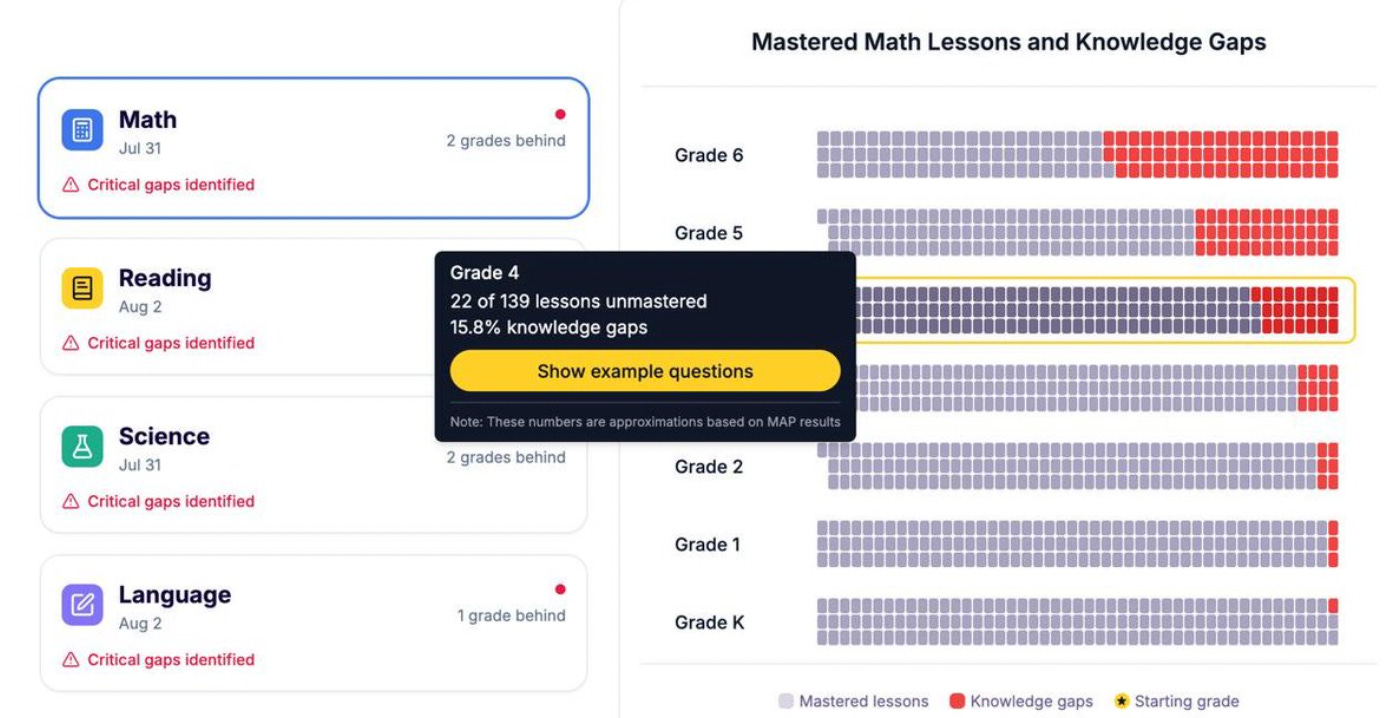
Today, kids can learn faster, grow more per year, and feel more rewarded and successful when schools pair high-quality instruction with adaptive, personalized tools — and Alpha School has brought that approach into the spotlight. Alpha uses adaptive software to tailor core academics to each student’s pace and mastery, compressing the traditional academic day into focused blocks while freeing afternoons for projects, communication, and physical pursuits.
In a recent post, Silicon Valley technologist and parent Angus Davis described his family’s experience. At Alpha, students advance only after demonstrating mastery — often at a 90 percent proficiency standard. Seat time does not move them forward. Mastery does. The software keeps students in what he called the 80–90 percent “sweet spot,” stretching them without overwhelming them. Progress is visible. Diagnostic testing is routine, not ceremonial. Growth is measurable, not abstract.
“Today, kids can learn faster, grow more per year, and feel more rewarded and successful by giving them a personalized, adaptive learning tool. Alpha is one school that is pioneering such tools and popularizing them. There is nothing preventing other schools from adopting such tools or following the trail that Alpha has blazed.”
He is right. You do not need Alpha to accomplish that work. Innovation is not always invention. Sometimes it is doing a tried-and-true thing with greater fidelity and clearer expectations.
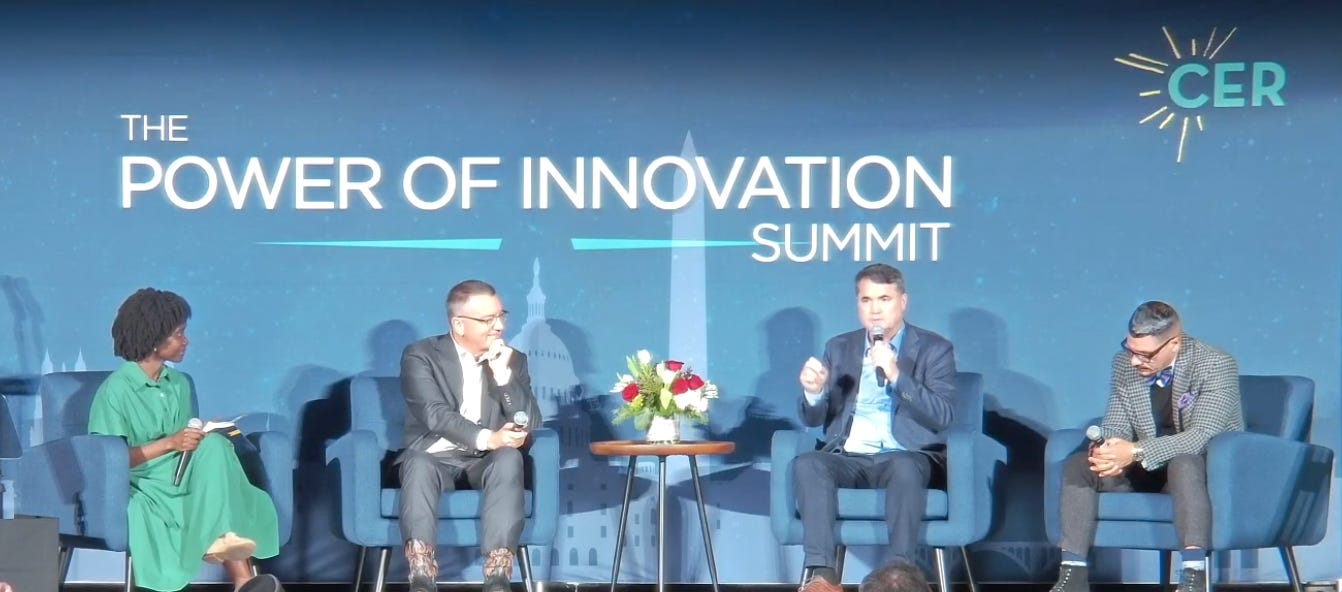
That was the spirit of the conversation at #POIS25 this past December, when Alpha founder Joe Liemandt joined Capitol Prep founder Dr. Steve Perry, and Steve Grubbs of VictoryXR to discuss delivery, standards, and AI.
The method may vary. The mission should not.
Watch here.
Different Models. Same Mission.
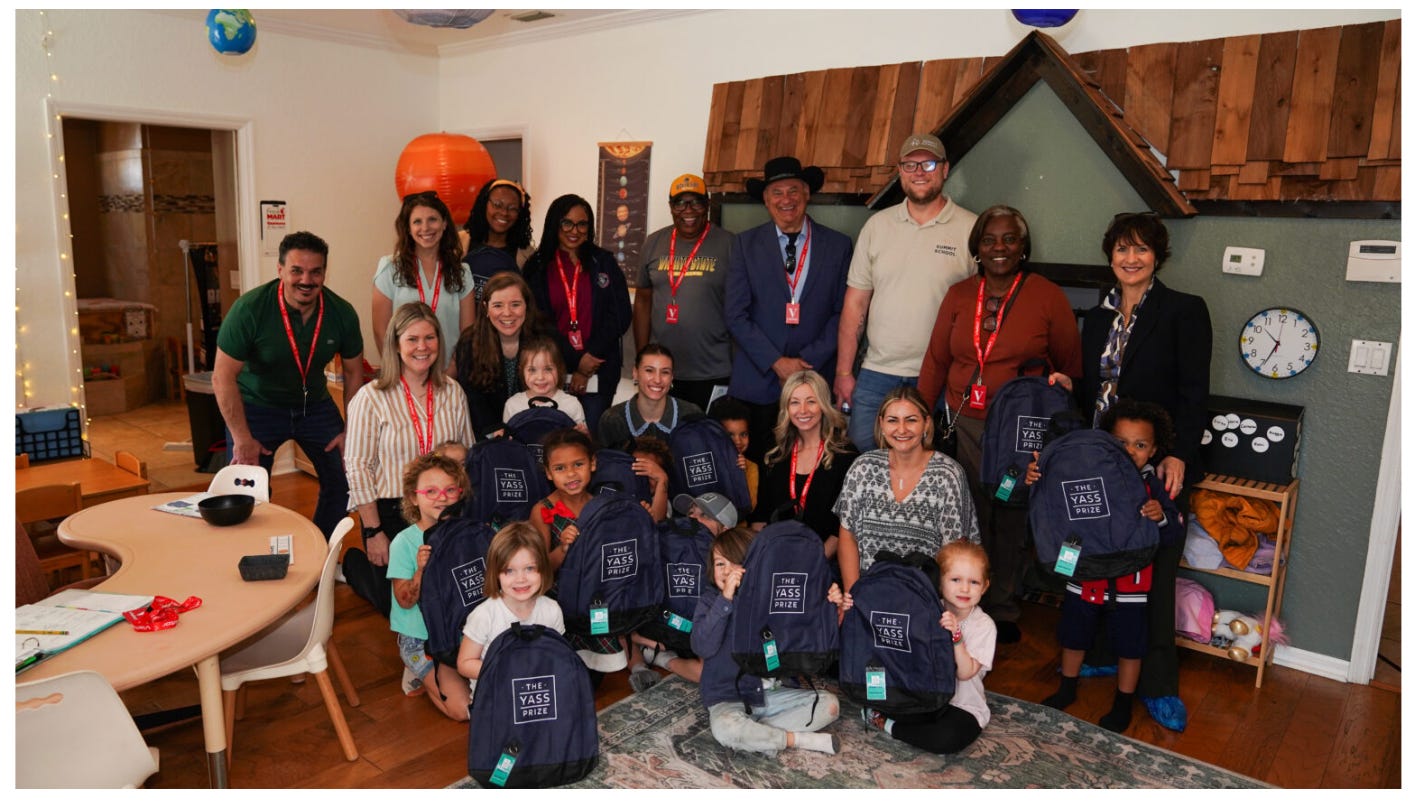
Last week’s Roadshow for Opportunity—when Yass Prize teams visit prior awardees — offered a clear reminder: schools can look very different and still pass the Presidents’ Day Proverbial Test.
The test is simple: Are you building with purpose? Are you strengthening the institution of education in a way that secures learning?
WonderHere
At WonderHere, the name is not branding. It is a model intentionally centered on ensuring children never lose their sense of wonder.
Led by former public school teachers, this Florida school blends Montessori principles, project-based learning, and hands-on exploration. Students move by developmental readiness, not rigid grade levels. The farm is part of the curriculum. Stewardship is lived, not lectured.
Child-centered does not mean content-light. The model is coherent, intentional, and serious about learning.
Chesterton Schools Network
The Chesterton Schools Network, winner of the $1 million Yass Prize, answers the same test in a very different way.
Its intentionally classical, tech-light model is rooted in primary texts, ordered inquiry, and the formation of intellect and character. Students read Shakespeare, the Federalist Papers, and foundational works of philosophy and theology. Truth, goodness, and beauty are not slogans. They structure the day. The model rests on a simple conviction: young people are capable of more than we often assume.
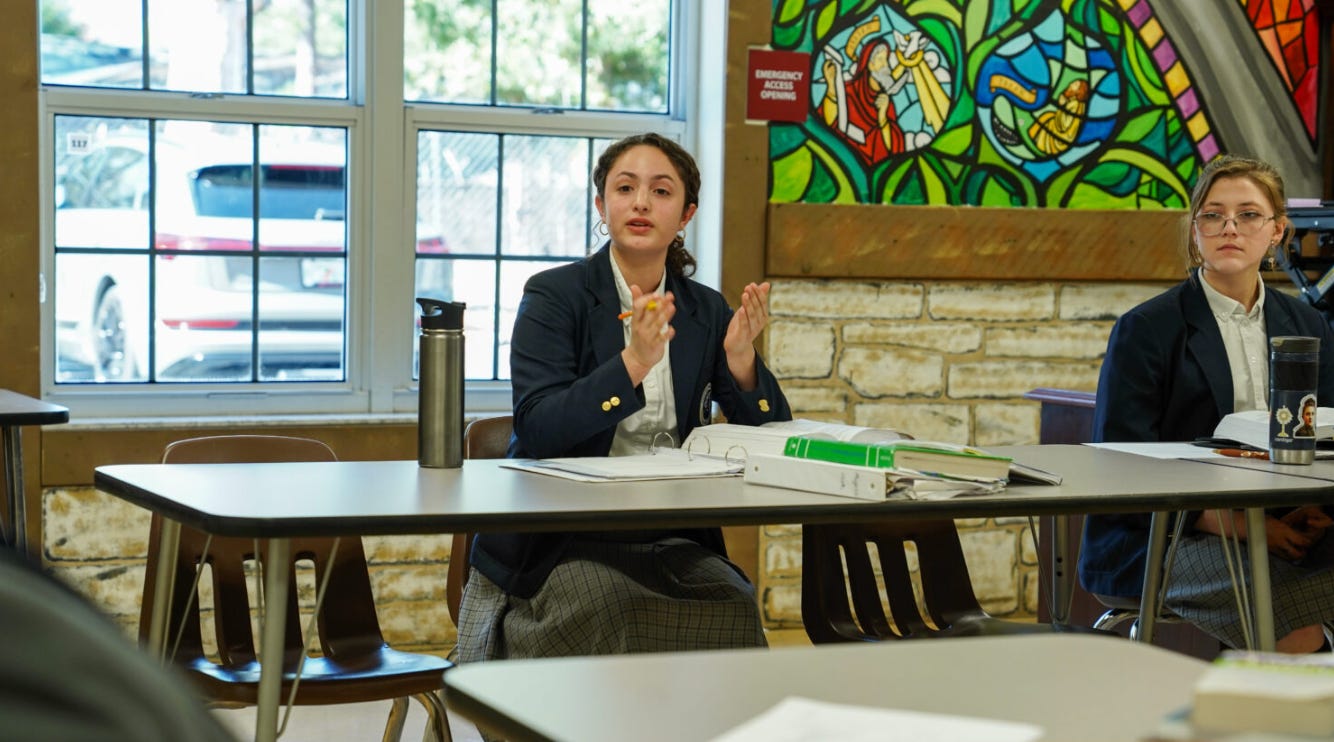
Now nearing 100 schools, the network demonstrates that clarity attracts families.
WonderHere and Chesterton differ in pedagogy, schedule, and structure. But both build with intention. Both align practice with purpose. Both strengthen — rather than drift from — education’s first principles.
Different models. Same mission.
Raising the Bar
The Presidents’ Day Proverbial Test does not apply only to schools. It applies to the standards that shape them.
The assessment sector is undergoing its own reckoning.
For years, the College Board SAT has been diluted, reshaped, and recentered in ways that blur what students actually know. What was once intended to signal academic readiness has too often become an instrument of accommodation — lowering clarity in the name of access.
Recent changes to the ACT only reinforce the concern. When standards drift, something more than cosmetic reform is required.
Enter the Classic Learning Test.
Founded by Jeremy Tate, CLT was built to realign assessment with substance. Its exams draw from primary-source texts in literature, philosophy, history, and theology. Students are not asked to skim fragments. They are asked to reason — to interpret complex arguments and engage enduring ideas.
CLT is expanding rapidly and is now accepted by hundreds of colleges nationwide. That growth signals something important: families and institutions are hungry for clarity.
The Presidents’ Day Proverbial Test applies to states as well: Are they strengthening the institutions that form citizens?
Florida Moves at Scale
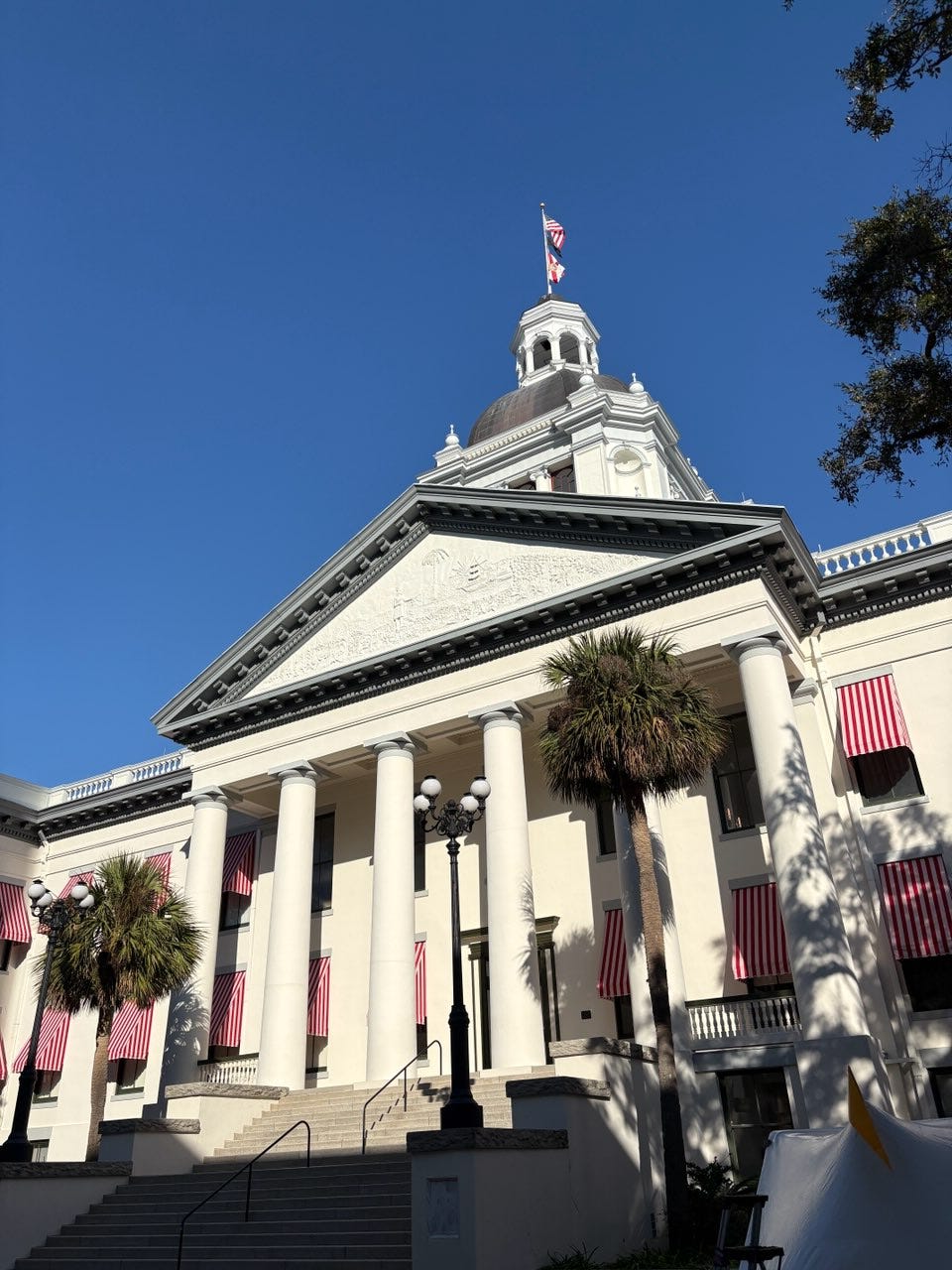
The Presidents’ Day Proverbial Test applies to states as well: Are they strengthening the institutions that form citizens?
Florida is answering yes.
Governor Ron DeSantis announced that to date, more than 21,000 teachers have now completed the state’s Civics Seal of Excellence Endorsement Course, each receiving a $3,000 bonus for advanced study in constitutional principles and the founding era.
Through the Civic Literacy Excellence Initiative, Florida has invested tens of millions of dollars in training centered on the Declaration of Independence, the Constitution, the Federalist Papers, and other foundational texts. The Civics Seal of Excellence rewards teachers who complete rigorous coursework, expanding student access to educators grounded in the substance of American government and history.
Many teachers were themselves trained in systems shaped by diluted standards. When what is tested narrows, what is taught narrows. Florida’s effort is a deliberate reversal — raising expectations, strengthening preparation, and restoring civic seriousness at scale.
States, too, can pass the test.
Perhaps no surprise that…
The National Assessment Governing Board is updating the civics framework for the National Assessment of Educational Progress (NAEP), with public comment open through March 27.
NAEP measures civics knowledge in grades 4, 8, and 12. What the framework requires influences what gets taught.
If you care about what you have been reading here, now is the time to weigh in.
Please be sure to submit a comment.
I was in the Sunshine State last week and saw firsthand that the entrepreneurial spirit is alive and well — serious about getting education right, from schools to civic leaders to state leadership itself.
They are not alone. Governors in Washington this week have an opportunity — and a responsibility — to keep education near the top of the agenda and to raise the bar in their own states. In the laboratories of democracy, leadership shows up in results. The bar should be high. It should get higher.
As G.K. Chesterton wrote, “Education is simply the soul of a society as it passes from one generation to another.”
See you around town,
Jeanne