
It Should Be Hard to Be Cynical About America
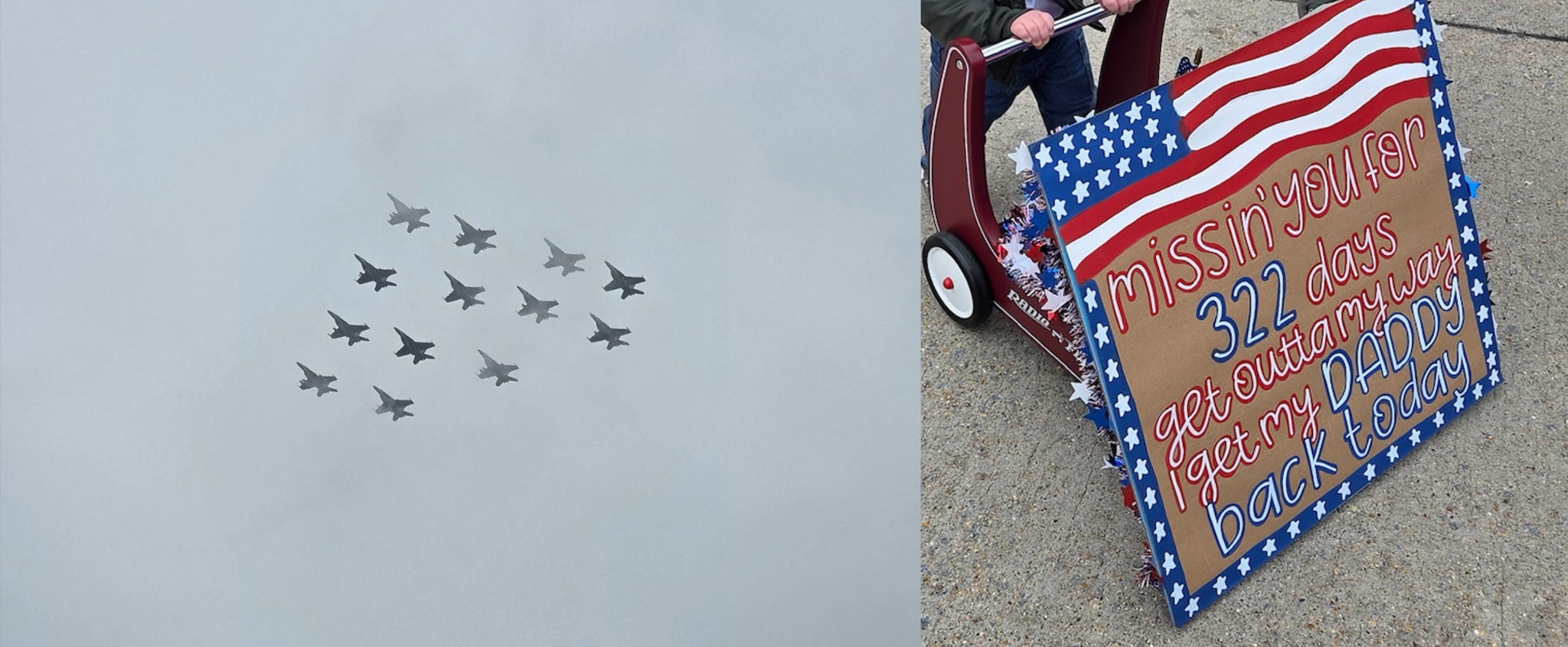
The pictures above, like most pictures, tell a thousand words.
Watching the flyover overhead and waiting with someone very special to our family after nearly a year serving his country with the United States Navy, it is hard to be cynical about America when you witness something like that — the joy, the pride, the sacrifice, the gratitude.
Ours is a nation that still puts duty first. A nation that values freedom. And while most of us benefit from that every day, we often forget the thousands of military families quietly living this reality year after year.
It is one of the great ironies of America that we can openly argue about how to improve our country while others defend it around the world. We can debate what our children should learn, what freedom means, and whether our institutions are succeeding while families across the military community sacrifice daily to preserve the very right to have those arguments.
As my friend and colleague Emily de Rotstein, head of the Chesterton Schools Network reminds us often that truth and beauty are essential to raising the next generation.
If you feel cynical at times, just watch the homecoming video and think to yourself, could I do that? How much training, schooling, sweat and hard work made all that happen?
Education and hard work together help build resilience… 322 days of it. When you see what so many Americans have achieved because others defended the freedoms that made those achievements possible, in addition to being grateful, it’s hard not to accelerate your efforts to save education and preserve the role of the family in it, with even more determination.
Nobody Loves Your Child As Much As You Do
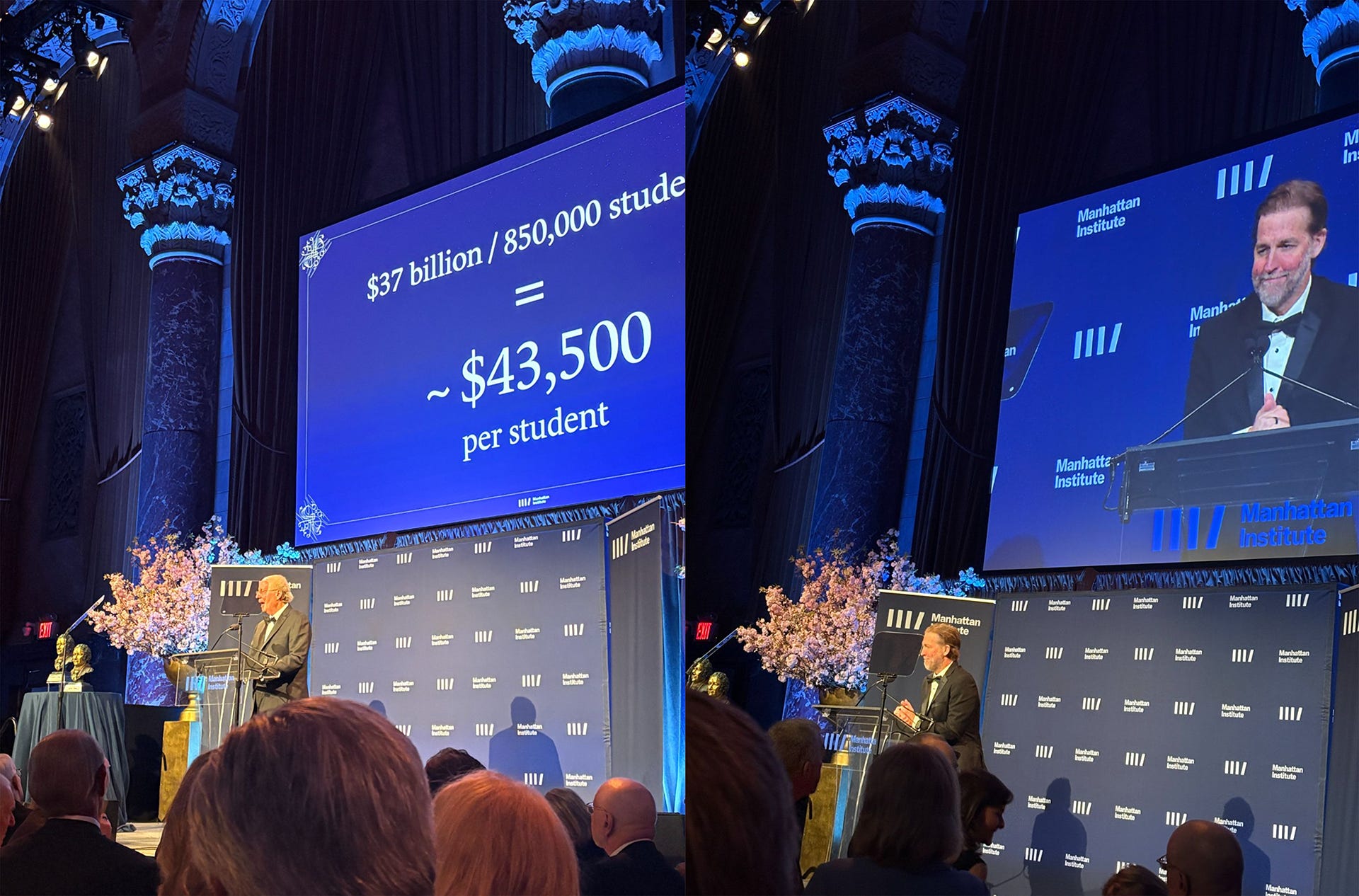
The week before this homecoming, the Manhattan Institute held what will likely be remembered as an anniversary dinner for the history books.
Former U.S. Senator and statesman Ben Sasse delivered the first remarks. As many know, Sasse is battling pancreatic cancer, and while innovative treatments and medicines developed in a nation that still allows discovery, entrepreneurship, and risk-taking have bought him precious time, he chose to spend part of that time speaking publicly about family, community, virtue, and responsibility.
The depth of his remarks about what we put first in our lives — and how much the smallest daily interactions shape the people we become — put much of what was to come for me over the next several days into focus. When he explained how much we must do to protect the next generation, how education factors into that, he brought down the house.
“Nobody loves your child as much as you do.”
In Sasse’s words, as the military families referenced above can attest to, “The virtues for a life well-lived are taught, modeled, and practiced in the daily life of society’s smallest but most important platoons … the family.”
That idea cuts directly to the core of why education freedom matters.
Institutions should exist to serve people, not the institutions themselves. Parents know better than anyone when something is right or wrong for their children. Families understand when a school is helping a child flourish and when it is not.
Investor, entrepreneur, and education philanthropist Jeff Yass took the stage after Sasse, with equally direct remarks. Yass, whose support for educational freedom and innovation has helped thousands of schools and students nationwide, highlighted that New York City now spends more than $43,500 per student each year — enough, as he joked, to educate every child well, allow them to attend a school of their choice, and make their mothers millionaires by saving the rest.
His remarks were featured in a Wall Street Journal opinion piece underscoring precisely that point: families know the disconnect when systems absorb extraordinary sums of money while outcomes remain unacceptable.
Systems do not love children. People do.
And increasingly, parents across the country are acting on that realization.
What High Standards Are — And Are Not
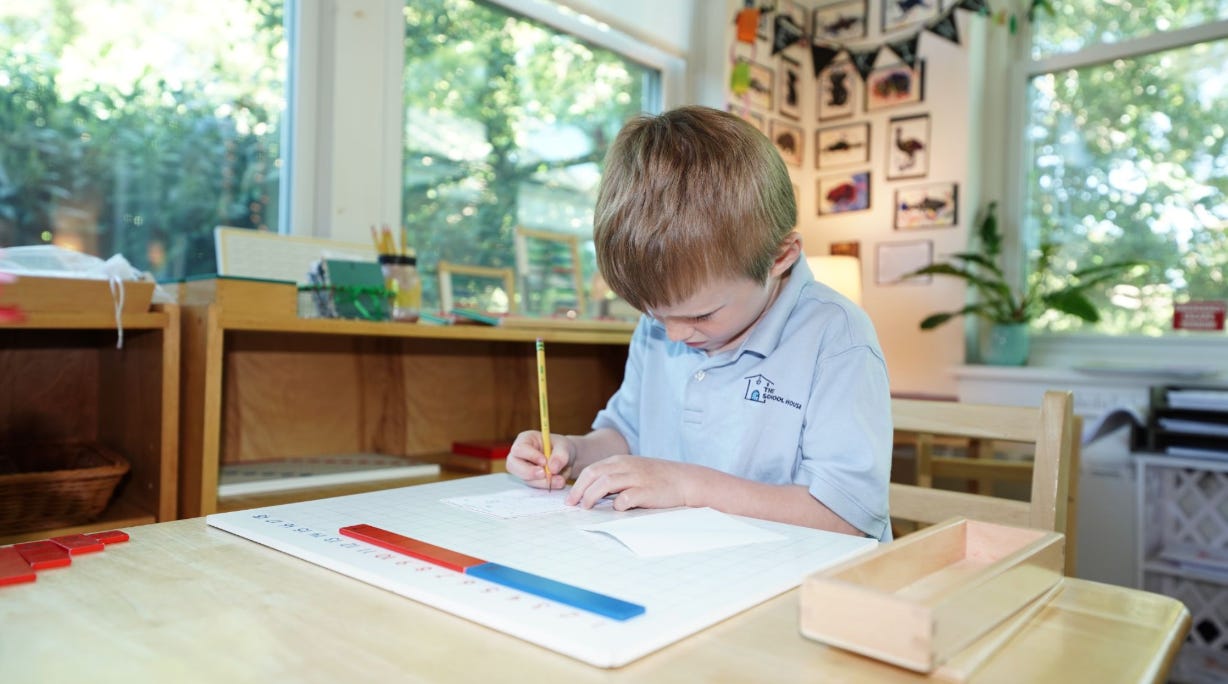
The day after the military homecoming, I visited The School House on Long Island, the final visit in the Roadshow for Opportunity, making stops along “Yass Prize Finalist Way.”
The School House is an extraordinary example of what happens when educators build around children, and blends the best of scientific pedagogy with joy, a theme that runs throughout my forthcoming book, The Education Avengers, and one that becomes increasingly important the more time one spends around schools that are truly working.
Every morning begins with the Pledge of Allegiance and “America the Beautiful,” sung by even the youngest children with enthusiasm and pride.
Inside the classrooms, movement, literature, mixed-age learning, curiosity, civics, science, entrepreneurship, nature, and rigorous expectations are all woven together into a coherent educational experience designed around how children actually learn.
In the same week I visited one of the most intellectually serious and joyful schools I have seen in years, I heard that another Long Island district had produced 21 valedictorians.
Twenty-one.
It’s as if no one could decide there was actually one student who stood above the rest academically and personally.
Perhaps there were many accomplished students. Of course there were. But I am certain there were distinctions that could have identified just one, the way it was done decades ago. Service, maybe? Defining character traits? Something that stood out about their class participation, project or service?
Rather than do the hard work of identifying one exceptional student, they’d rather avoid sensitivities, which just flattens standards and eliminate distinctions in ways that remove challenge, weaken resilience, and ultimately diminish achievement itself.
We have confused avoiding disappointment with pursuing excellence.
Fordham Institute president Michael Petrilli recently wrote thoughtfully about this very phenomenon in a piece on commencement season and the growing discomfort many schools now have with recognizing distinction, merit, and excellence openly. His commentary is worth reading.
The issue is not whether many students can succeed. Of course they can. The issue is whether adults still believe excellence should be pursued, measured, celebrated, and modeled for others.
High standards and joy are not opposites.
As The School House demonstrates so clearly, and as thousands of other mission-driven schools across the country remind us every day, children flourish when adults challenge them, trust them, and expose them to beauty, meaning, rigor, responsibility, and purpose.
The Philadelphia School Closure Saga
A clear and tragic example of what happens when standards drop for everyone, from systems to faculty to students is playing out right now in Philadelphia. Like many cities nationwide, Philadelphia is closing 17 schools, not simply because they are bad, but because they are profoundly underenrolled.
Declining birth rates and people leaving the city are only part of the story. Families understood what was happening before the district admitted it publicly, so many of them simply didn’t wait. Schools built to hold 500 or 800 students are now barely a quarter full. And they look desolate, abandoned and often dirty, visible reminders of institutions that families no longer trust.
Parents have already voted with their feet time and time again in cities across America.
That is why Philadelphia is closing 17 schools.
Not simply because birth rates are declining, though they are. And not only because academic performance is poor, though in some schools proficiency rates are as low as 5% in math and barely 10% in reading.
The closures are happening because families left long ago.
Parents seek safety, stability, rigor, opportunity, and schools where their children are known and challenged.District leaders may see buildings, staffing formulas, and real estate calculations. Families see their children’s futures.
A school closing is painful.
But trapping children in schools where most cannot read or do math proficiently is worse.
Families know when schools work and when they do not.
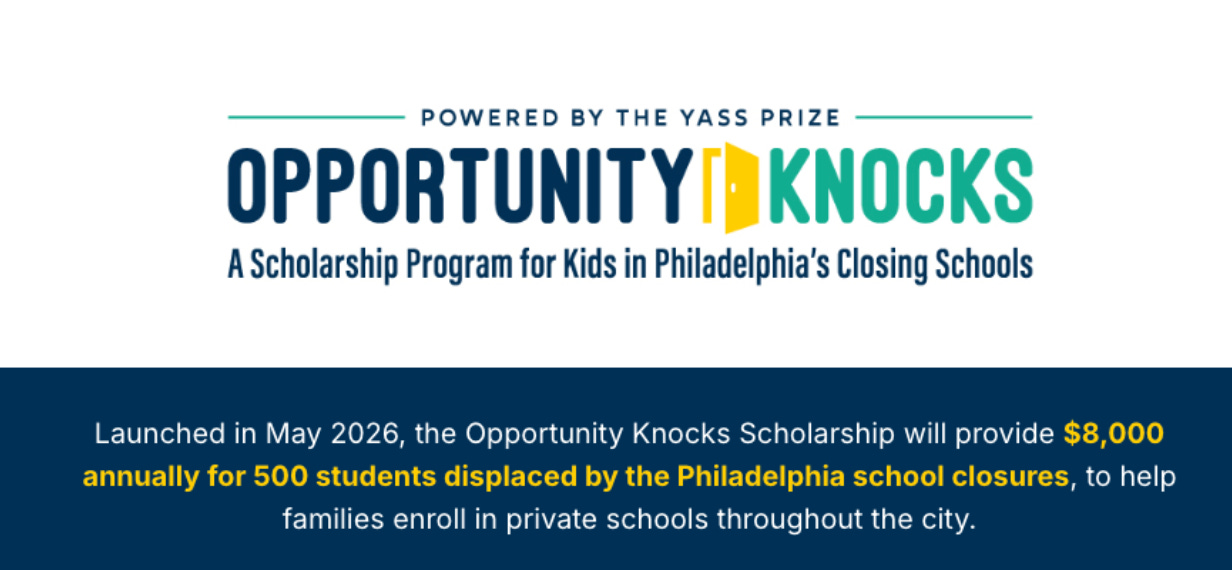
That is why we are proud to have helped the Yass Prize launch the Opportunity Knocks initiative to support students affected by these closures and help connect families to schools where children have a greater opportunity to thrive.
If you know families in Philadelphia connected to one of these 17 schools, please help spread the word. The families who need these opportunities most are not always the ones most likely to hear about them quickly, and it is no secret that many within the public education establishment are deeply unhappy that families are being offered alternatives.
And that brings us back to the larger question running through all of these conversations — What are high standards actually for? And how do we preserve funding for families first?
Florida Families’ Funds Should Follow the Child
Public education is not a building or a bureaucracy. It is the education of the public.
That is why recent discussions in Florida about potentially separating the funding streams for scholarship students and traditional public-school students are so misguided.
The pressure is understandable. The Florida Education Association continues to sue over educational choice programs, and legislators face constant pressure from adults who still fundamentally misunderstand what educational choice is intended to accomplish.
But children are not different classes of citizens depending on where they attend school.
When funding does not follow families, it creates separation and division while reinforcing the false idea that systems matter more than students.
Governor Ron DeSantis and many of the leaders who helped create and expand educational freedom in Florida understood from the beginning that equal dignity requires equal funding logic.
It is important not to accept proposals that may sound rational on the surface but ultimately undermine the very principles of equality and freedom educational choice was designed to protect. Will have lots more to say on this in the coming weeks.
America 250 for Children
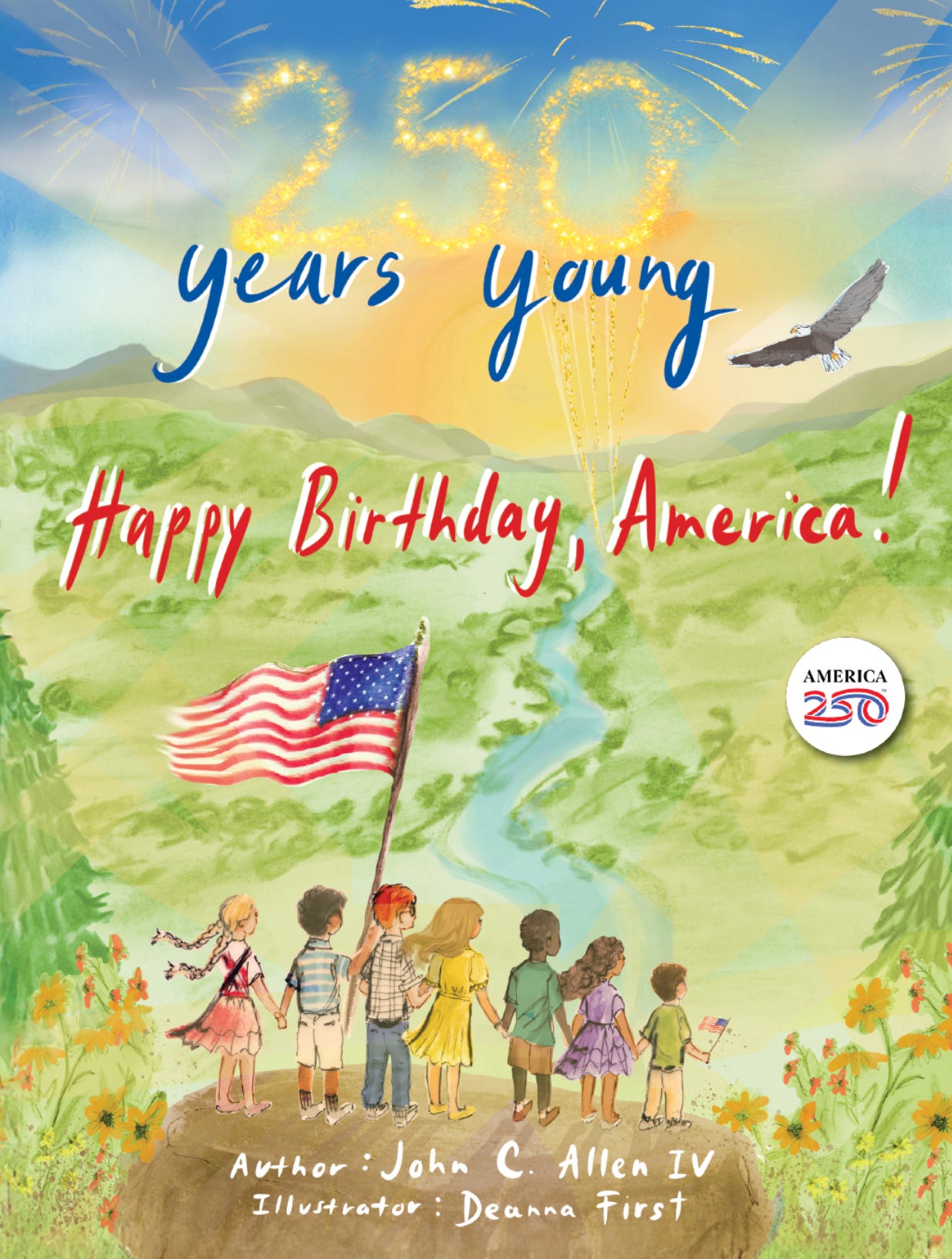
My eldest son, John, a former educator and now a leader in his own field, recently published 250 Years Young: Happy Birthday, America!.
And yes, this is absolutely a plug for the book.
But it is also a reminder that children are capable of understanding far more about this country than we often give them credit for.
The beautifully illustrated children’s book is an official publication of the U.S. Semiquincentennial Commission, created in honor of America’s 250th anniversary and inviting children to see themselves in America’s ongoing story. You can find it here: 250 Years Young: Happy Birthday, America!
At a time when so many schools seem uncomfortable teaching civic identity, national history, or even the idea that excellence and gratitude should coexist, it is refreshing to see children invited into the American story honestly and optimistically.
It reminds me of the military homecoming our family experienced.
It reminds me of schools working every day to instill freedom, responsibility, and citizenship in children.
It reminds me of parents sacrificing quietly to give their children better opportunities.
It reminds me of the builders, innovators, educators, entrepreneurs, and service members who continue believing this country is worth investing in, not to mention fighting for.
Speaking of service, here’s to the men and women we remember this Memorial Day. Put aside the food and drinks and say a prayer of gratitude, paying homage to those who didn’t make it home.
Without them, we simply wouldn’t be here. God Bless You All. - Jeanne
-
P.S. - The Yass Prize 2026 application deadline is June 1. Send this to a transformational education group or school you know! Apply at yassprize.org.