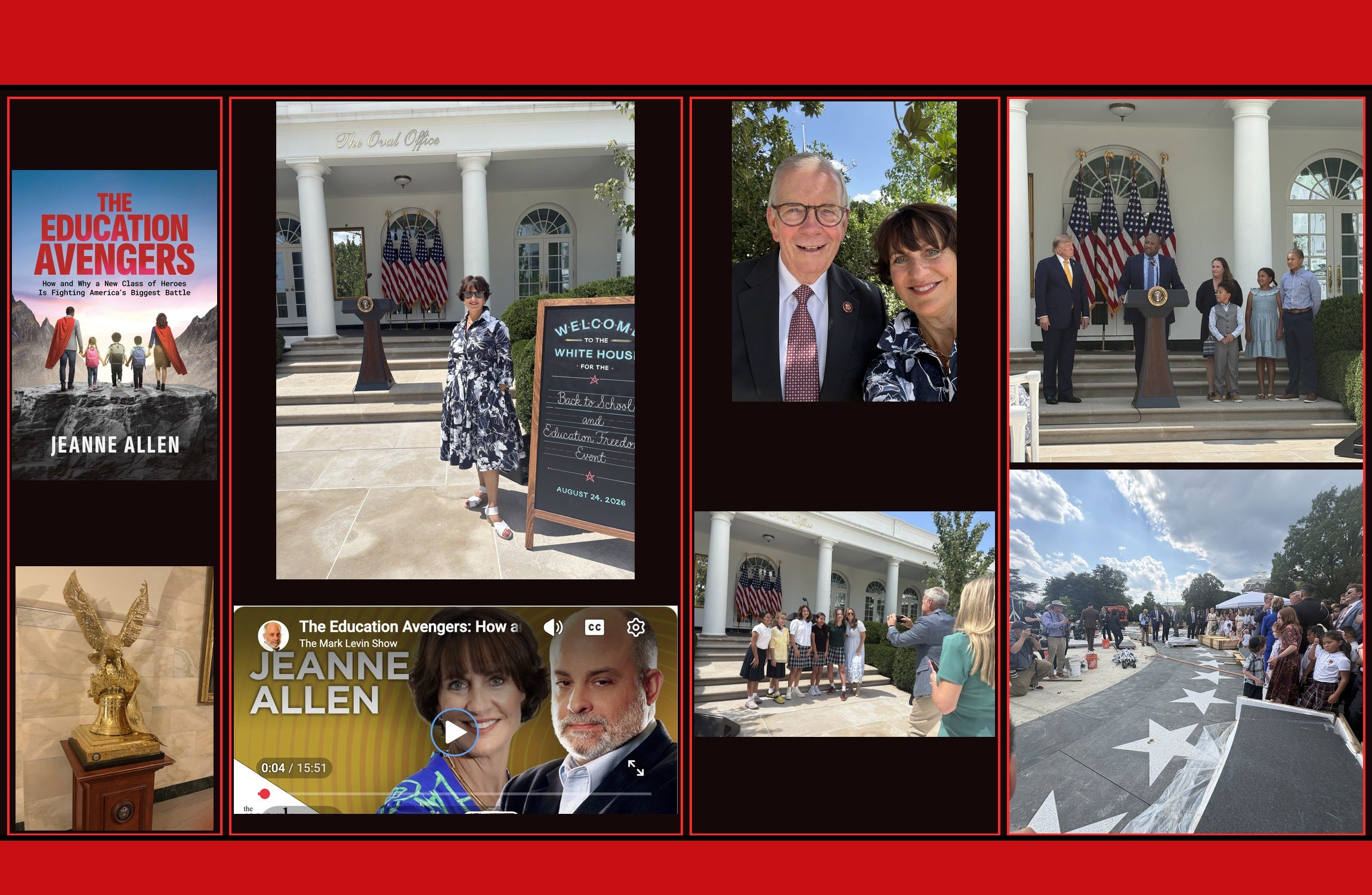
It’s official: September.
The beach bags are giving way to backpacks. Kids are back in school. Washington is back. And, inevitably, so is politics.
So, a few observations from a very busy back-to-school week.
We Didn’t Wake Up One Morning With a Literacy Crisis
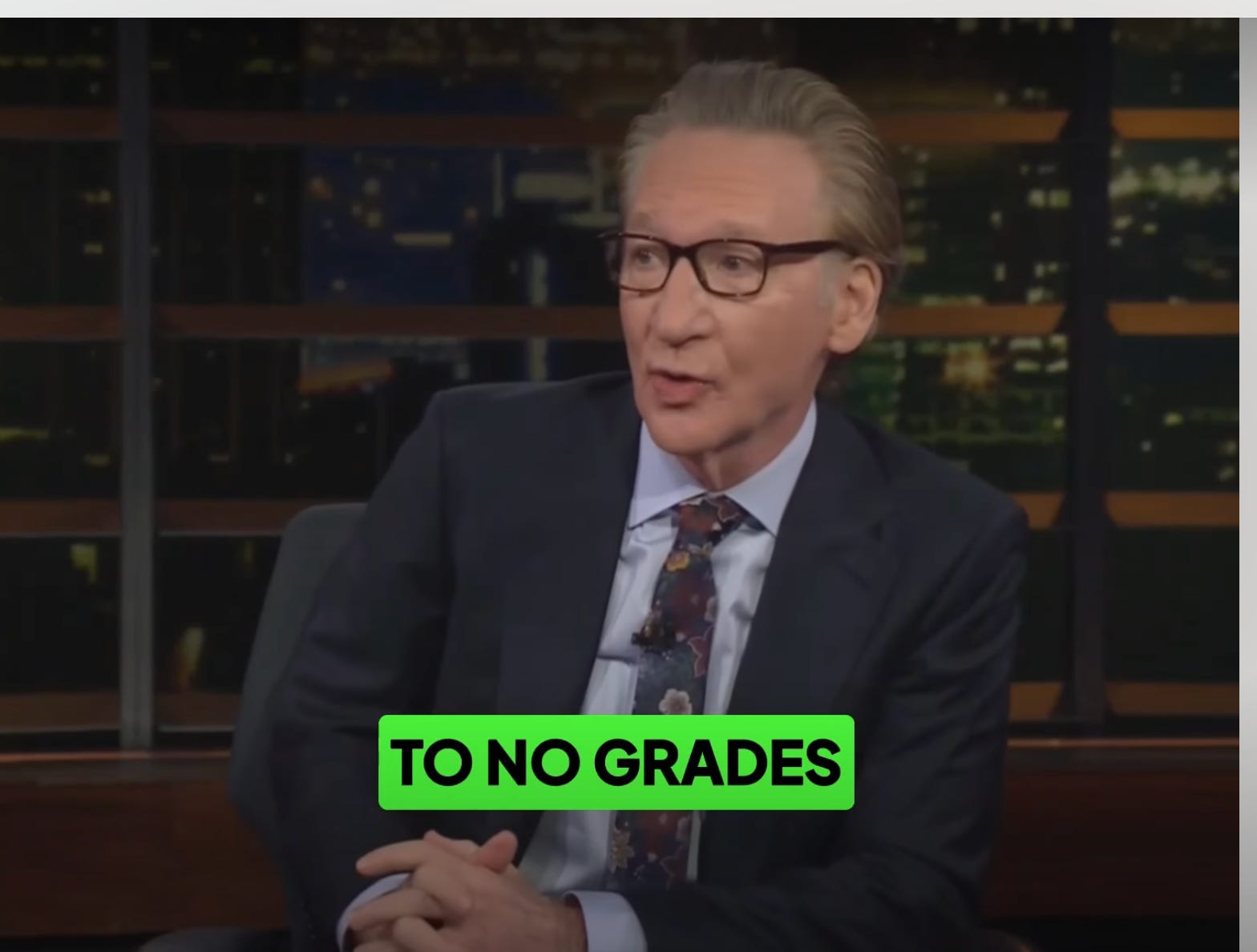
Bill Maher is not an education reformer, which may be precisely why his recent riff about the University of Michigan caught my attention. Reacting to Michigan’s decision to mask first-semester letter grades for incoming students, Maher bemoaned the response to not letting kids feel “sad” if they don’t do well, correctly pointing out that the backlash to expecting a lot from students “started long ago when they stopped teaching things…” Funny. Except it isn’t.
We didn’t wake up one morning with a literacy crisis. We lowered the bar one accommodation at a time. Children struggle to read, so we assign less reading. Attention spans shrink, so we give them more screens. College students struggle with difficult texts, so professors assign fewer of them. Students fear bad grades, so we make the grades disappear. As I said on ABC News Live, I’m not opposed to changing how we assess students. I’m opposed to giving them less information. Struggling may not be a virtue, but how people react to challenges and adversity can help build virtues like patience and resilience. Honest information, high expectations and the opportunity to get better are how people grow.
WATCH: Bill Maher’s take | My ABC News Live discussion
We Went Back to School… and Back to Politics
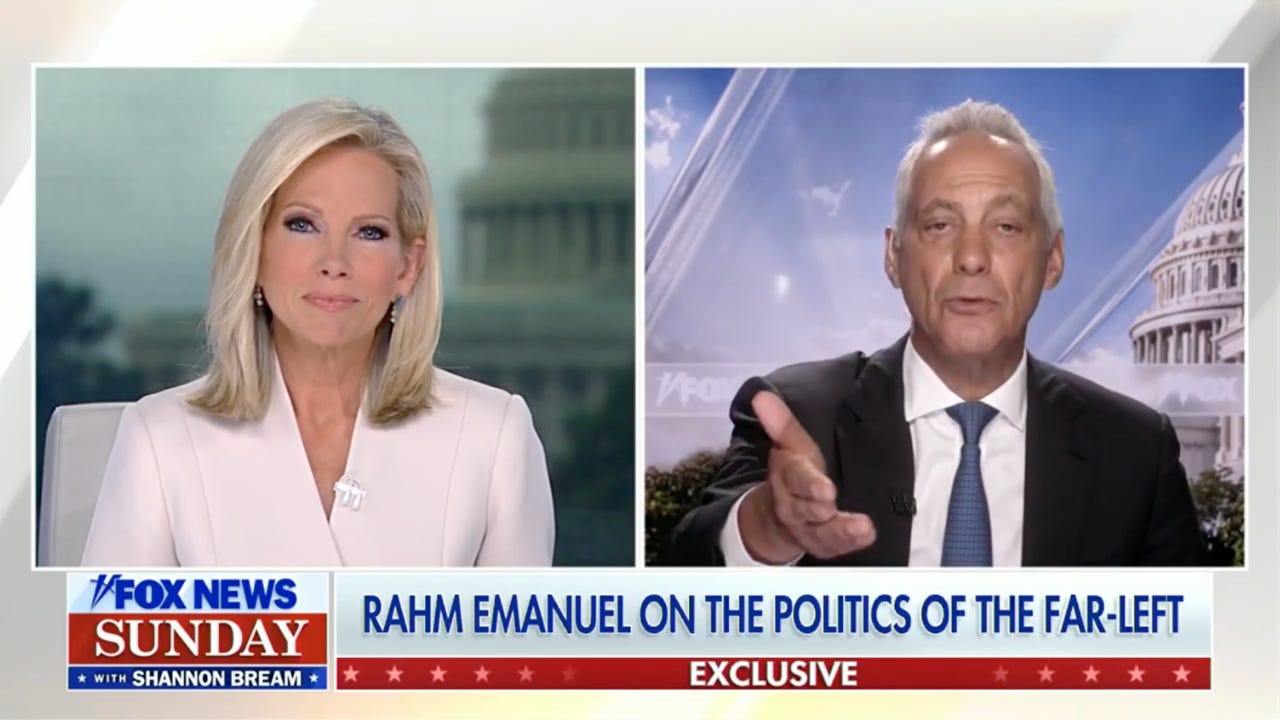
Former Obama Chief turned Chicago Mayor turned presidential candidate in waiting, Rahm Emanuel, seems to be following Maher’s playbook (or the polls?) on the media campaign trail—CNN, MSNBC and even Fox—promoting what are being billed as his new “hard line” views on education.
And some people (even some education reformers) are cheering.
That Rahm is talking about reading, math, standards and results, including Mississippi’s reading gains that Governor Tate Reeves has been at the forefront of demanding is all good. On Fox News Sunday this past weekend, he called for bipartisan education reform; then continued taking on the issue on Morning Joe and CNN, later that day. Earlier this summer, he said that Washington is largely silent, while too many American children cannot read at grade level.
But let’s be clear before the cheers—diagnosing the problem is not the same as backing the changes needed to fix it.
Talking tough about reading scores is not the same as giving parents power. It is not the same as giving great educators freedom. It is not the same as allowing entrepreneurs to build something different when the existing system does not work.
Let’s have higher standards for our kids, and for politicians, shall we?
A Candidate’s Calling Card: The Education Avengers
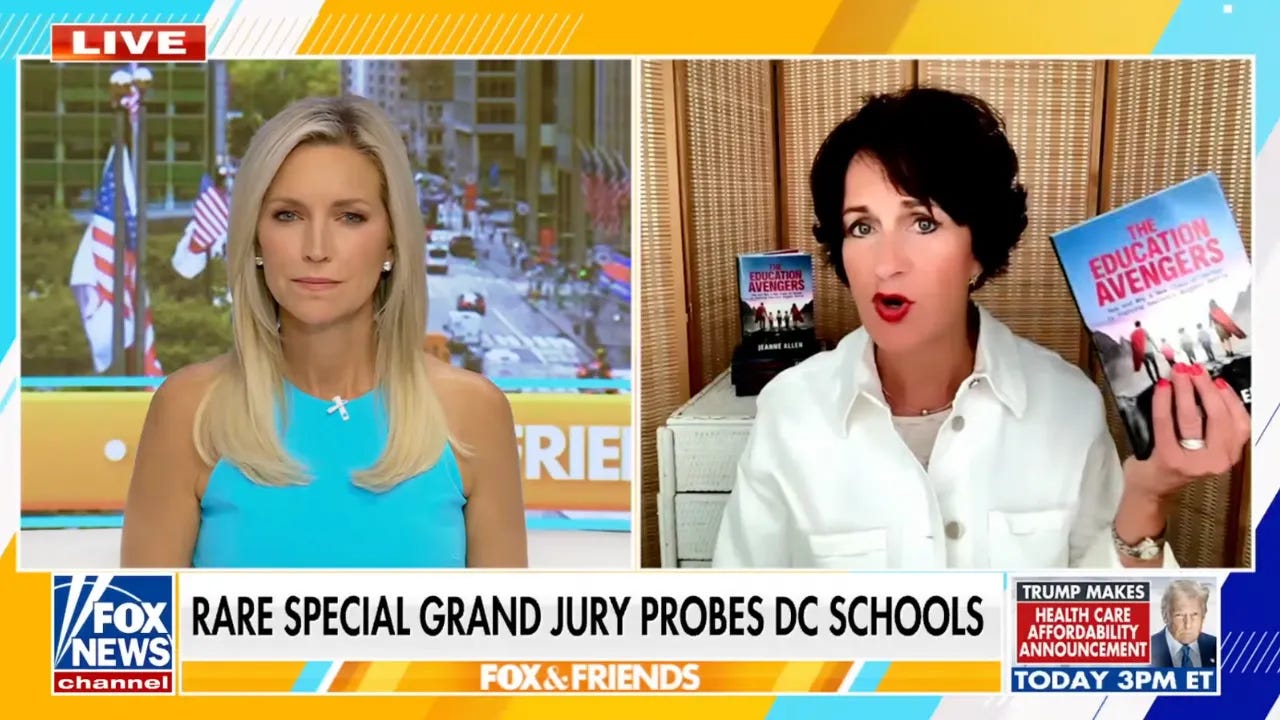
Last Tuesday, my new book debuted. And they may as well be the blueprint for any campaign that claims to care about making their communities better.
The people in The Education Avengers: How and Why a New Class of Heroes is Fighting America’s Biggest Battle, provide a useful reality check because they didn’t merely identify what was wrong.
They did something about it. I loved writing it, but even more, I loved learning new angles—and the conditions that truly do make students, schools and communities flourish.
As the Preamble goes:
Every so often, when the world feels fractured and institutions creak under their own weight, a new kind of hero emerges—not with capes or secret identities, but with courage, clarity, and a sense of purpose so fierce it unsettles the status quo. The Education Avengers are just that.
They have chosen to fight not monsters or aliens, but apathy, bureaucracy, and the slow decay of promise in the lives of children. They wield superpowers forged not in laboratories or cosmic storms, but in the lived experience of broken schools, fractured communities, and systems that neglect whom they were built to serve.
My “why” in writing the book is really that simple:
The Education Avengers fight things harder to name—and far harder to defeat. Every individual derives their gifts from a tapestry of experiences—rough-edged, imperfect, and powerful. When those patterns are understood and repeated, lives change. That is why these Avengers matter. Whether we think we are connected to education or not, the children and families we pass every day—at the store, in our neighborhoods, through our work—are shaped by a vast and mostly unseen ecosystem of decisions.
So the question for you and all the candidates talking about, but not naming the issue is this:
If you knew there was a way to do better—if you could see it, understand it and replicate it—why wouldn’t we?
The Avengers aren’t pundits telling us what should work. They are people showing us what does. Meet The Education Avengers.
Taking the Argument Everywhere
That’s also why I’ve spent these first days after the book’s release talking about these ideas wherever people will listen.
Fox & Friends: Monday the subject was Washington, D.C.—chronic absenteeism, low achievement and what happens when adults become accustomed to failure. (Fox News)
Mark Levin: On launch night, we talked on radio about the twelve remarkable people in The Education Avengers, the Hydra they confronted, and what ordinary people can accomplish when they refuse to accept the status quo. (Available now on YouTube)
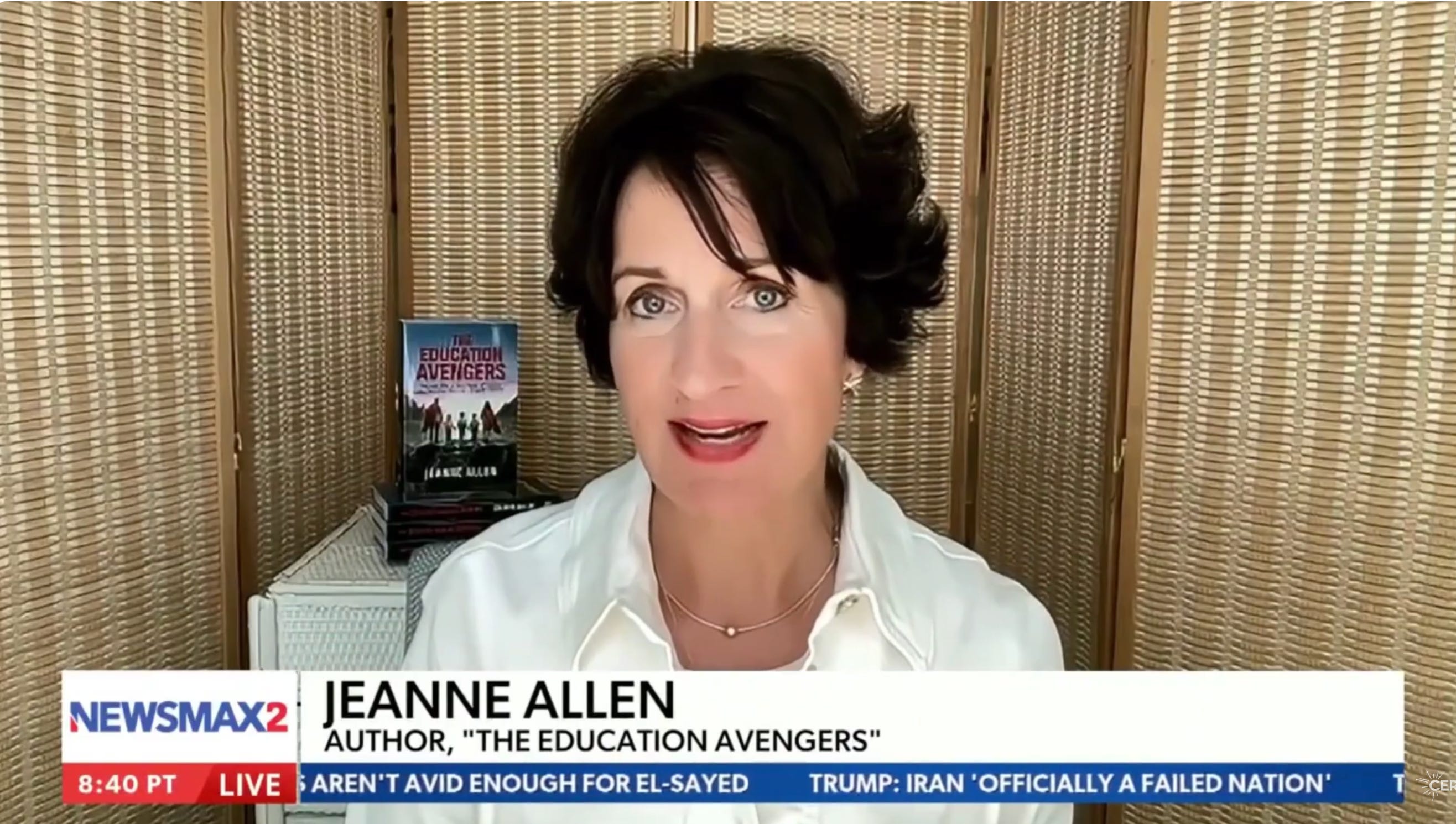
I was also thrilled to join WSJ’s All Things with Kim Strassel and Newsmax.
Believers Are Good. Doers Are Better.
The White House back-to-school event in the Rose Garden last week was a gathering of true believers—and hopefully one that girds still more people to act. President Trump and ED Secretary Linda McMahon used the occasion to put education freedom, parent power and the need for better results squarely at the center of the new school year. Their commitment and inspiration using the bully pulpit is a huge and necessary component of making education opportunity happen for every child.
That principle—education opportunity—is bigger than any political party. But principles don’t survive without action.
President Trump is acting on it.
Governors like Ron DeSantis, Kevin Stitt and Kim Reynolds have spent two terms acting on it.
On the Democratic side, Senators like the late Joe Lieberman, Mary Landrieu, Joe Manchin, Tom Carper— and today, Colorado Governor Jared Polis—have each, in different ways and different eras, been willing to cross political lines when education demanded it. President Bill Clinton considered the growth of charter schools one of his greatest legacies.
They may not have supported expansive education freedom, but not long ago, prominent Democrats could support charter schools, challenge the education establishment and still get elected. Now we have James Talarico in Texas fighting education freedom accounts and Abdul El-Sayed in Michigan standing in opposition to the state’s life-changing charter schools.
That’s not progress. And it certainly isn’t the kind of independence children and families need from people who want to lead.
President Reagan will forever be known as the president who woke up a Nation at Risk, helping launch the modern education reform movement. As Reagan liked to say, “Status quo, you know, is Latin for ‘the mess we’re in.’”
That is what we need: actions, not words.
And Speaking of Doers…
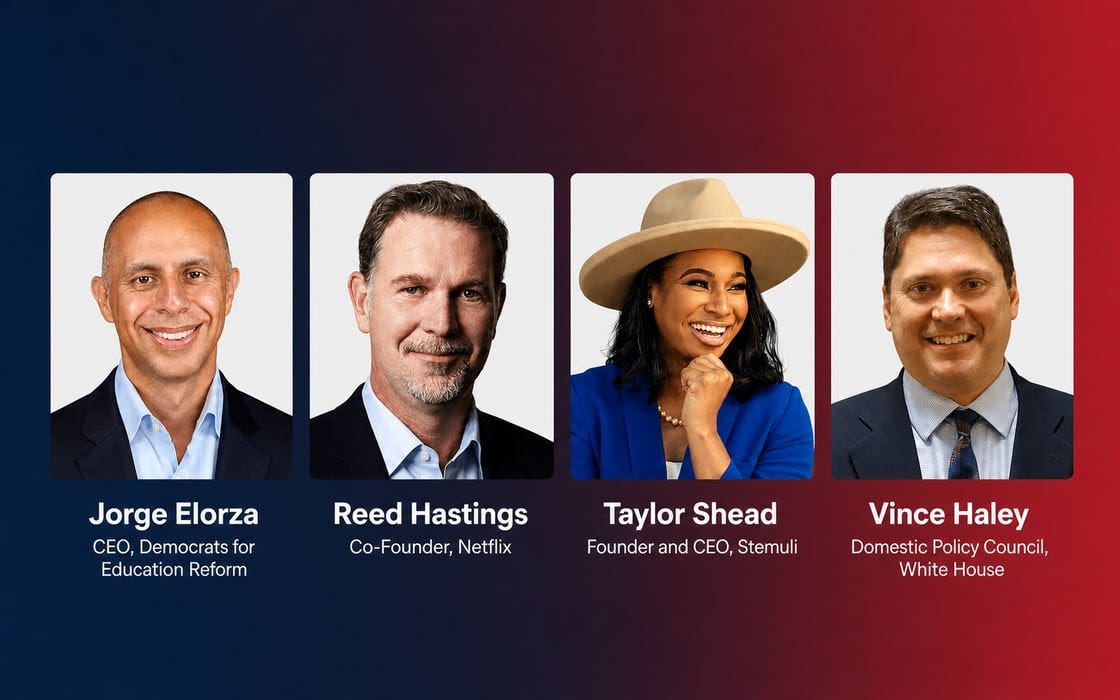
On October 6, bold leaders, innovators, entrepreneurs and education Avengers will assemble in Philadelphia for the 2026 Power of Innovation Summit: The Power of Freedom.
It’s not another event about what might someday be possible, but an entrepreneurial and sector-diverse gathering of people doing it.
And…the $1 million Yass Prize will be awarded that evening to one of this year’s extraordinary education innovators.
It’s not too late to join us. Check out the incredible speaker line up and consider joining us October 6.
Lots of irons in the fire, but I’m looking forward to a brief Labor Day break before heading to the Big Apple for the official book launch party, hosted by Forbes Media, Steve Forbes and his incredible team.
Enjoy these last gasps of summer.
Happy September! - Jeanne