
As you probably noticed, Forza has been a little less reliable this summer. And the question is, why not? It’s summer, after all. Like many of you, it’s a very busy time, whether you’re enjoying a little more downtime or, like me, preparing for some of the fall’s biggest activities—the Yass Prize, the Power of Innovation Summit, a book launch, to name just a few.
So I have been a little less able to put pen to paper, as they say. We’ll be back to a better cadence this fall, but for now, I want to reflect on a couple of things I’ve done while I’ve not been writing, and then get to the heart of my list for you, which I’ve been building a little bit every day for the past ten days.
I’ll start with a time-worn but critical theme for Back-to-School time: Information is power.
Yet this summer, I’ve been struck several times by how little people know about what is happening with education opportunity and achievement. Getting them information when they are increasingly distracted by all manner of media, social and otherwise, is our greatest challenge.
On the weekend, I went to a meet-and-greet for a local candidate.
It was a very informed group and yet, among the dozen or so folks I was speaking with, they knew little about the federal scholarship tax credit, the relative strength of Massachusetts’ charter school law, or how innovators and entrepreneurs, like the latest crop of Yass Prize contenders, are building new systems to address the needs of kids. I might as well have been talking about life on mars. But they wanted to know more.
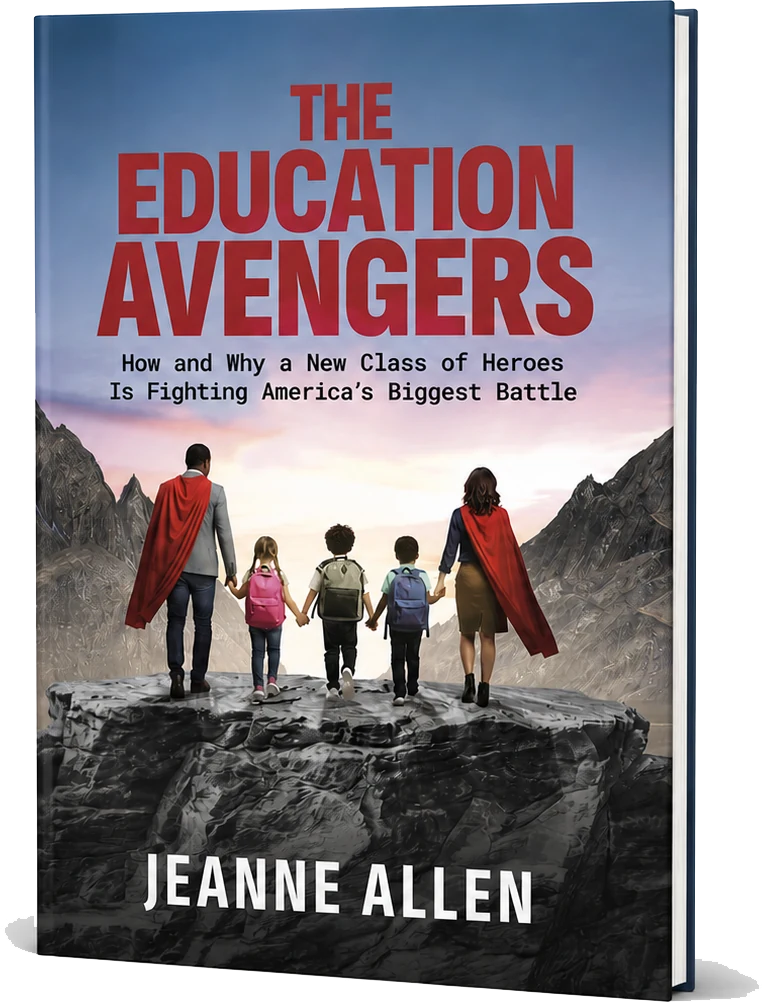
This is also a theme coming out of the Summer Salon we held. Incredibly smart, entrepreneurial business owners, leaders in their fields, retired and active people, engaged in politics at all levels and from all parties, have told me they had never had a conversation like the one we had that evening: about how you really actively use your community to stimulate opportunities for young people, ensure human flourishing, and ensure that they not just survive, as I talk about in The Education Avengers, but thrive.
People can complain about taxes and housing and other issues that are important and certainly barriers to young people staying in small communities. But when the availability of jobs goes primarily to people from out of the country on temporary visas, it’s not just because there’s no housing. We’ve not inspired people to think strategically about how to engage young people in the workforce—and there are multiple avenues to do so.
When really smart people aren’t aware of what other really smart people are doing around the country, it creates a gap, and rather than a gap, I’d like to see a funnel.
What’s my suggestion? Well, I’ll repeat they suggested at the candidate event I attended:
Tell five people.
That’s right. If everybody tells five people about an issue, a person doing great things for kids, or a piece of information worth knowing, it can spread like wildfire. Maybe you tell them personally, or maybe you tell them through your social channels. But if you’ve ever wondered how things become viral, it’s because people take the time to make them viral.
So with that as an anchor and a thought, here is this week’s Forza for your review, edification, and amplification.
When People Know, They Move
There is an extraordinary amount of education news breaking at once, and taken together it offers a revealing snapshot of where American education is right now. Parents increasingly want options. More states are changing laws to permit them. Governors are competing to improve their education environments. At the same time, student achievement remains deeply troubling.
And perhaps most interestingly, when people actually know what is available to them, they increasingly use it.
That distinction between policy and practice has been central to CER’s work for more than three decades, and it is precisely what our newly released 2026 National Charter School Law Scorecard and Rankings is designed to measure.
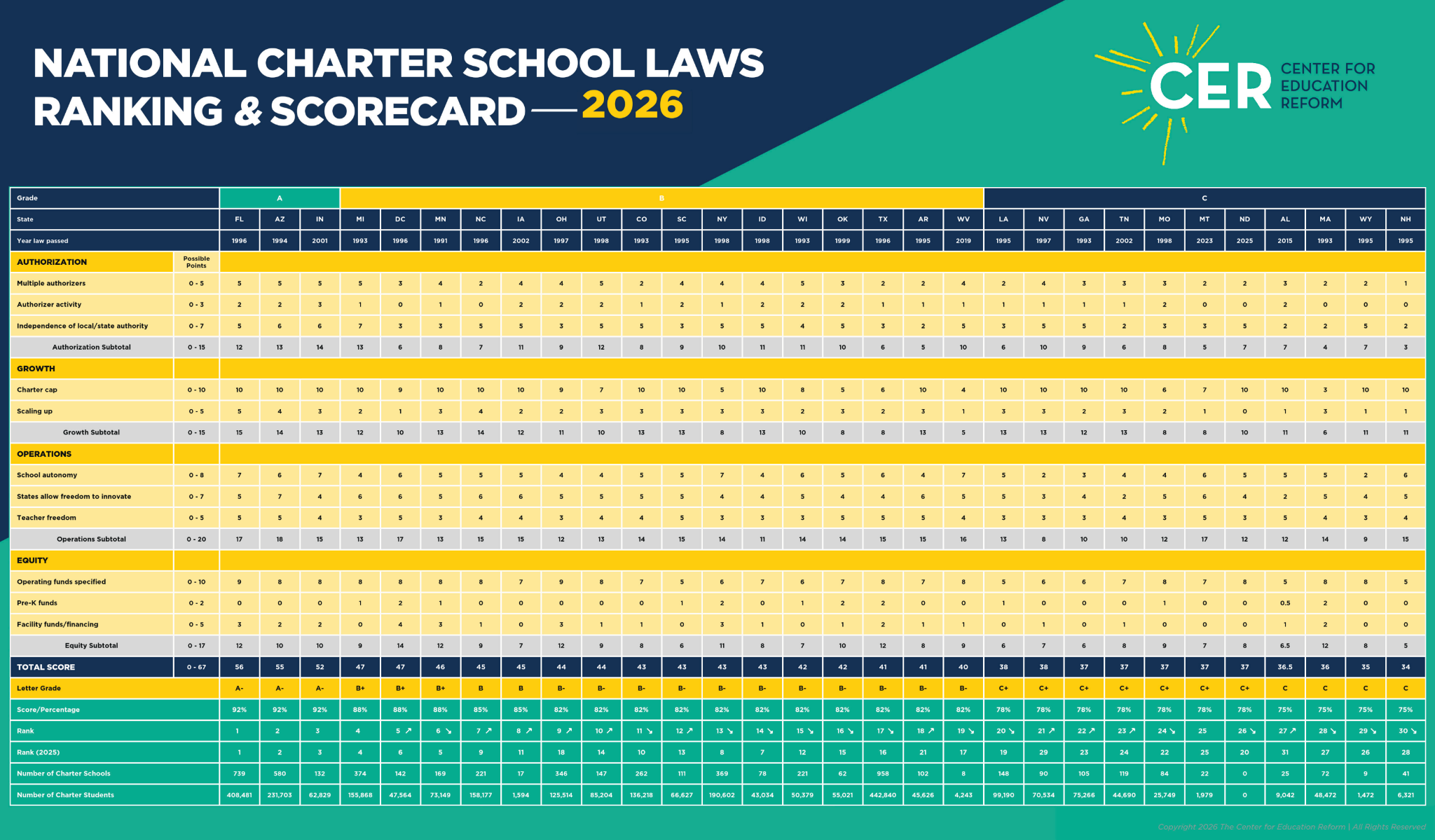
Today, 48 states have charter school laws, a remarkable change from when Minnesota enacted the nation’s first in 1991. But simply having a charter law tells us very little about whether educators actually have the freedom to create great schools or families have meaningful access to them. Of those 48 states, only 19—roughly 40 percent—earn a B-minus or better in our analysis. Just three earn an A or A-minus, and in nearly 30 years of evaluating charter laws, CER has never awarded a perfect score.
That’s because our rankings don’t measure intent. They measure what the written law actually produces. We look at authorization, growth, operations and equity: who can open schools, whether successful schools can expand, how much freedom educators have to operate, and whether funding and facilities allow charter students to be treated fairly.
The response to this year’s rankings has been fascinating in itself. The Scorecard generated more than 214 media pickups, including 110 television-station sites across 37 states and Washington, D.C. Much of the interest was not simply in the states already at the top, but in states that moved—sometimes dramatically—because lawmakers changed the conditions under which educators can operate.
Florida: Freedom With Follow-Through
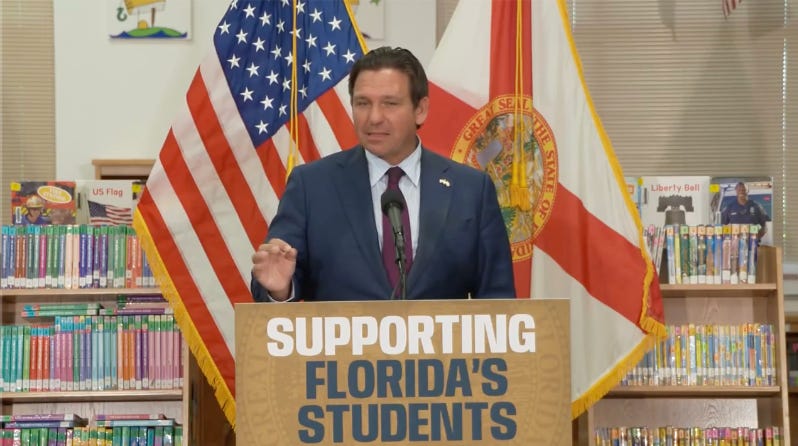
Florida remains #1, earning an A-minus for the third consecutive year, and Gov. Ron DeSantis made a point of highlighting CER’s rankings in his back-to-school remarks. He noted that Florida has been ranked number one in education freedom, citing both our Charter School Law Scorecard and Parent Power Index.
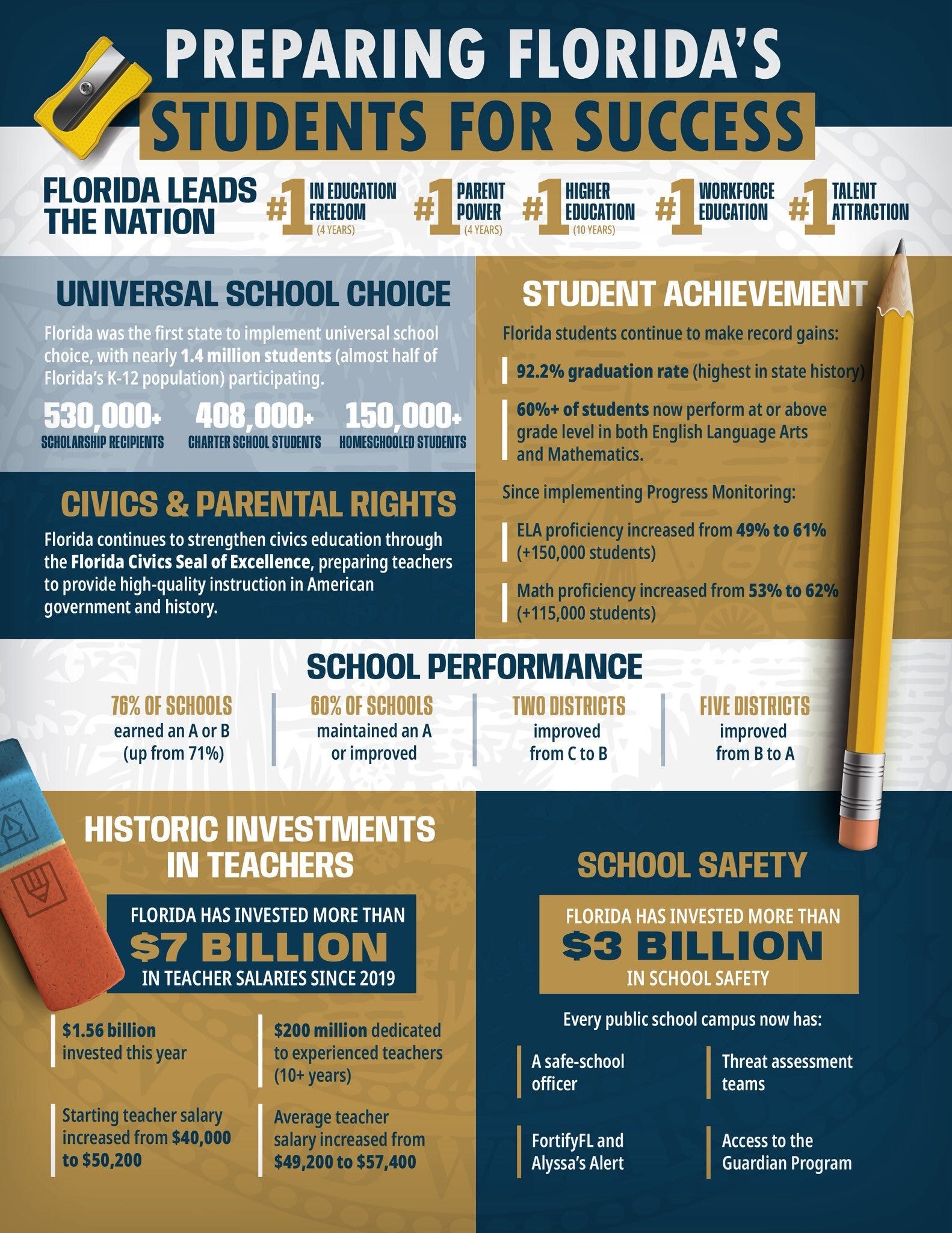
The more important story, however, is what has happened alongside those policies. Florida reports a 92.2 percent high school graduation rate, more than 60 percent of students at or above grade level in both English language arts and mathematics for the first time, and 76 percent of schools earning an A or B. The state has also directed approximately $7 billion toward teacher compensation since 2019, with starting teacher pay rising more year to year.
It’s not that the charter law or parental-choice policy alone caused those academic results. But creating those conditions can be a powerful catalyst.
Iowa Shows How Quickly Things Can Change
Iowa offers an even more striking example of the relationship between laws and what becomes possible on the ground.
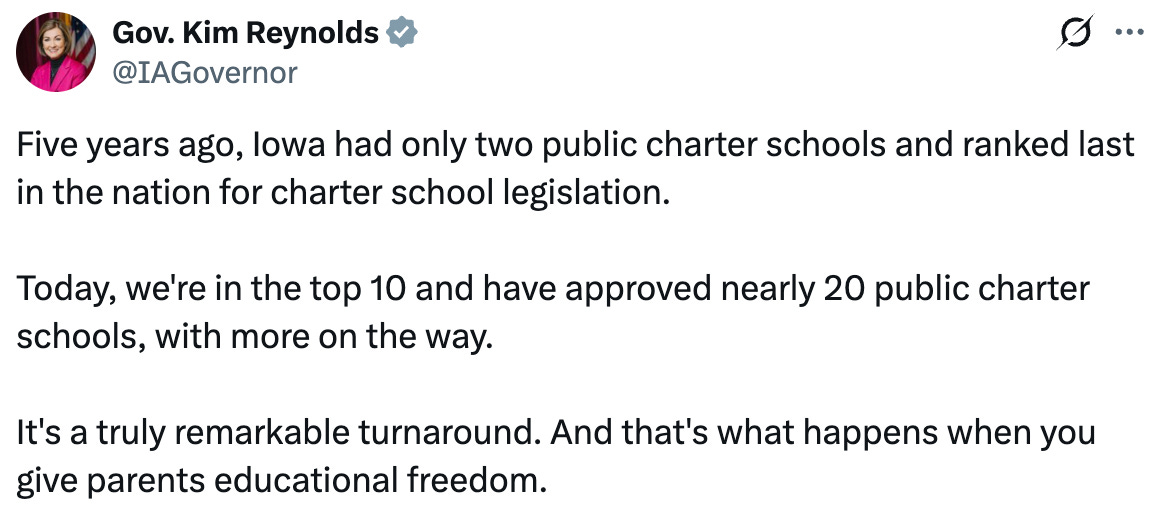
Only a few years ago, Iowa had two charter schools, both established through local districts, and its charter law earned an F from CER. Lawmakers substantially changed that framework, including creating a pathway for independent charter schools. Today Iowa ranks #8 nationally with a B, 16 charter schools have been approved and 10 are operating.
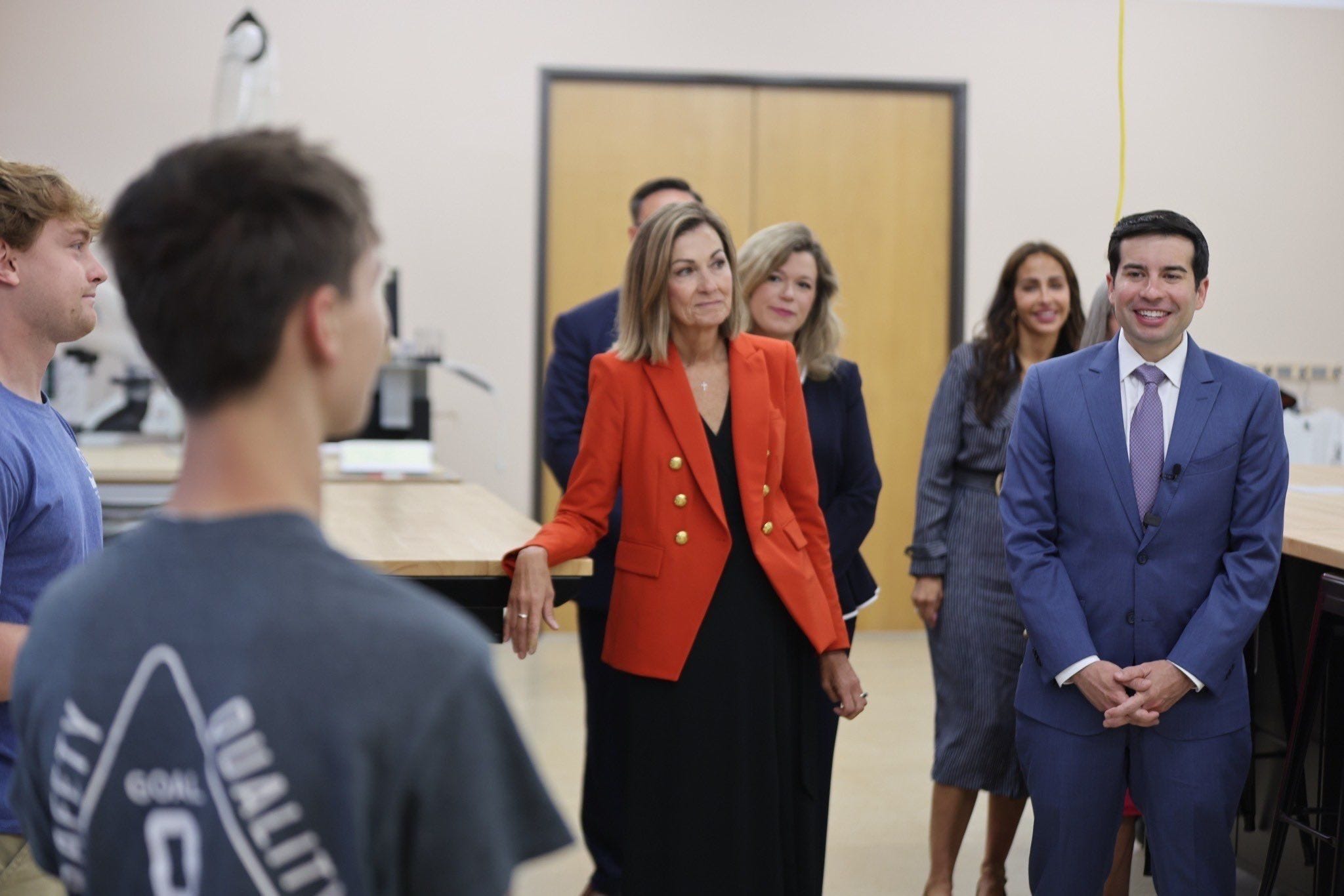
This comes on top of the state’s pathbreaking education choice program enacted right after she took office four years ago. Gov. Kim Reynolds celebrated the charter progress following the release of CER’s rankings, noting that charter enrollment increased 213% from FY2023 to FY2025. She is now pushing the framework every state should embrace, proposing that all funding follow students and that charter students have access to concurrent enrollment, extracurricular activities and other opportunities available to their district-school peers.
Iowa did not suddenly discover an appetite for different schools. It changed the conditions under which people could create them. Once the barriers changed, supply began responding to demand.
Parents Have Already Moved
According to EdChoice’s 2026 Schooling in America survey, 84 percent of school parents support education savings accounts, 82 percent support tax-credit scholarships, 79 percent support vouchers and 75 percent support charter schools. Yet the same survey found that half of parents don’t even know whether their state offers an ESA. Parents increasingly want agency over how and where their children are educated, but many still don’t know what is available to them. Just imagine if they had more information. It’s power.
North Carolina gives us a glimpse of what happens when access expands. Use of its Opportunity Scholarship has tripled over three school years following universal eligibility, with spending reaching about $589 million in 2025–26. Private enrollment has grown, but the expansion has not produced the wholesale exodus from public schools that opponents of universal choice predicted. The questions worth asking now are where families are going, why they are choosing differently and whether the supply of schools is keeping pace with them.
Information becomes particularly powerful when families have something they can actually do with it.
Texas: When Families Have Somewhere Else to Go
Texas may become the next great test.
Having finally enacted its Education Freedom Accounts program, the state is now confronting the other side of the equation: how traditional public schools respond when families have more leverage.
More than 170 Texas public-school campuses have closed or are slated to close since 2023, while statewide district enrollment fell from about 5.54 million students in 2024–25 to 5.47 million in 2025–26. Charter growth and demographic change and the new private-school choice program are helping parents move.
Some naturally blame choice, as if it’s a bad thing. The better questions, that will spark better answers, are Where are families going? Why are they leaving? And how should existing systems adjust when demand changes?
It’s amazing what happens when you do that. Recently we learned that nine Texas districts that had been at risk of state takeover improved enough under the latest accountability ratings to avoid intervention, and 284 districts improved their ratings. Competition produces consequences.
And like his colleagues in Mississippi and Louisiana, Gov. Greg Abbott has moved to create a Texas Classroom Commission of current and former educators to recommend improvements in reading, math, teacher recruitment and retention before the 2027 legislative session.
More options increase the urgency for every school to improve.
New York: Why Hochul Should Say Yes
Meanwhile, the pressure is growing on Gov. Kathy Hochul to opt New York into the new federal Education Freedom Tax Credit. Religious-school parents, the Teach Coalition and the New York State Catholic Conference have launched a six-figure campaign urging her to act on her commitment to participate, opening access to scholarships that can support tuition, tutoring, after-school programs and transportation.
The union is the big reason she hasn’t, just like other big Blue state governors. But can they really afford to ignore the data?
On New York’s statewide assessments, English language arts proficiency among New York City students in grades three through eight fell six percentage points in a single year in 2026, with declines in every grade tested. Third grade fell 13.8 points and fifth grade 13.1 points.
Information is power. Tell five people.
And Then There Are the Builders

Which brings us to another example of what happens when people know what is possible—and act.
Last Wednesday, August 12, at Forbes on Fifth, we announced the 26 contenders for the 2026 Yass Prize.
They are showing what’s possible when you can work in a community or state that fosters opportunity for providers and families: building different kinds of schools and learning environments, reaching students who have been poorly served, creating new pathways between education and work, and demonstrating that families embrace new approaches when they are available.
And that’s why their arrival is so well timed with the release next week of The Education Avengers.
The 12 people I profile in the book did not begin with identical philosophies, models or political views. They began with problems they could see in front of them and a conviction that children deserved something better.
Policy can open a door. It cannot walk through it, welcome a child, hire a teacher or build a school. People do that.
When laws, leadership and execution work together, opportunity can grow and barriers come down. North Carolina shows parents actually using the choices they’ve been given. Texas is beginning to confront what happens when existing systems must respond. New York reminds us both how much academic work remains and how consequential the decisions about new opportunities can be.
And those 26 Yass Prize contenders remind us that people all over the country aren’t waiting for somebody else to fix education.
They know what is possible. And they’re acting on it.
Which brings me right back to where I started.
Tell five people.
Information is power. But only if we use it.

Check out my interview last week on ABC News Live about the explosion of AI on college campuses and the question everyone seems to be asking: What should students do differently now?
How about reading more?
Learn things. Develop interests. Talk to people. Build the knowledge and judgment that allow you to use these remarkable tools well.
That’s a much better preparation for an AI future than trying to guess which college major an algorithm won’t touch.
I’ll be back soon.
Thanks for reading - Jeanne