
The Next Chapter of American Leadership
Christmas is over. It’s January. And with the noise of a new year comes something else: thousands of people across the country looking to set the tone, frame the vision, and define the direction of 2026.
Consider this: in 2026 there will be 39 gubernatorial elections. According to the National Governors Association (NGA)— now chaired by the thoughtful and steady Governor of Oklahoma, Kevin Stitt — 18 incumbent governors are running for reelection, while 21 more are either term-limited or choosing not to run again. That is an extraordinary level of transition in the nation’s most powerful domestic leadership class.
In February, governors from across the country will descend on Washington — Republicans and Democrats separately, and then together through the NGA — to meet with one another, with national influencers, and with members of Congress. These are the real laboratories of democracy. Some governors still remember that their states are sovereign and independent. Others would prefer Washington to fund and force. But make no mistake: most of the next wave of domestic policy, especially education policy, will be written first in the states.
It is already happening.
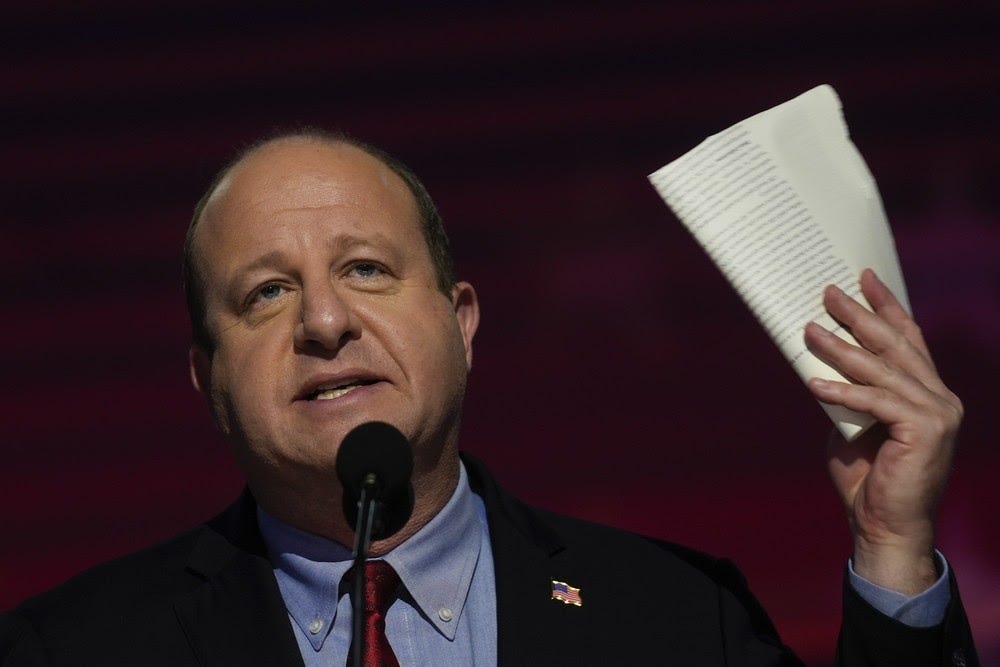
It has been encouraging to watch thoughtful governors put partisanship aside for kids. Colorado Governor Jared Polis’s recent announcement that his blue state will opt into participation in the Big Beautiful Bill’s education tax credit — known as the ECCA — is a prime example. Virginia and several Republican-led states moved early as well. The program is not yet operational; rules still must be finalized and the framework formally launched. But getting ahead of the curve matters, and Polis’s leadership will undoubtedly influence others — just as the likable and principled Kevin Stitt continues to do among his colleagues, sharing why education freedom and great workforce opportunities go hand in hand.
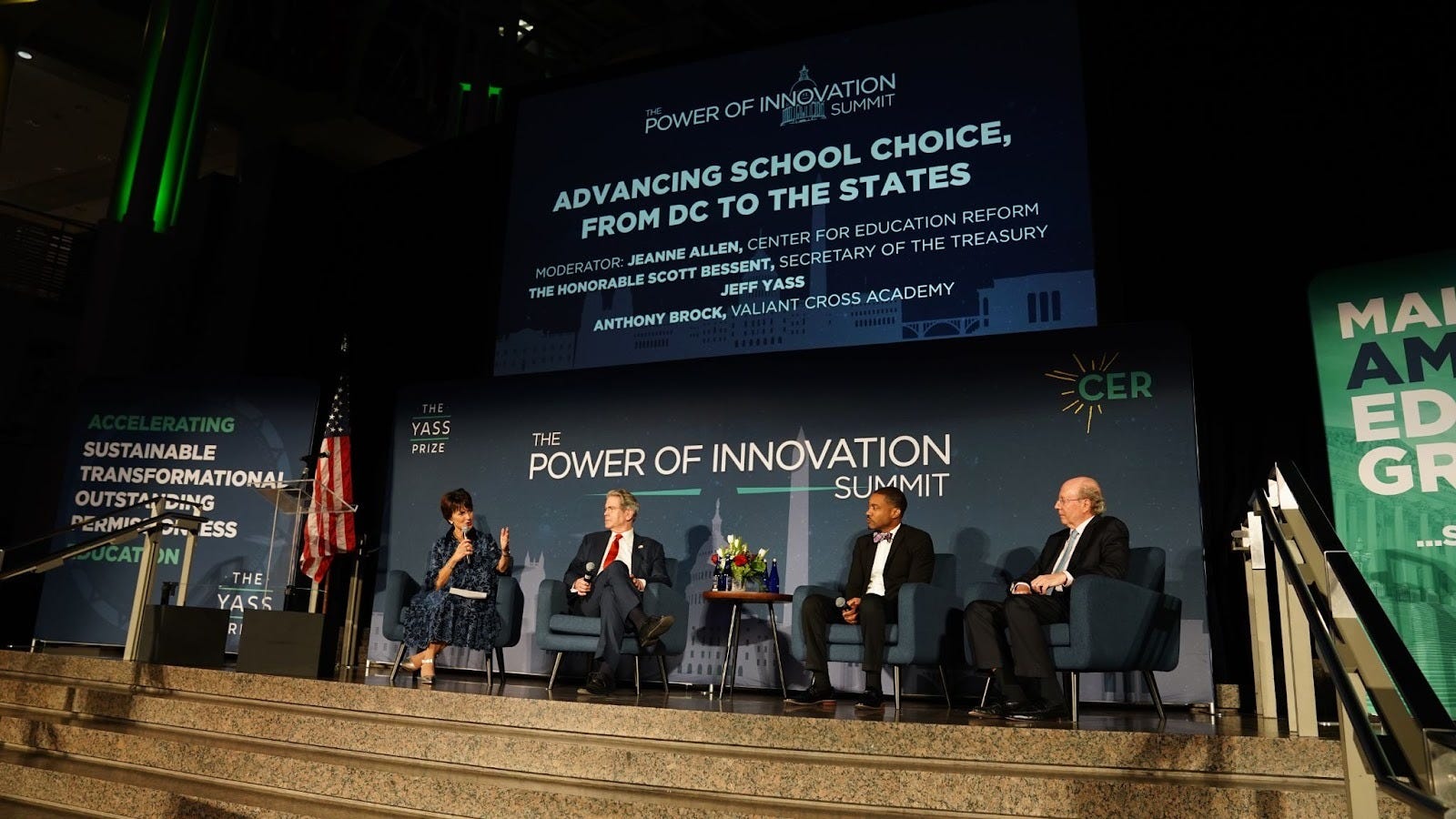
Speaking of which, my recent panel with US Treasury Secretary Scott Bessent, Anthony Brock from Valiant Cross Academy and philanthropist Jeff Yass, Advancing School Choice from DC to the States, offers great insights on how the economy, the workforce and education opportunity all connect. But I digress..
Meanwhile, the U.S. Department of Education continues its complicated dance with federal limits. It has now approved elements of Iowa Governor Kim Reynolds’s education waiver request and is still considering Indiana’s. There is only so much any education secretary can do without formal changes in federal law, and that process is never fast. At the same time, the department has been forced by the courts to rehire dozens of civil rights office staffers whose positions had been terminated.
All of it is a powerful reminder of something our system was designed to protect: state sovereignty still matters.
And that brings us — remarkably — to this moment in American history.
Common Sense, 250 Years Later
Much of what follows here is inspired by a beautiful reflection by historian Jonathan Horn in The Free Press this week, as the country marks the 250th anniversary of Thomas Paine’s Common Sense, first published on January 10, 1776.
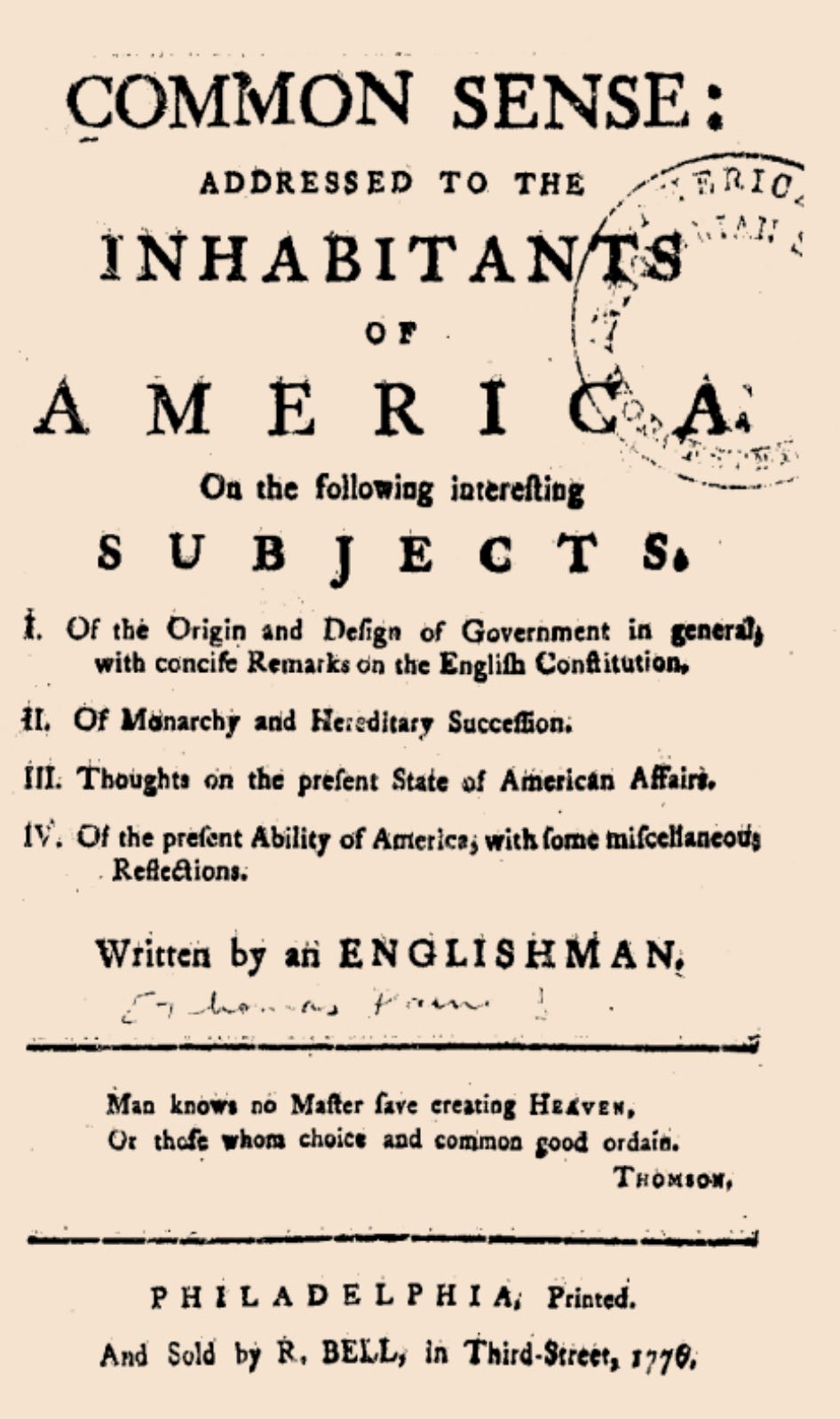
Common Sense was one of the first serious works of political philosophy I ever read in college. It hooked me. Not because it was polite or cautious, but because it was fearless. Paine wrote in what he called the Age of Reason, and he did what few dared: he said plainly that America must sever ties with Great Britain.
As Horn quotes: “There is something absurd,” Paine wrote, “in supposing a continent to be perpetually governed by an island… The blood of the slain, the weeping voice of nature cries, ’TIS TIME TO PART.”
I remember being struck by the notion that what seems like a simple exercise - publishing what amounted to a grassroots pamphlet became the bestselling publication of the American Revolution. As Horn explains, it was read in homes, taverns, and town squares. It shaped not only public opinion, but leadership itself.
Paine believed the American cause was not merely national, but human:
“Freedom hath been hunted round the globe… O! receive the fugitive, and prepare in time an asylum for mankind.”
There is nothing “common” about that kind of courage.
Paine believed that free people must speak plainly, think boldly, and tell uncomfortable truths in moments of consequence.
And here we are, 250 years later, facing another moment that demands exactly that.
Why Knowledge Still Matters
On one of my morning walks, that thought followed me — especially as I slowed down for my precious lab Bella, who’s nine now. We’re nearly the same age. Do the math.
The call to action for anyone involved in education could not be clearer: we must use this moment to teach, to talk, and to show the long arc of history — the generations of conflict and hardship that did not begin with this one.
And knowledge matters. More than ever.
A growing body of research confirms what educators have long believed: while knowledge and intelligence are not the same thing, acquiring knowledge strengthens intelligence itself. A major meta-analysis published by the National Institutes of Health found that each additional year of education increases IQ by one to four points. Reading and expanding vocabulary improves the verbal components of intelligence. A 2025 study from the University of Bath found that people with higher IQs make more realistic predictions and exercise more consistent judgment — hallmarks of better decision-making.
This is exactly the case being made by the Knowledge Matters Campaign, which champions the critical role that content knowledge plays in both the science of reading and learning. Their new History Matters Podcast makes the point beautifully: high-quality history instruction builds knowledge, accelerates literacy, and prepares students to participate fully in civic life — starting in the earliest grades.
Even the origin of the word museum reminds us why this matters. It comes from the Greek Mouseion — the seat of the Muses — a place where art, music, literature, and learning were meant to live together under one roof. Civilization itself was built on the assumption that what we know shapes who we become.
Looking Back to Hold Us Together
As we approach America’s 250th birthday, I keep returning to the importance of resources that reconnect us with the long arc of who we are — not just our conflicts, but our character.
The America 250 work emerging from so many groups remind us not just where we have been, but what has always held us together.
John Dickinson’s fingerprints on our founding.
Thomas Paine’s moral courage.
The enduring architecture of liberty.
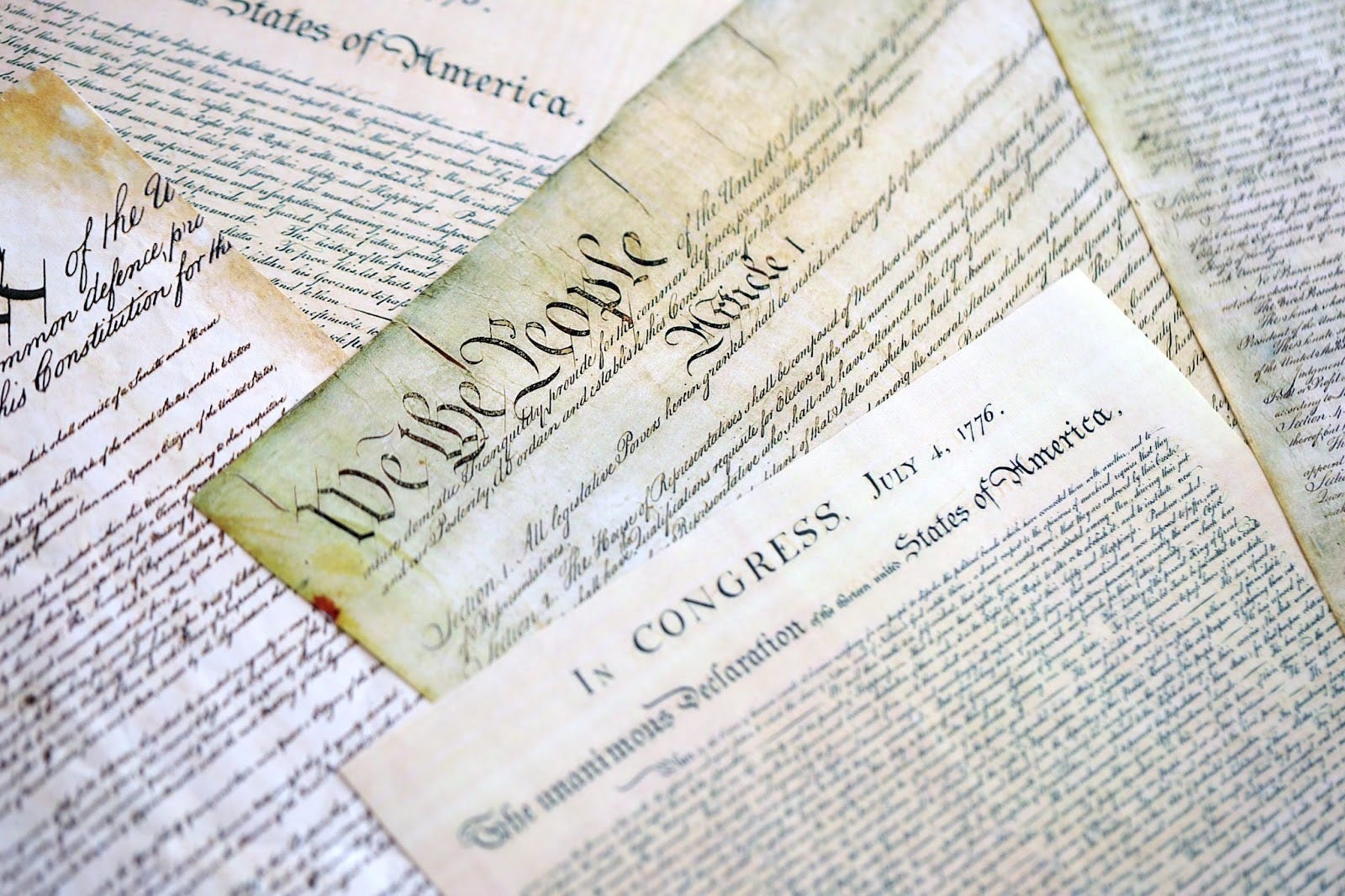
This is what real leadership as Americans looks like: not performance, not outrage, not tribal noise — but thoughtful courage anchored in knowledge and responsibility.
That’s why for our part, we are relaunching our popular “Why America?” Initiative to support and trumpet those who join us in wanting to inspire civic understanding, celebrate our founding and educate the next generation of Americans. We’re grateful to all who are doing just that—especially through education—and can’t wait to share more!
What We Need More Of
At a time when everything feels accelerated, amplified, and endlessly reactive, the choices we make about how we speak, what we consume, and what we model for our children and communities matter more than ever.
Somewhere along the way, we began confusing instant information with actual understanding, and reaction with reflection — a shift our children are watching closely.
We need:
Wisdom over WhatsApp.
Dialogue over reckless rhetoric.
Community over collectivism.
Purpose and service over fighting at any price.
If you want more voices from other eras when the world felt just as fractured and the stakes just as high (beyond our obvious Founding), read C.S. Lewis. Read J.R.R. Tolkien and G.K. Chesterton. Read Martin Luther King, Jr. Read the great books. Study the moments in history when societies were tested and thoughtful writers reminded us of what values, character, and integrity truly mean.
Those reminders are not nostalgic.
They are necessary. As is the understanding that voting is the greatest power you have to effect change.