

Texas Parent Power
Yesterday morning at 9:00 a.m., Texas opened the doors to what may become the most consequential school-choice launch in the nation.
In just over 48 hours, 48,000 Texas parents applied for the Lone Star State’s long-anticipated Texas Education Freedom Accounts (TEFA). Backed by a $1 billion investment, TEFA expands parental freedom and flexibility by empowering families to choose the educational environment that best meets their children’s needs—without permission slips from bureaucracy or geography.
TEFA is open to all Texas students, providing up to $10,000 per child, and up to $30,000 for students with disabilities, to support enrollment in the school of their choice.
Texas didn’t stumble into this moment. It required political will, sustained leadership, and the courage to withstand predictable resistance from entrenched interests. Governor Greg Abbott and state leaders carried this effort from vision to reality—proving that when leaders stay focused on children, real parent power is possible.
Kudos to Odyssey, the tech company that built the turn-key system enabling families to qualify quickly, and to the thousands of education providers ready to serve students. TEFA should now serve as a model for states across the country. Not only does it unlock homegrown innovation, it is already attracting proven school models from beyond Texas—including Yass Prize–recognized leaders bringing high-quality options to families who have waited far too long.
Freedom didn’t just arrive in Texas yesterday. But it’s now available for kids, too.

GEM State Victory
Idaho’s Supreme Court has just codified freedom in rejecting a challenge by the usual suspects the BLOB to the Gem State’s $50 million education tax credit law, determining that “nothing in the Idaho Constitution prohibits the legislature —provided it fulfills its constitutional duty to public education — from using tax credits to assist parents who are financing their children’s education outside of that system.” Since January, 9,000 students have applied for scholarships to attend the school of their choice.
Does it bother they-that-will-not-be-named at all that the U.S. Supreme Court has upheld choice programs repeatedly? And yet, they continue to spend tax payer money to sue. There should be a law…
Freedom Has a Long Memory

Moments like Texas don’t appear out of thin air. They are the product of decades of moral argument, lived experience, and people willing to insist—long before it was popular—that parents matter and children deserve real choices.
That throughline brings us, fittingly, to Dr. Howard Fuller.
Just in time for Black History Month, PBS released A Fuller Education, a special tracing the life and work of one of the most consequential architects of modern education reform. It is a reminder of how long these battles have been fought, and by whom.
Long before “school choice” entered board rooms, regular funding cycles and advocacy group lexicons, Howard was asking harder questions: Who is education intended to serve? Whose money is it? Who has power and who doesn’t?
Dr. Howard Fuller would readily admit he had a coalition who helped him make Milwaukee famous for school choice. It didn’t take an army but the patient and strategic resolve to enact, litigate and implement the nation’s first school choice program.
I’m so proud of my friend Howard for his overdue recognition on PBS. Watch and share so you get to know the many so many are proud to know, and who we all have to thank for pioneering parent choice for the underserved.
Autism Parent Power Expands
Just days ago, parent leadership for autism advocacy moved to the national stage when Diana Diaz-Harrison was appointed National Autism Coordinator by Robert F. Kennedy Jr.. The appointment recognizes years of parent-driven leadership that built real schools for children with autism when few options existed.
Few stories capture the arc of courage like Diaz-Harrison’s.
She began her career as a bilingual teacher, later working as a journalist and communicator. Everything changed in 2004 when her son was diagnosed with autism—and she discovered just how few real educational options existed for families like hers. Instead of accepting that reality, she rebuilt it.
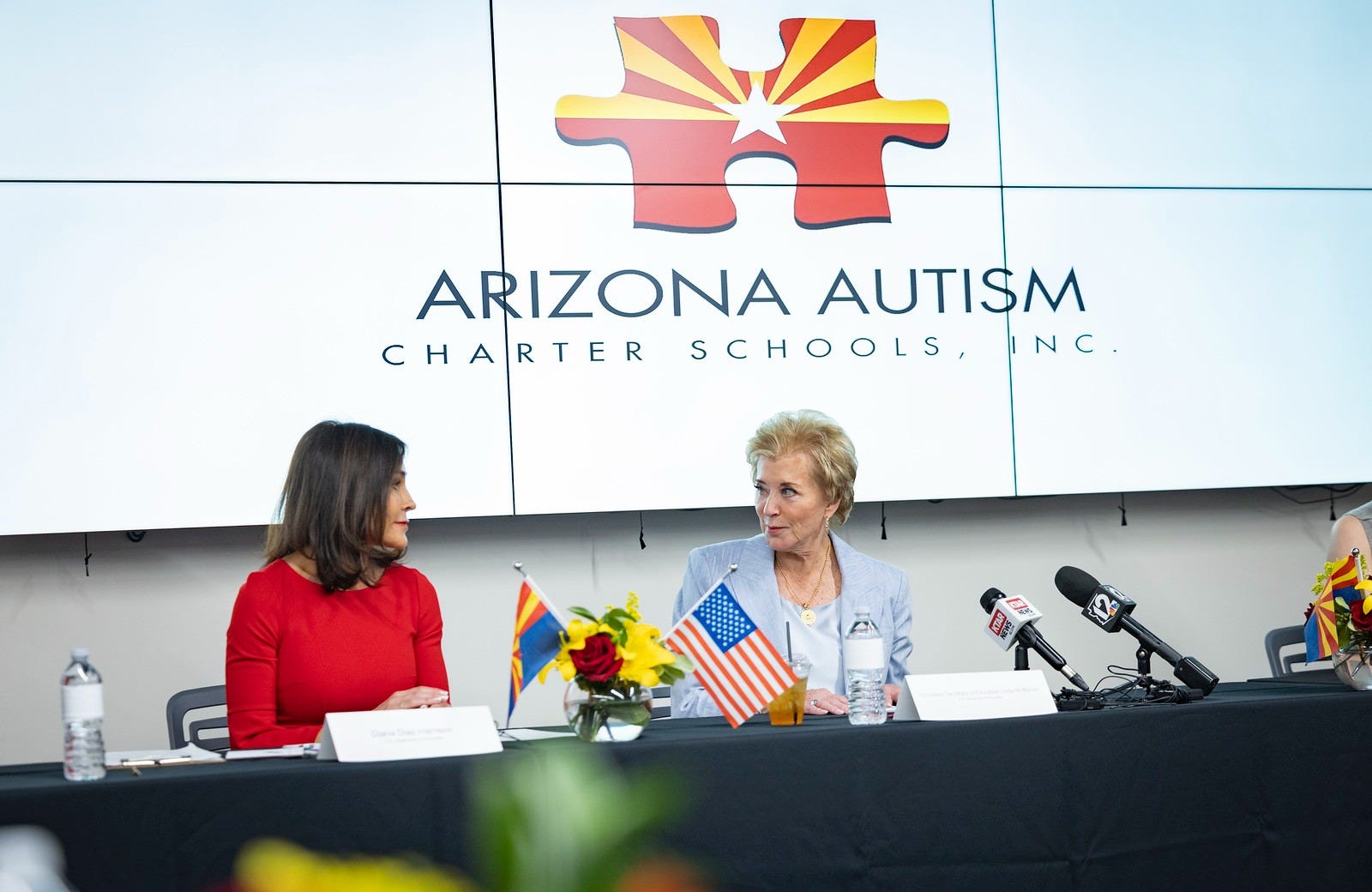
In 2013, she founded Arizona Autism Charter Schools. One year later, it opened as Arizona’s first tuition-free, autism-focused charter school. Today, it serves more than 1,000 students and stands as a national model for what is possible when schools are designed around children’s actual needs.
Her work earned national recognition, including the $1 million Yass Prize for innovation, which she used to launch the National Accelerator of Autism Charter Schools. Prior to this post, she served as Deputy Assistant Secretary for Special Education at the U.S. Department of Education, and Deputy Commissioner of Disabilities at HHS.
Let Freedom Work in Connecticut
During Black History Month, it’s worth paying attention to who is actually doing the work for Black children—and who isn’t.
Dr. Steve Perry has spent his career building schools that serve primarily African American, low-income students—and delivering results. His charter network, Capital Prep, followed Connecticut law to the letter in seeking approval for a new school in Middletown: top blind score, record public support, and unanimous approval by the State Board of Education.

What followed is now before the courts. Despite funding being appropriated for charter schools, the state denied support to the approved school—raising a narrow but critical legal question about whether Connecticut followed its own statute once approval was complete.
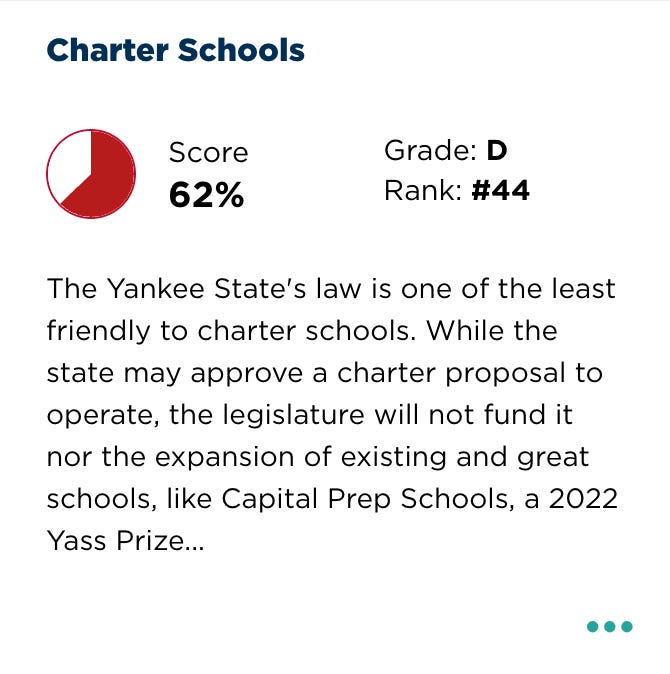
The issue isn’t performance, it’s process—and whether families seeking high-quality options are treated fairly once politics enter the picture. Context matters: according to CER’s Parent Power! Index, Connecticut ranks in the bottom ten nationally on charter funding equity and autonomy.
We laid out the full facts and legal stakes in a recent Forbes op-ed.
Maryland Parents Make Power
Long before curriculum battles made headlines, a group of Maryland parents saw the problem clearly—and decided to act.
More than twenty years ago, Tom Neumark and a small group of Frederick neighbors began pushing back against a system that was neither challenging their children nor respecting families’ voices. Rather than wait for permission, they did what parents across the country have done when institutions fail them: they built something new.
Their efforts helped give rise to Maryland’s charter law—weak and constrained from the start through no fault of their own, but just strong enough to allow the creation of some charter schools, including theirs, the Monocacy Valley Montessori Charter School. The school proved what parents already knew: when families are trusted and educators are empowered, students rise.

But in Maryland, progress has never come easily.
Whether it’s a quest for better curriculum, accountability for results or bureaucratic impediments to exceptional schools, despite resistance, parent advocates have fought.
That same spirit now animates Better Maryland Schools, a parent-led effort insisting on rigorous academics, transparency, and real educational options for all Maryland families. This is what perseverance looks like in education reform: not viral moments, but not giving up—especially when the system hopes you will.
Maryland parents are still standing. And they’re not done. The state’s leadership has rarely supported any kind of parent power—but persistence pays off. Kudos to Tom and his group for their commitment.
Forza means strength—not just in victory, but in persistence. This week showed us both. To more of it! -Jeanne