
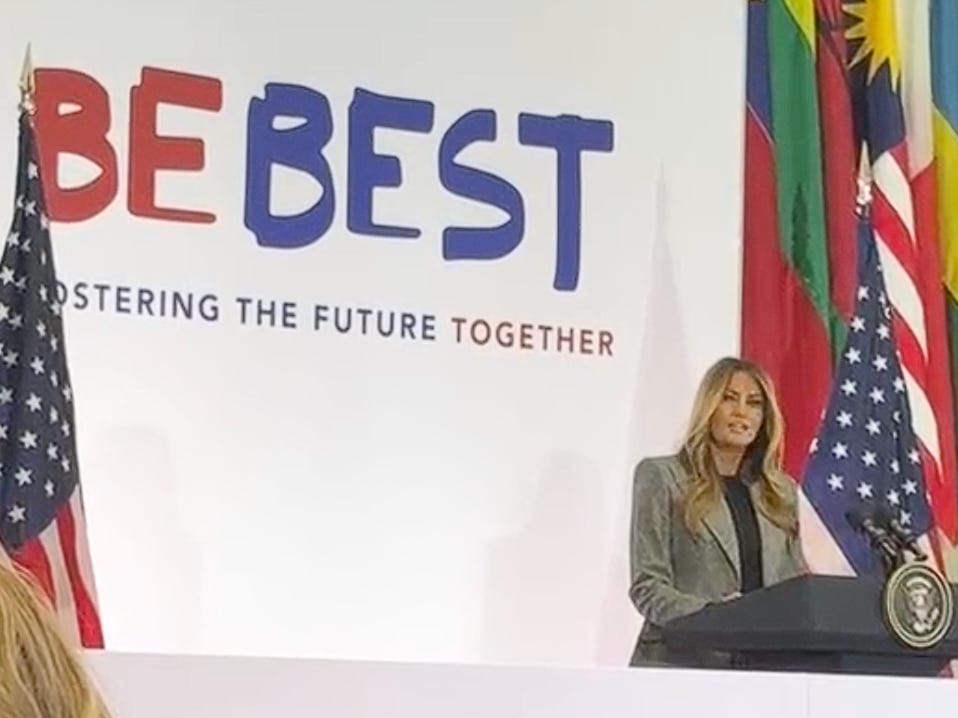
I was honored—and candidly a bit curious—to be invited to the Fostering the Future Together: Global Coalition Summit, hosted by the ever-elegant #FLOTUS, Melania Trump, at the United States Department of State.
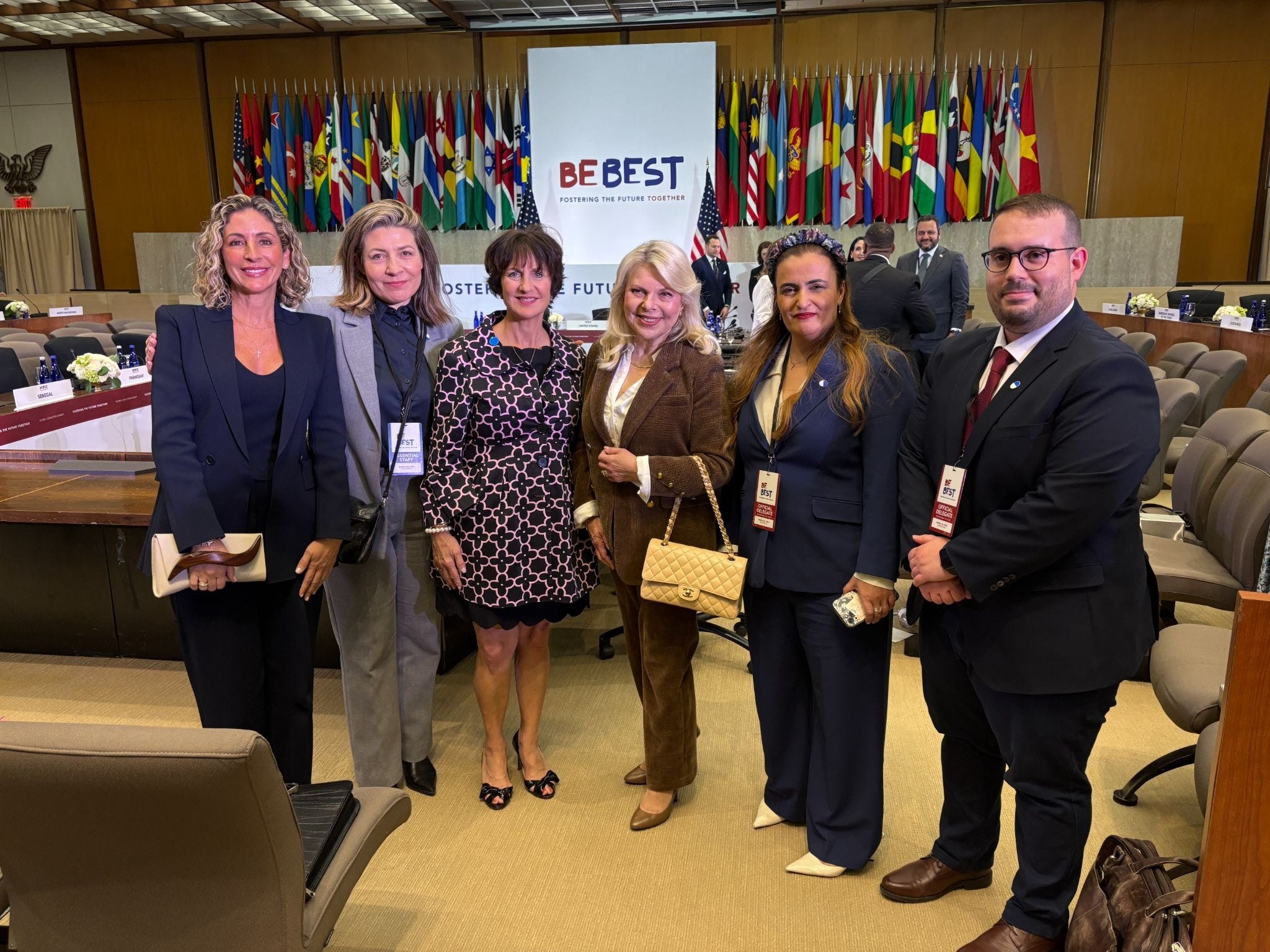
What stood out most was not any one presentation, but the opportunity to sit back and listen—to technologists, policymakers, and first spouses from more than 40 countries—discuss how artificial intelligence is already shaping education and what comes next.
As the First Lady said in opening the summit, the purpose is to “cultivate the skills students need to have in this rapidly changing world.” She urged participants to prioritize children above political philosophy and geographic boundaries, noting that progress accelerates when public and private sectors work together.
That framing carried through the day.
Incorporating AI into the Classroom
The First Gentleman of Slovenia reflected on how countries move through cycles of rejecting, ignoring, and eventually adopting new technologies—and said the current challenge is incorporating AI into curriculum. He emphasized the need to use whatever “soft power” is available to support children’s education and growth, and expressed hope that this group of first spouses could form a lasting coalition, potentially even a think tank.
From Serbia came a more direct question: AI is a challenge for humanity as a whole—so how do we incorporate human ethics?
That question—ethics—surfaced repeatedly.
The First Lady of Ukraine spoke about the importance of digital systems in moments of crisis, and how prior investments in digital education platforms enabled continuity in teaching and learning when traditional access was disrupted. The ability to stay connected, share accurate information, and maintain learning proved essential.
That reality connects directly to emerging technologies designed for both connected and disconnected environments.
Leaders from projects such as M50, working with Arizona State University’s Next Lab, described tools that operate independently of the internet—particularly relevant for rural or restricted-access environments. In places like Sudan, ministries are providing localized data and curriculum, with AI systems built to reference and operate within those parameters rather than drawing from global datasets.
At the same time, other models are expanding access through connectivity. Starlink for education is now serving more than 5.5 million students across over 25,000 schools, providing high-speed internet access in remote areas without traditional infrastructure.
Between connected and disconnected solutions, the practical question becomes less about whether access is possible—and more about how it is implemented.
Opportunity and Responsibility
Several leaders focused on how AI intersects with governance, safety, and responsibility.
Ambassador Monica Crowley, Chief of Protocol of the United States, emphasized empowering students to expand their knowledge and use of AI while ensuring strong outcomes.
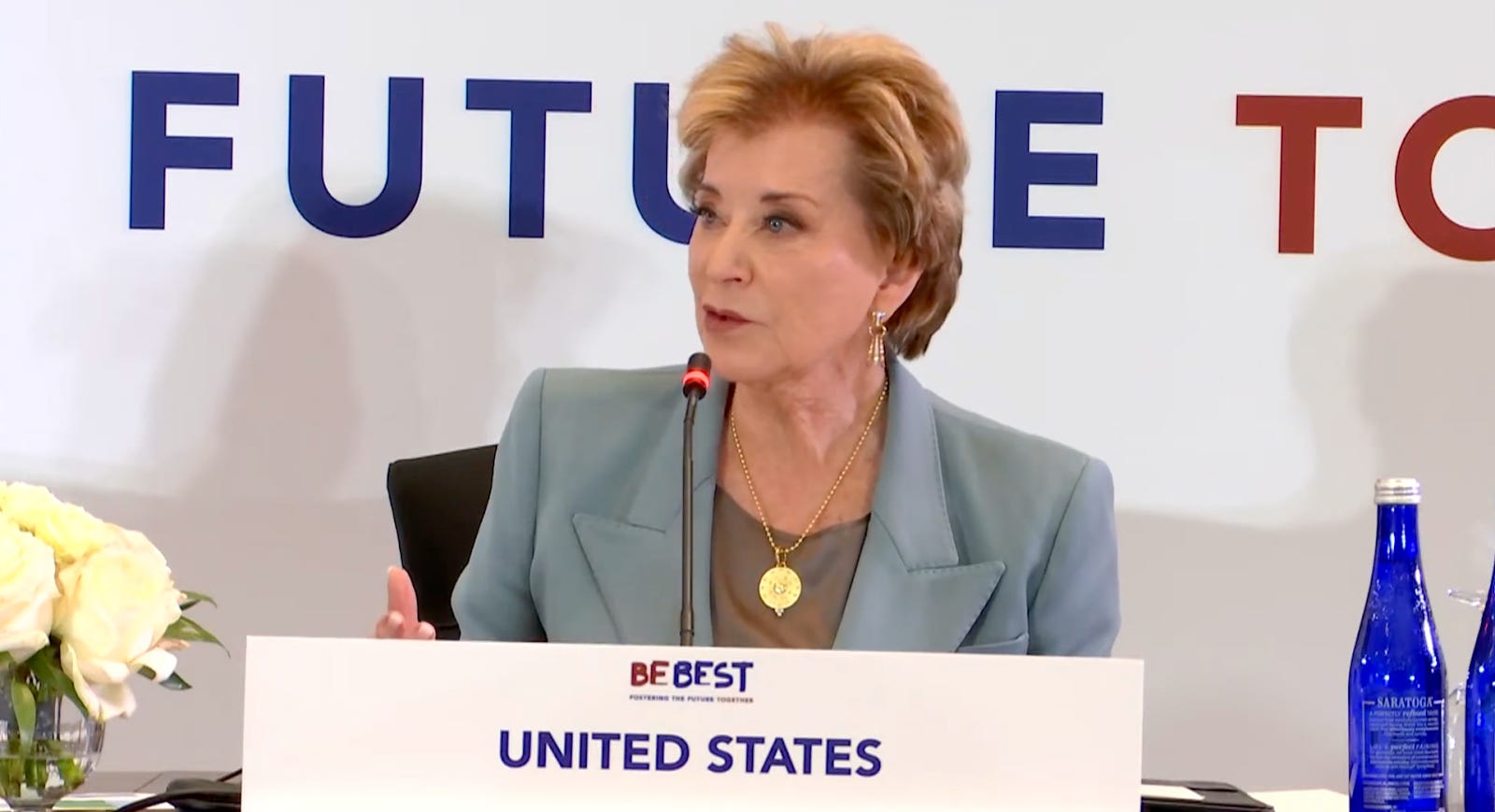
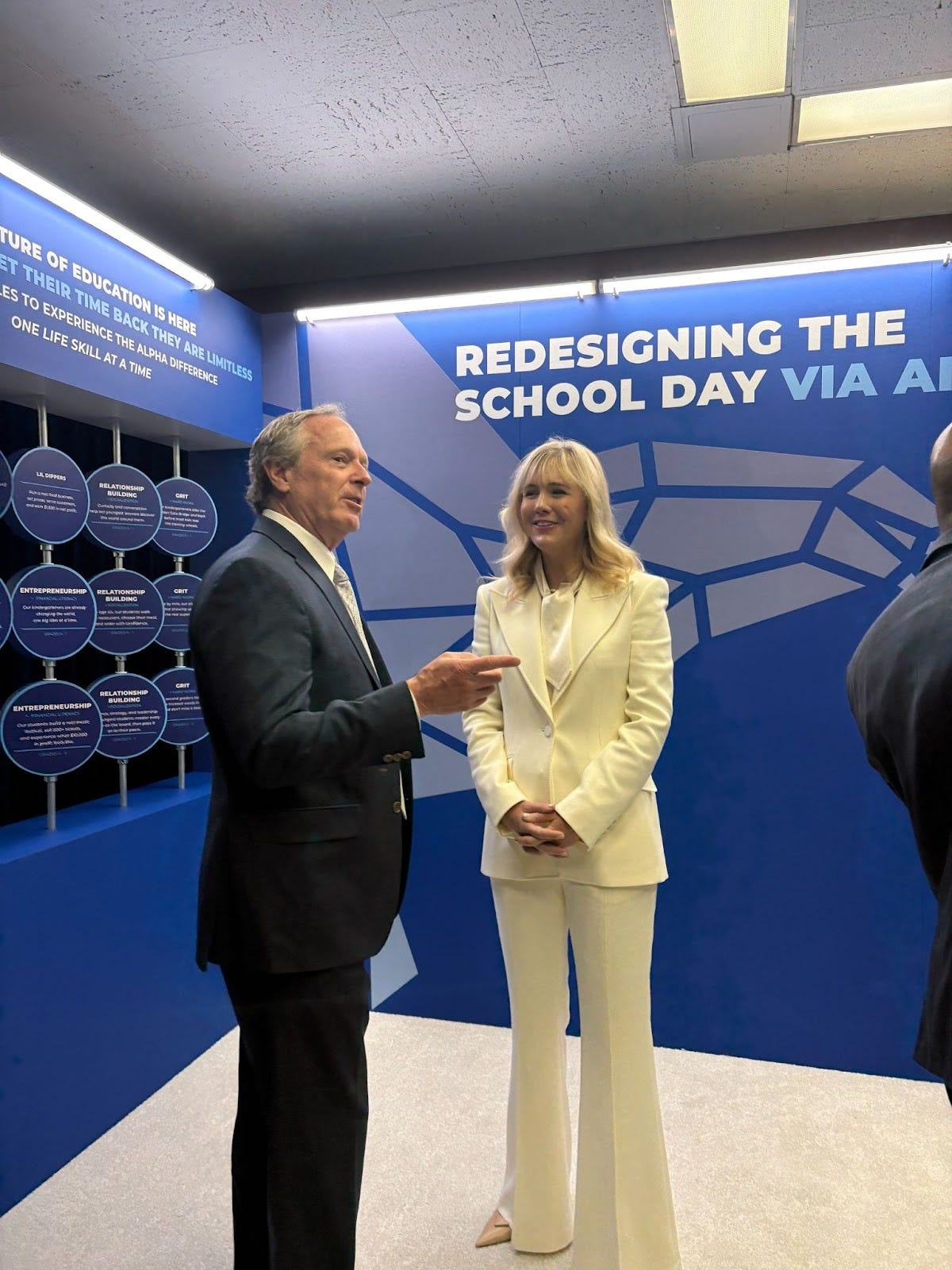
Linda McMahon, United States Secretary of Education, leading one of the sessions, underscored both the opportunity and the need for guardrails—highlighting the importance of embracing AI tools while ensuring they are used responsibly. She pointed to examples such as Alpha School’s customized AI models as evidence of how these tools can be applied effectively in education.
“Artificial Intelligence is a technological leap on par with the invention of the printing press and the rise of the Internet. It is no longer just a transformative technology, but a foundational one that is already shaping the world around us and education especially, it can serve as a powerful equalizer, opening doors of opportunity for students and expanding access to quality learning.
“Together, we can show how proper use of ed tech tools, including digital assessment programs, immersive simulations and adaptive learning systems, can be an enhancement to not as a replacement for human-centered classroom instruction, while simultaneously equipping students with the digital literacy they will need throughout their lives.”
State’s Deputy Secretary Christopher Landau noted the importance of helping children understand the potential for manipulation and emphasized: “Our job is to build, not just consume—build responsibly, not just consume.”
That distinction—between use and understanding—was a consistent undercurrent.
All Solutions Are Local
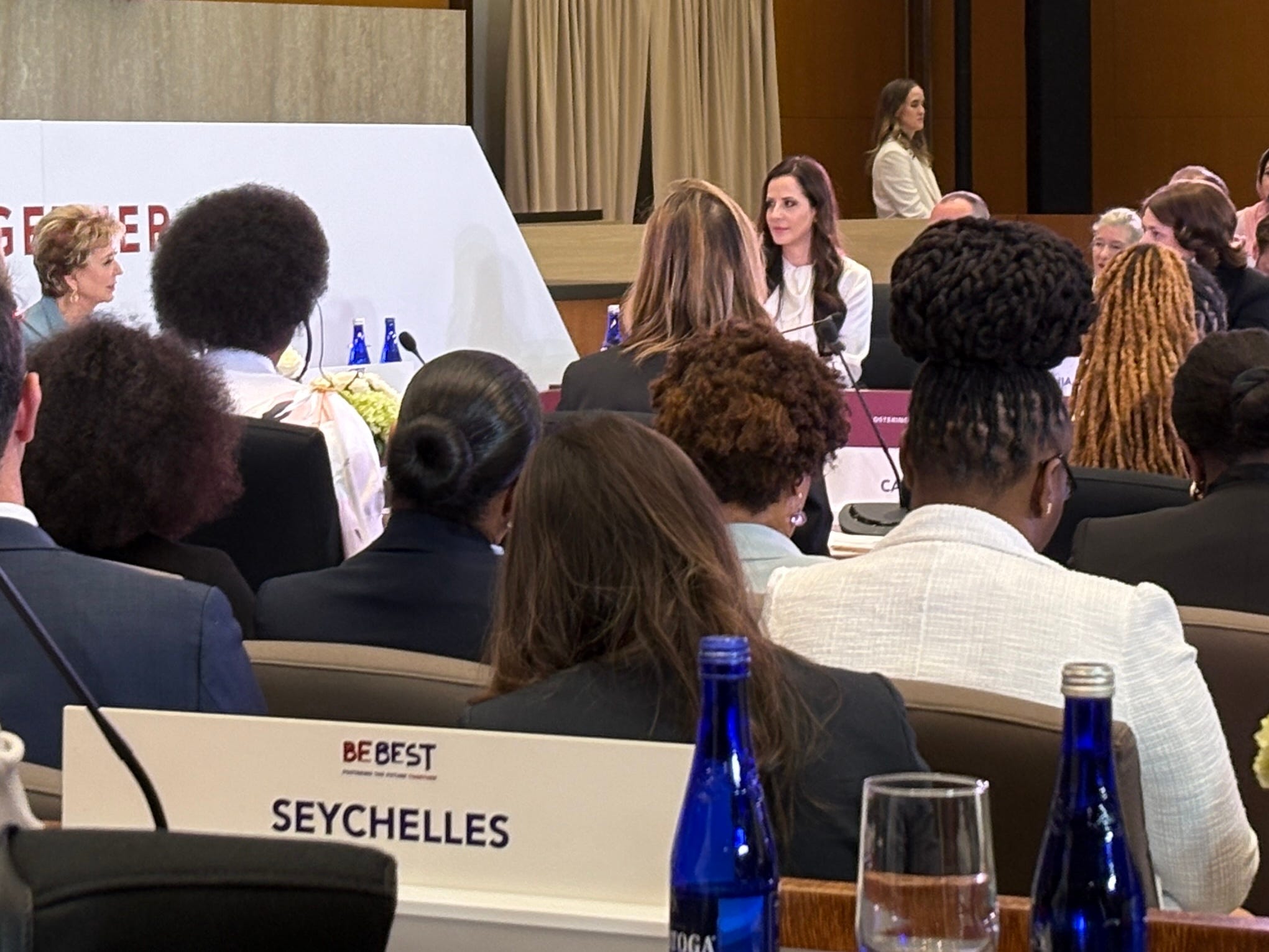
From Estonia came a focus on bridging innovation with child protection, with AI viewed through the lens of children’s rights.
Costa Rica framed the issue more simply: the digital world is no longer separate—it is where children live. The question is who guides them, and how they are guided so they are not navigating alone. Costa Rica has already begun implementing national AI policies centered on ethics and human safeguards.
The First Lady of Bangladesh shared that her country is working to make education—and AI tools—free through the postgraduate level.
Lithuania described its position as a leader in AI access within the European Union and emphasized the role of AI in personalizing education and expanding opportunity across social and economic lines. She offered a stark warning:
“Humanity will have no future for teachers if we only teach tech and do not seek to institute high ethical norms across the globe.”
From the Seychelles came a reminder that while technology advances, it should not come at the cost of human connection: devices should not cause us to lose our human touch.
Parent Power, Not Government Regulation
Andrew Ferguson, Chairman of the Federal Trade Commission, spoke to the broader purpose of innovation, stating that it is not for its own sake, but to promote the flourishing of people—especially children. He emphasized that regulation cannot replace parents and called for a pro-parent lens in approaching AI policy.
He also pointed to recent federal efforts to protect children online, underscoring the role of leadership in advancing those protections.
Prioritizing Digital Literacy
Across countries—including Kenya, North Macedonia, Israel, and others—there was a consistent focus on digital literacy as a national priority and a shared recognition that AI is already embedded in the lives of young people.
The conversations were practical, immediate, and in many cases already underway.
And while approaches varied, the common themes were clear: access, ethics, literacy, and responsibility.
Guidance and Guardrails
Of course, every time there’s a new technology or new effort—even though this is remarkably different—we have to make sure we understand that just because a product calls itself AI, or responsible, or ethically sound, or focused on literacy, it isn’t necessarily so.
We have to be looking for people and products that actually provide guidance and guardrails to teachers to help evaluate—not to mention ensuring that educators themselves understand and become expert in its use so they can better cultivate and guide students.
This is not just about producers. Producers will naturally be self-interested. And self-interest is not inherently bad—as long as there is a watchdog, and people ensuring that, in the words of the head of the FCC, “we are being very pro-parent and recognizing how easy it [AI] is to manipulate.”
That brings us directly to the issue of school choice.
Because there will be parents who simply don’t trust what is being provided or developed. And in that case, they need options—options that allow them to choose the schools and organizations that can best serve their children and use these tools effectively.
Maybe it’s a Chesterton Schools Network, which deliberately takes a non-tech-focused approach and relies on books and the Socratic method.
Maybe it’s a School House Model that uses a broad range of tools.
Maybe it’s a hybrid microschool model like those catalyzed by KaiPod Learning.
Whatever the choices are, there must be choices.
That’s why the Federal Scholarship Tax Credit seems to be increasing in popularity—which is important—but confusion abounds.
Next week, I’ll share more about what it is—drawing on the organizations that have done so much work to put it in place—and also what it is not. Because even some people in the field seem to think this is a program more about selling products than serving students.
Hope I’ve teased that enough for you to come back next week!
Until then, enjoy these increasingly beautiful spring days - Jeanne