
Eavesdropping
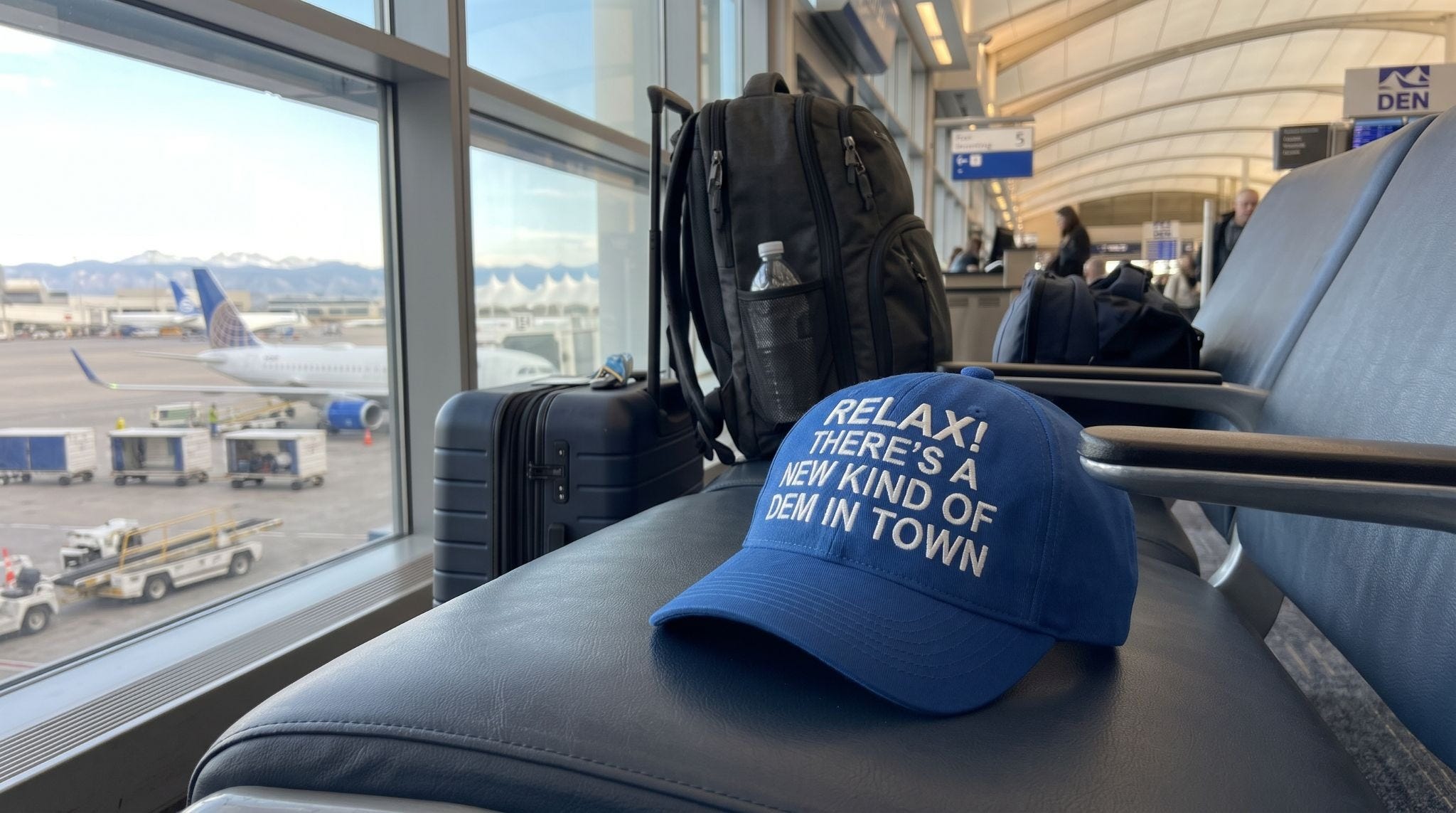
I was sitting in the Denver airport last week waiting for a flight back to Washington, surrounded by an unusually animated group of young people. They were returning from What’s Next, a gathering of Democrats planned well before the election turned so many races their way.
One woman was holding up a couple of hats, asking her friends which they liked better. Emblazoned in big, bold letters on one were words to the effect
RELAX! THERE’S A NEW KIND OF DEM IN TOWN.
I loved the sentiment. I would very much like to believe it.
But are you sure?
Whether you’re approaching the events of the past two weeks from the perspective of what’s next? or now what?, this issue of Forza may raise your blood pressure.
“First They Came for the Children…”
Even before the ink was dry on the election results, newly empowered Democrats were talking about restricting, overhauling or outright eliminating programs that give families power over their children’s education.
The Wall Street Journal captured it well in its editorial, First They Came for the Children. Children are in danger of becoming collateral damage in an election that had far more to do with the cost of living and dissatisfaction with the president than with how Americans want to educate their children.
In Texas, Governor-elect Gina Hinojosa took aim at the state’s new education savings accounts in her victory speech. In Arizona, the country’s most expansive ESA program is in the crosshairs. And in DC, congressional Democrats have already put repeal of the new federal scholarship tax credit on the table.
Hinojosa has called the Texas program a scam. Tell that to the families of the more than 111,000 children benefiting from it (and over 95,000 more on a waiting list), including children with disabilities whose parents finally have resources to get them the education they need.
And despite what the teachers’ unions would have us believe, there was no national referendum on school choice. A vote against Trump is not a vote against a child’s scholarship.
Virginia Is for… Politics?
Then there’s Virginia. Gov. Abigail Spanberger, heralded as one of the faces of this new Democratic Party, announced Friday that she would not complete the Commonwealth’s participation in the federal scholarship tax credit, denying a potential new source of support to families whose children attend public AND private schools.
Never mind that former Gov. Glenn Youngkin had already submitted Virginia’s election to participate, or that the scholarships can support tutoring, special education services and other expenses for public-school families.
Not so fast, says Treasury Secretary Scott Bessent, who is pressing Spanberger to complete the certification process. The IRS still lists Virginia as participating. Whether the governor can legally refuse to complete that process remains unresolved.
The irony? Virginians could still direct up to $1,700 of their federal tax dollars toward educational opportunities toward children in other participating states. Just not their own.
What exactly is progressive about that?
We’ve been here before.
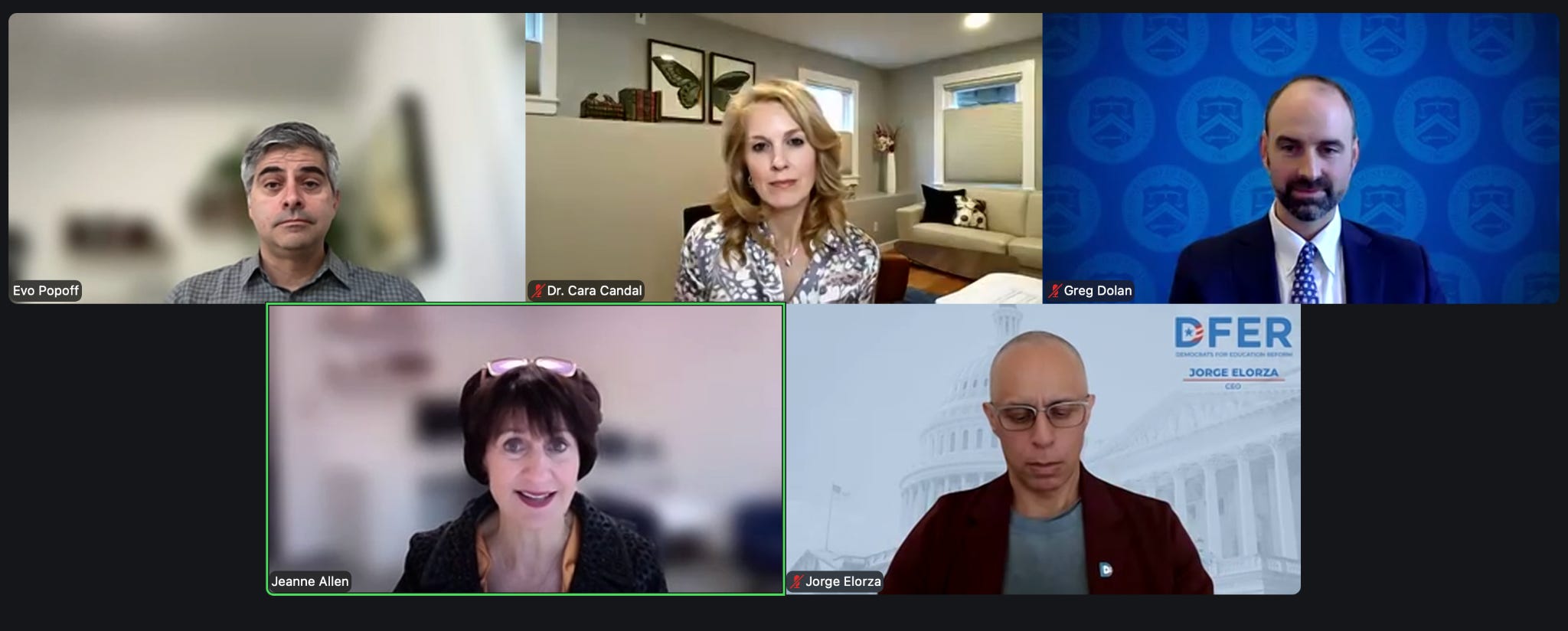
In conversations with numerous reporters these past two weeks, including The Washington Post, and during a Whiteboard Advisors webinar yesterday, I’ve been reminded of the line “It’s déjà vu all over again”.
In the 1990s, Democrats — and some Republicans — made virtually identical arguments against charter schools. They tried to whittle them down, throw up obstacles and impose what they called accountability, but what often amounted to control.
They lost, not because the politics were particularly favorable, but because once parents realized they didn’t have to keep their child in a school where she was being bullied, or where she had never learned to read, the idea became more powerful than any politician.
As I told the Post:
“The most important reason these programs exist is because education in America is still woefully inadequate for most people and particularly dismal for our least-served children.”
More to the point: You cannot rip opportunity out of a child’s hand. You just cannot.
That’s How America Goes to School
The education opportunity movement is considerably larger, more diverse and far less partisan than its critics seem to understand.
Some 60,000 students were benefiting from private school choice programs at the turn of the century. Today, EdChoice estimates that number exceeds 1.5 million.
But that’s only part of the story.
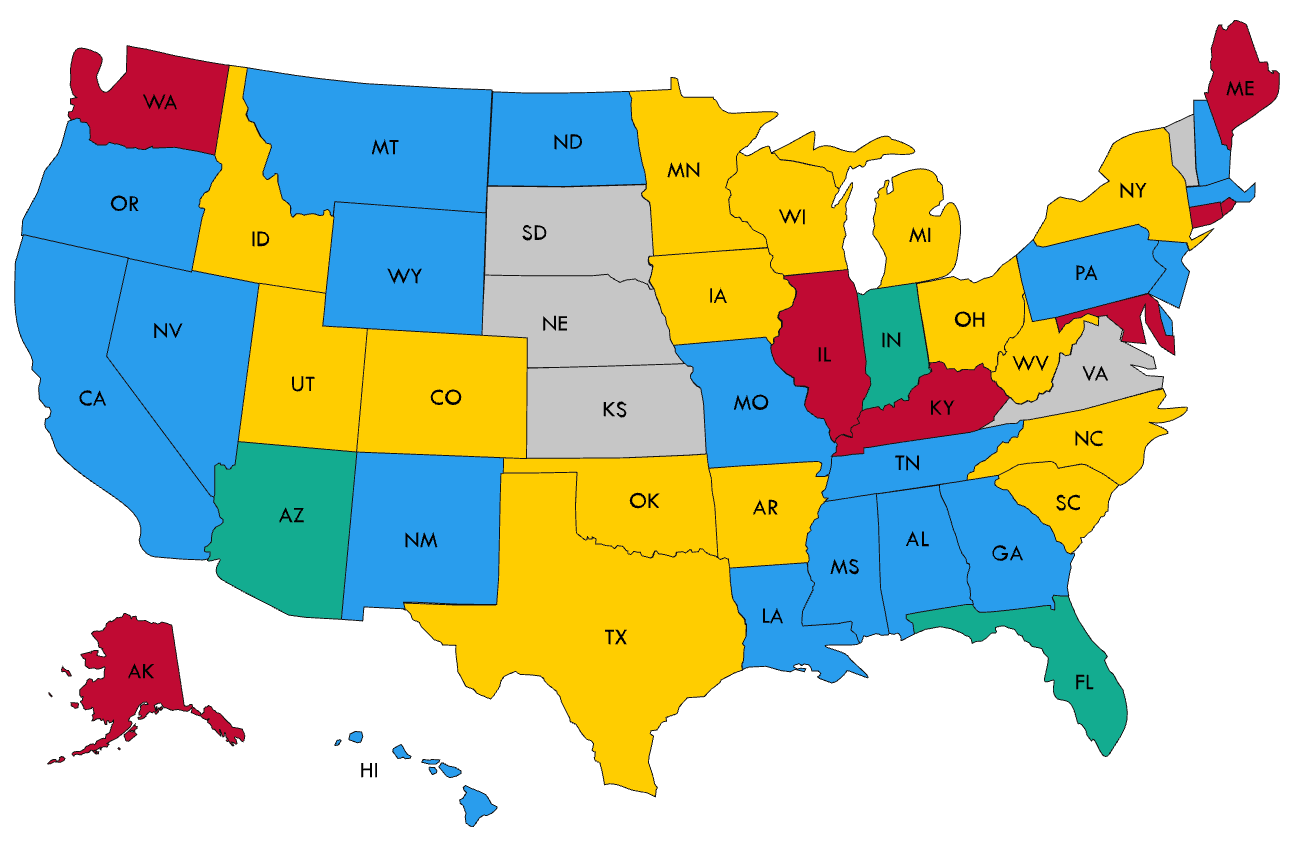
Choice is charter schools. It is families choosing public schools across district lines. It’s microschools operating inside public school systems. It’s Miami, Los Angeles and Boston creating options within and beyond traditional school boundaries.
By our estimates at CER, roughly a quarter of American students today attend schools made possible, directly or indirectly, by choice.
That’s not a program you repeal. That’s increasingly how America goes to school.
And look at what happened in Miami and Washington, D.C., as educational options proliferated. Choice did not mean the death of public education. It helped breathe new life into it.
Public education is about the public. It shouldn’t be about a structure. Period.
Will the REAL Reform Democrats Please Stand Up?
Many of the people who actually create, lead, teach in and support innovative schools are Democrats. So are many of the parents who depend on them.
Years ago, in his office at the U.S. Department of Education, Arne Duncan told me that the Obama administration couldn’t advocate for charter schools nearly as much as he would have liked. Today, he’s lending his voice to the federal scholarship tax credit. New York Gov. Kathy Hochul has embraced it, too.
These are not insignificant developments.
Jorge Elorza, the former mayor of Providence and CEO of Democrats for Education Reform, has been making the case that Democrats need to find their own way forward on educational choice rather than simply trying to dismantle it. The idea of what a progressive education savings account might look like is a conversation worth having.
Wisconsin’s Democratic Governor-elect David Crowley has indicated that he does not intend to abolish his state’s longstanding voucher program. There are Democrats who understand that empowering people is an inherently progressive idea. They understand personalization, and that the diversity of educational approaches available to people with means ought to be available to everyone else.
In the Dark Night of the Soul
I don’t expect all of this progress to be reversed overnight. There will be fights. There will be hearings, obstacles erected and a great deal of time and money wasted debating whether people should have the freedom to direct some of their tax dollars toward the education of children.
But I’m hopeful cooler heads will prevail.
And I have to believe that many of these newly elected officials, in what F. Scott Fitzgerald described as the dark night of the soul, know that the diversity and pluralism they embrace in virtually every other facet of American life ought to extend to education.
Why on earth wouldn’t it?
Time to Channel Reagan
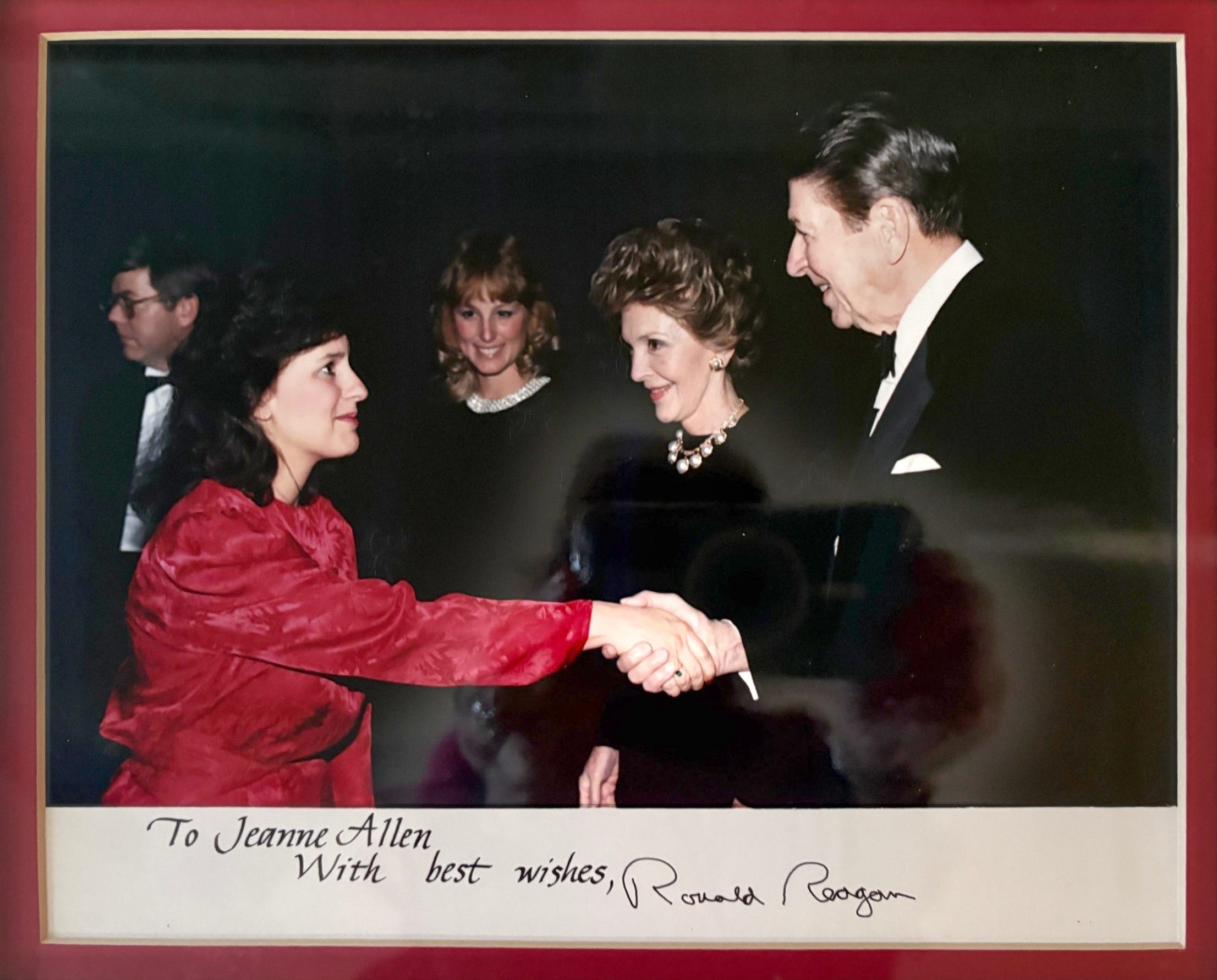
Perhaps it’s time to channel Ronald Reagan. I had the privilege early very early in my career of working for and watching a leader who understood that you don’t abandon an idea simply because the political winds have shifted. You make your case. You make it again. You bring more people into the conversation. And you never lose sight of why you were fighting in the first place.
Nor did Reagan confuse having strong convictions with an inability to work with people who disagreed with him. Those of us who have spent decades fighting for educational opportunity would do well to remember that right now.
There’s plenty of meaningful bipartisan work awaiting them. Helping military families secure better educational opportunities for their children, for one. Bringing education and workforce development into closer alignment, for another. Finding new ways to personalize education for children who learn differently.
Instead of spending the next two years trying to undo what millions of families have accomplished, imagine what could happen if this new crop of elected officials took the time to visit their schools, talk to their teachers and listen to their parents.
They might even discover that their constituents’ problem with educational choice isn’t that there’s too much of it.
It’s that there isn’t nearly enough.
I really do want to meet that new kind of newly-elected Democrat, someone with the gumption of Joe Manchin, the courage of the late Joe Lieberman, or the openness of outgoing Colorado Gov. Jared Polis.
In the meantime, I’m keeping my hat on.
Diverse but Unified

There’s been no shortage of post-election analysis, but these four unique perspectives are particularly worth your time.
Andy Rotherham — On the politics of Virginia. In Monday’s Eduwonk, Andy raises an important point about Spanberger’s decision. Virginians may soon be able to quantify how much scholarship money their own taxpayers are sending elsewhere. Andy also calls attention to the pressure on Spanberger to dismantle Virginia’s itty-bitty but useful public lab schools.
Mike Petrilli — The “blue-nami” wiped out some great reformers. Mike reminds us that the election was consequential not just for school choice but for a whole host of education reforms, including the future of some of what reformers consider the country’s most effective state education leaders.
Rick Hess — What did voters actually vote for? Rick and Andy explore the critical distinction between a repudiation of the incumbent party and an endorsement of the other party’s ideological agenda. The distinction seems to be lost on quite a few people celebrating the results.
Kelsey Piper — A refreshing - albeit modest - take from the left. In Should Texas Dems throw out the Bible with the bathwater?, Piper makes the case for Texas Democrats to think more carefully about which education reforms they undo. You needn’t agree with all of her prescriptions to appreciate her observation about school choice: parents care about the quality of the actual schools available to their children, not the average performance of an entire sector.
More of this kind of conversation, please.
Notes & Asides
Congress has some ideas of its own. Senate Republicans released their proposed education spending bill Monday. Among other things, it would impose additional congressional oversight on the redistribution of the Department of Education’s functions. More here.
The incredible shrinking school system. In The New York Times, we read about the enrollment crisis facing America’s schools, driven in large part by declining birth rates.
It’s always interesting to watch what happens when there’s a baby bust rather than a boom. School districts start getting desperate. But necessity is the mother of invention.
Perhaps this will provide the impetus for districts to open their increasingly empty school buildings to education entrepreneurs who actually have customers, and to explore new ways of organizing schools that put educators, rather than bureaucrats, in charge. The latter alone could save them a great deal of money.
There’s no reason why declining enrollment has to mean declining educational opportunity. Quite the contrary.
For more insight into how our schools are staffed and organized, and the bloat that is just ripe for reconstitution, the EdChoice research on school staffing is always illuminating.
I’ll see you next week with some Thanksgiving Talking Tips to guide your holiday conversations. Please share Forza so more people can engage in helping all children achieve the American dream. Thank you - Jeanne