

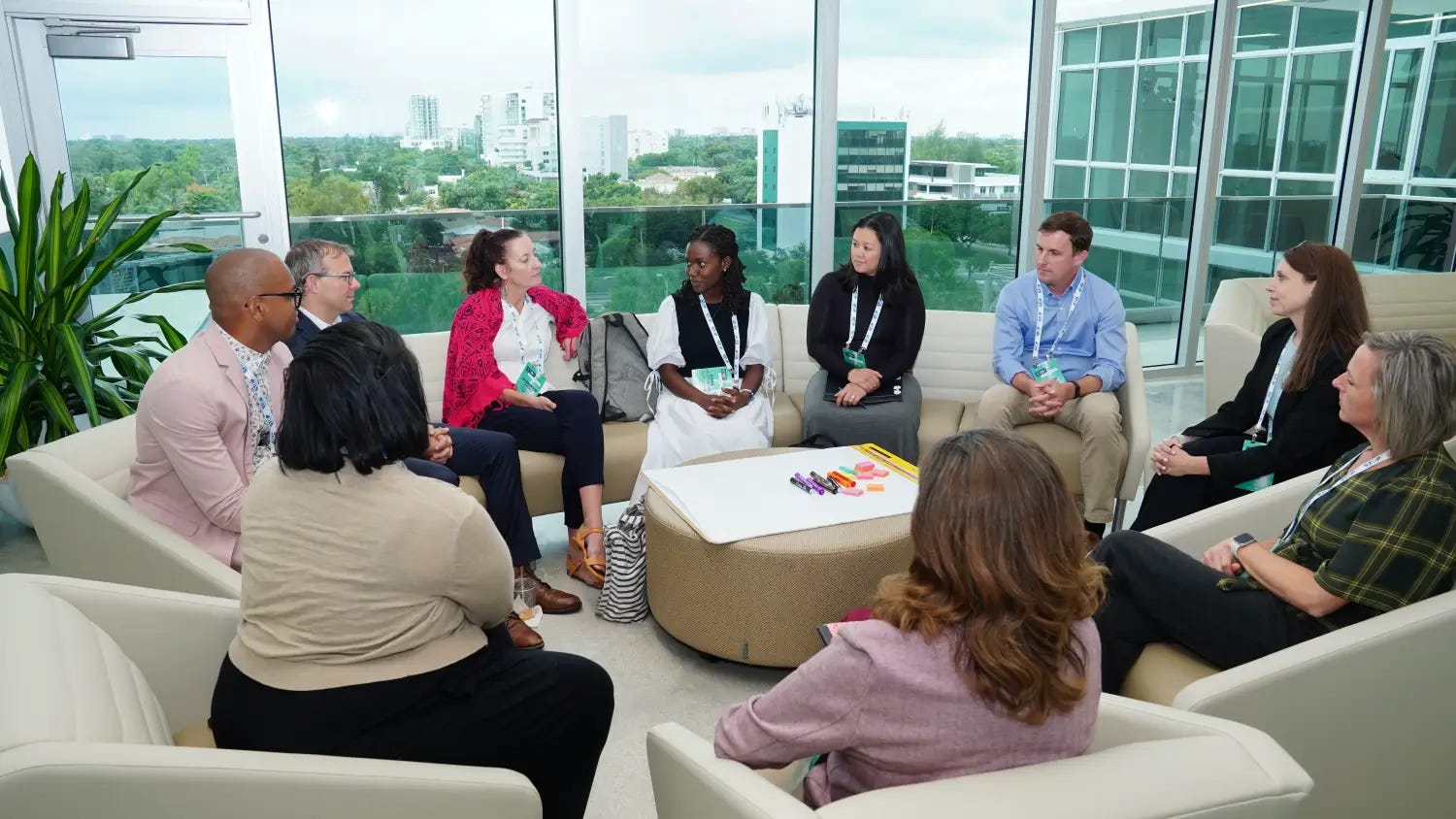
Hi from Miami, where I’ve been seeing old friends and making some extraordinary new ones at the sixth annual Yass Prize Accelerator, held in partnership with Forbes. It has been an incredible, inspiring four days.
We gathered at Mater Brickell Academy, an extraordinarily fitting place for this conversation. Mater Brickell is a tuition-free public charter school in the heart of Miami founded by Academica that deliberately combines college preparation with entrepreneurship, technology and business pathways. Students can develop startup ideas, tackle real industry problems and work with entrepreneurs — precisely the sort of education we keep saying young people need for the world they are entering.
And the news of the last several days offers plenty of evidence for why this work is so urgent.
The numbers are getting harder to ignore.
The Organisation for Economic Co-operation and Development (OECD) released its latest PISA results last week, and U.S. reading and mathematics performance is now among the lowest ever recorded for American students on PISA. Compared with 2015, the share of American 15-year-olds failing to reach PISA’s baseline increased by seven percentage points in reading and six in math. PISA is assessing whether young people possess the basic skills necessary to use reading and math in further education, work and ordinary life — not whether they have reached some lofty academic standard.
Just one day earlier came PDK’s annual poll: only 32% of Americans say they are satisfied with U.S. K–12 education, the lowest level in the poll’s 27-year trend, while 67% are dissatisfied. Even parents’ satisfaction with their own children’s schooling has fallen to a record-low 66%. Schools receive their weakest marks for teaching critical thinking and preparing students for work.
None of this should surprise us. When families lose confidence and lawmakers make alternatives possible, parents’ attitudes change, and they start to move.
Look at San Antonio
In just three years, 37 neighborhood schools have closed, while charter schools, virtual schools, microschools and other alternatives have expanded. Primer — the 2024 Yass Prize winner — has opened three San Antonio campuses this year, bringing its small-school model from Florida into Texas just as the state’s new education-freedom program gives more families the purchasing power to choose.
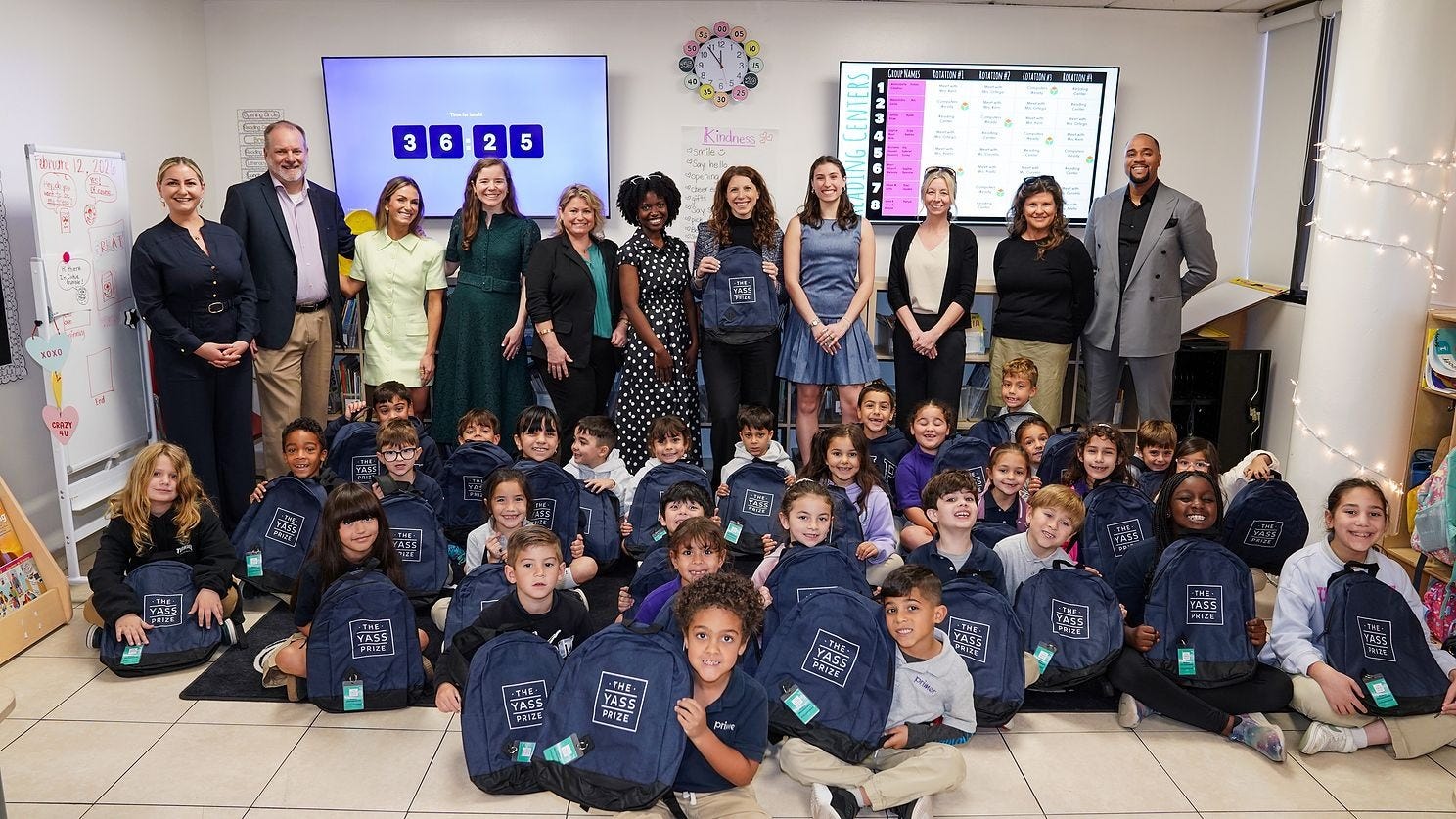
That is what parent demand looks like when great choices prevail. It is why growing parent demand will drive even more enrollment shifts as families vote with their feet. And with the data only continuing to reinforce that the status quo has failed, can you blame them?
Then there is Pennsylvania — where, apparently, innovation is considered childcare.
This one is almost impossible to make up.
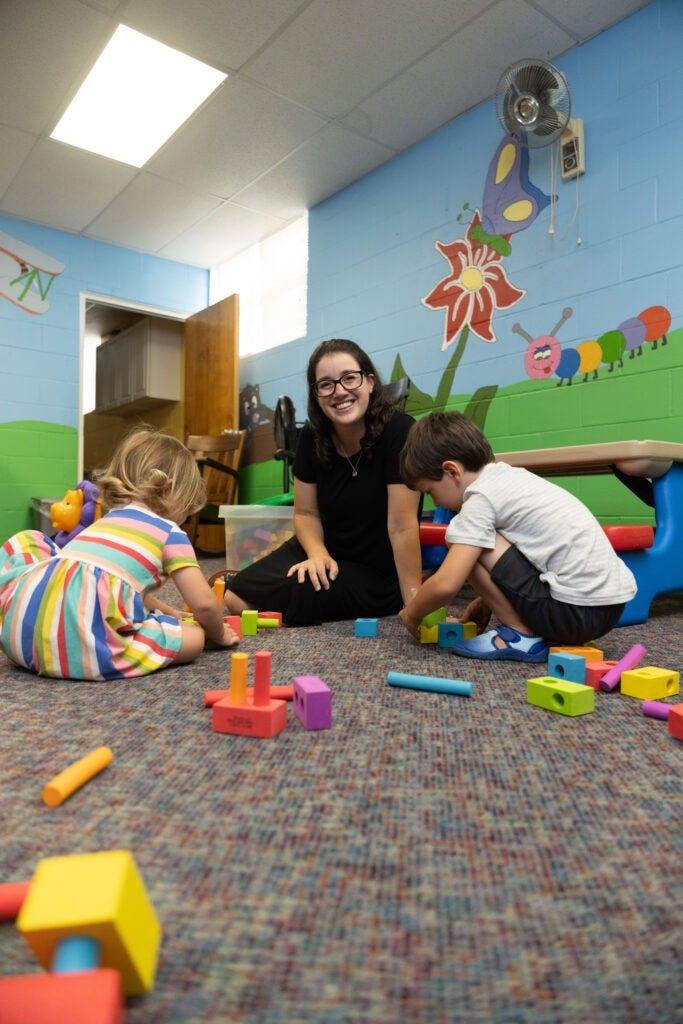
Roots Learning Academy is a hybrid homeschool program near Pittsburgh serving roughly 150 families. Children spend part of their week learning together and the rest learning at home with their parents. Pennsylvania inspectors showed up unexpectedly this spring and decided Roots was not an innovative education model at all — it was an unlicensed childcare center — and ordered it to comply with childcare regulations or stop operating.
The Institute for Justice is now fighting the order in what it calls the first case in its new Education Entrepreneurship Project.
Government has spent decades regulating conventional education into rigidity, uniformity and frustration — helping propel families toward alternatives in the first place. Now, as entrepreneurs create genuinely different models, regulating bodies and the policy system cannot be allowed simply to reach for another regulatory box and say: Fine, then we’ll regulate you like childcare. As if that is a proxy for quality.
One-third absent.
Meanwhile, New York City has another staggering number: 33% of students were chronically absent in the latest reported year, meaning they missed at least 10% of the school year. The city is now requiring every school to designate a “school avoidance liaison” to intervene with students and families.
We have seen even worse versions of this, like in Washington, D.C., where more than one in three students were chronically absent and the response too often centered on fines, referrals and enforcement. You can compel a child’s presence on paper; you cannot compel engagement, belonging or purpose.
Absenteeism cannot be treated as an attendance problem. A child who repeatedly does not want to be in school may be telling us something about school. It’s something the innovators in the room with me in Miami this week understand and have mastered, as have so many others throughout the country who have the freedom to develop and deliver to meet the unique needs of students and their communities. They simply do not have this problem.
Business Acumen or Innovation?
The U.S. Chamber of Commerce partnering with the College Board pointed out this past weekend that fewer than 20 percent of high-school students take a business course, even though employers increasingly say young people lack critical thinking, communication, project-management and financial-decision-making skills. Only about 40% of hiring managers say it is easy to find entry-level candidates with the capabilities they need, resulting in their recommendation that courses like the College Board’s AP for personal finance are important prerequisites for life.
I have another idea. They should visit Mater Brickell Academy or any other of the growing number of entrepreneurially focused schools being developed around the country that infuse rigorous content with business courses, training and even shark tank-like pitching.
Because the answer is not merely teaching students how to get a job. It is teaching them how organizations work, how ideas become enterprises, how value gets created — and giving them the confidence to build. Students must be able to enter the workforce prepared to participate fully, not just to be another cog in the wheel.
When I entered the inaugural Education Entrepreneurship master’s program at UPenn more than a decade ago, one of the great revelations was just how little entrepreneurship itself was taught in education. Everyone talks about improving institutions but far less about forming people who could create entirely new ones.
A growing number of organizations like ours are working to change that, and it won’t be by adding an AP Business for Personal Finance, but by creating or scaling the learning that can educate for the skills, grit, resilience, and great habits that make up successful people.
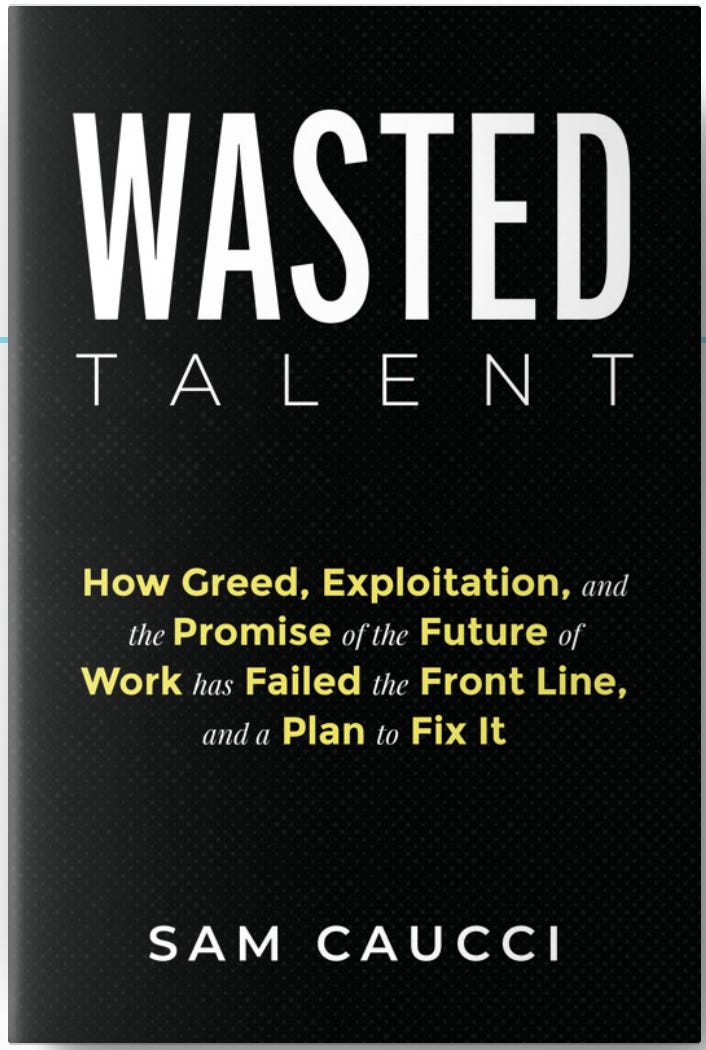
The Chamber might also want to make this book required reading. In Wasted Talent, Sam Caucci, founder of 1Huddle, challenges businesses to stop overlooking the talent already inside their own organizations—and has made a career helping companies train, develop and unlock the potential of their employees. Sometimes business acumen starts with people, just like education.
Kudos to Ohio: more schools, not merely more programs.
Ohio just awarded $20.7 million to 13 public charter schools, including federal Charter Schools Program dollars for new or expanding schools and facilities funding for nine others. It is part of a five-year, $100 million effort to expand access to high-performing community schools.
That is what public policy should help do: make room for more excellent schools to open, grow and serve families, schools like Oakmont Education, which is bringing back students of great promise who were failed by the traditional system, and ensuring they leave with the credentials and skills to become contributors in the workforce.
Parents want—and the workforce needs—the same thing. States like Ohio are responding. It’s called Supply.
Speaking of supply... the Avengers have assembled.

Last week at Forbes on Fifth, so many of the people I wrote about in The Education Avengers were together in one place. These are people who did not wait for an institution to solve a problem. They saw what children needed and built — schools, networks, organizations, technologies and opportunities.
In his introductory remarks that evening, Steve Forbes reminded us of Tocqueville’s Democracy in America, in which he marveled at what he dubbed voluntary associations –
“…the people coming together and doing things.”
Not like the people who’d come from Europe with its medieval traditions where you got permission to do something, where you waited to be told to do something, he argued, but, “Here in America, whether it was for a school, a hospital, a road, sports, professional associations, whatever, Americans just got together and did it. And Tocqueville said, ‘This is how you develop citizens for a successful republic.’”
Those uniquely American associations are also how you build community, and isolate isolation, so to speak. Our kids need the connective tissue that comes from being part of something bigger, which not only leads to belonging but people who are joyful in the presence of others, and have purpose. And ultimately that presence and purpose leads to flourishing, the throughline of My Avengers.
That is why this week in Miami feels so connected to last week in New York. The china breakers, association-builders and disruptors are no longer the outliers. They are the people leading the way for in forging community for millions of students.
And then there is AI.
Many of the education innovators gathered here this week are using it or exploring deeper applications for it. But the fault lines and concerns about it creating more isolation and less community are real.
Then, there’s the debate that broke out into the open when Anthropic CEO Dario Amodei called for frontier AI companies to slow the development of increasingly powerful models, and OpenAI’s Sam Altman publicly backed the need for greater caution. The warning was consequential enough to rattle global technology stocks today; Microsoft separately released a proposed “constitution” intended to ensure its AI remains under human control.
So should AI actually slow down?
And if it does — or even if it does not — what does that mean for what children need to learn now? Do we go back to the books? Or the real pedagogy?
It’s an issue we all need to be exploring.
Please be on the lookout for my interview on the Untold Story with Martha MacCallum, Fox News’ most amazing anchor, tomorrow, September 18!
And Happy Constitution Day! I hope you will take at least a moment to celebrate and honor the spirit that formed the foundation of our country, and the entrepreneurs who built it.
It’s shaping up to be a great fall! All the best - Jeanne
I like the focus on teaching students how businesses actually work, rather than only preparing them to find a job. Understanding entrepreneurship, financial decision-making, and how ideas can become sustainable businesses can be valuable skills well beyond the classroom. Resources such as https://ceocapitalconnection.com can also be useful for entrepreneurs who want to learn more about business funding and growth.